
Sunday, November 22, 2026



News and Views from the Global South
Environment
Q&A: Shared Water Resources – Source of Conflict or Cooperation?
Over the past decade, numerous media and research reports have have anticipated wars over water in Africa. As far back as 1998, the Institute for Security Studies presented a research paper stating that water is "recognized as a fundamental political weapon in the Southern African region. Water will increasingly shape the international relations and security arrangements of Southern Africa."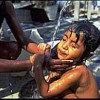
DEVELOPMENT: Progress on Water, Less on Sanitation
The number of people globally who lack access to an improved drinking water source has fallen below one billion for the first time since data was compiled in 1990, according to a report released Thursday by the World Health Organisation and UNICEF.DEVELOPMENT-MADAGASCAR: Not Enough Money for Basic Water
Safe drinking water is a scarce resource in Madagascar. Considerable financial investment is needed to improve sanitation and water treatment and distribution for the population of this large island.FINANCE: Developing Nations Rack up Hefty Foreign Reserves
As the global economy continues to be jolted by volatile financial markets, bank failures, a spreading credit crunch, and rising food and energy prices, some of the developing nations have accumulated three-quarters of the world's reserves, amounting to a staggering 4.3 trillion dollars.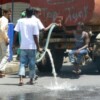
DEVELOPMENT-MAURITIUS: Water – Waste Not, Want Not
The 1.2 million-strong population of Mauritius presently enjoys plentiful piped potable water from the 2000 mm average annual rainfall that falls over the island annually. But large amounts of water are wasted, and with growing demand from new development, the island's water security may come under pressure in the near future.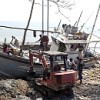
ASIA: Shoring Up Against Climate Change
Three years after a devastating tsunami flattened Banda Aceh, the mayor of that coastal town on Indonesia’s northern tip reckons that restoration work is far from over. He now needs to adapt to threats posed by climate change.OIL-CARIBBEAN: Petrocaribe Building ‘Anti-Crisis, Anti-Hunger Shield’
Seventeen countries in Central America and the Caribbean are to make down payments of only 40 percent on Venezuelan oil, while cooperating to expand their food supply, and calling on the North to take measures to curb speculation on futures markets, which is resulting in surging crude prices.FINANCE: Lobbyists Enlist Public in Commodities Speculation Fight
Energy traders and oil-consuming businesses are enlisting the public in a tug-of-war over proposals to tame fuel and other commodity prices.
Internet Can Be a Dangerous Pharmacy
Medications that have been stolen or falsified, are expired, or sold without a doctor's prescription are the reality of the online pharmacy.
“Reproductive Rights Can Overcome the Conservative Wave”
Access to birth control is in keeping with the rights of women and helps keep population growth in check, making development policies more feasible and improving food security, says family planning expert Carmen Barroso in this Tierramérica interview.Ecobreves – ARGENTINA: Detox Bacteria Discovered
Research conducted in Argentina has proved that some bacteria are capable of breaking down and detoxifying otherwise polluting liquid waste from tanneries and paper, textile and chemical industries.Ecobreves – BRAZIL: Free Refrigerator Replacement
Brazilian electricity companies are donating more than 30,000 new refrigerators each year to poor families as part of the national plan to eliminate chlorofluorocarbons (CFCs), which damage the Earth's ozone layer.Ecobreves – MEXICO: Kids Sign Charter Against Global Warming
In the schools of the state of Mexico, neighboring Mexico City, there is a charter circulating in which the students commit themselves to 24 actions aimed at halting global climate change.Ecobreves – HONDURAS: Climate Threatens Food Production
Excessive rainfall in some areas and prolonged drought in other areas of Honduras threaten agricultural production and food supplies, warn farmers and the International Monetary Fund.ENVIRONMENT-AUSTRALIA: New Plan to Undermine Japanese Whaling
Australia is hopeful that its proposal for a new multi-national whale research program - in which whales are not killed - announced at the recent International Whaling Commission meeting in Chile will place considerable pressure on Japan’s controversial whaling programme.G8: Old Targets Set in New Language
After months of ministerial meetings that culminated in the summit of the world's seven major industrial democracies and Russia (G8) last week, the focus shifts back to United Nations negotiations on a new post-2012 climate treaty regime.
ENVIRONMENT: Afro-Brazilian Communities Recover Jucara Palm
The juçara, a palm tree in danger of becoming extinct due to over-exploitation of its edible heart, is beginning to recover thanks to sustainable management by the Afro-Brazilian communities of the Atlantic tropical forest, Brazil's most deforested biome.ENVIRONMENT: Cutting CO2 Could Save Dying Corals
The rapid decline of coral reefs around the world offers a potent warning that entire ecosystems can collapse due to human activities, although there is hope for reefs if immediate action is taken, coral experts agreed at the conclusion of a five-day international meeting Friday.
Q&A: 'With the Right Methods, You Can Be Self-Sufficient'
The U.N. High Commission for Refugees says that in the five years since camps were established in Southern Chad for Central African refugees, U.N.-administered agriculture programs have reduced external food assistance to a minimum.CLIMATE CHANGE: Small Islands’ Warning Went Unheeded
When the president of the Maldives, Maumoon Abdul Gayoom, addressed the U.N. General Assembly about 20 years ago, he warned of the possible death of his tiny Indian Ocean island if steps were not taken to curb climate change.
Q&A: "A Silent Housing Crisis Is Unfolding"
With a billion people living in slums, and thousands more joining them every day, the world faces yet another looming challenge - the rise of an impoverished urban underclass, says Anna Tibaijuka of the United Nations Human Settlements Programme (U.N. Habitat).« Previous Page — Next Page »


Through our global network of local writers, we are continuing our award-winning coverage of global and local environmental challenges, with a focus on the people for whom the ecosphere matters in a direct way: rural dwellers who have little means to protect themselves against adverse conditions; communities that need to switch to sustainable development in order to survive; poor women and children, who are the most vulnerable in natural disasters. Sponsored by the United Nations Environment Program (UNEP), the United Nations Development Program (UNDP) and The World Bank (WB), IPS also maintains the award-winning Tierramérica, a specialised information service on environment and development.

The Week with IPS

Tracking global progress towards a sustainable world


