
Sunday, November 22, 2026



News and Views from the Global South
Environment
SWAZILAND: Income Rating Hobbles Aid Effort
Amanda Dube is literally ‘dirt poor’. Fierce bush fires ravaged Swaziland for months in 2007, and repeatedly swept over the hilly area of Mliba where she lives. Fires burned the trees and vegetation on the small sloping plot where the widowed mother of three attempts to scratch out a maize crop.CHILE-ARGENTINA: Pascua Lama Mining Project on Hold
Nearly two years after winning environmental approval from the Chilean government, the controversial Pascua Lama gold mining project of the transnational Barrick Gold Corporation remains without a launch date.BULGARIA: On To A New Nuclear Path
The European Commission (EC) has given a positive opinion on construction of a nuclear plant at Belene by Russian Atomstroiexport, controlled by Gazprom.DEVELOPMENT: “Plan B” Urges 80 Percent CO2 Cuts
Imagine it's a glorious new era and everything you'll do as part of your normal day helps to stabilise the climate and the global population, eradicate poverty, and restore the earth's damaged ecosystems.
ARTS-MALI: Festival Fosters Cultural Exchange in the Desert
A polar bear is in the middle of the Sahara desert. It is not a mirage.
INDIA: 'World's Cheapest Car Environmentally Costly'
Nothing has generated as much hyperbole in the global automobile industry in recent years as the unveiling, last week, of an ultra-cheap bare-bones car made by the Tatas, India’s steel and engineering giant.ROMANIA: Fighting for the ‘Right’ to More Emissions
Following the example of seven other countries from Central and Eastern Europe that joined the European Union (EU) in 2004, Romania and Bulgaria, the newest members, have sued the European Commission (EC) for lowering their national caps for carbon dioxide emissions.
CHALLENGES 2007-2008: The Green House Effect
Environmentally-friendly buildings have evolved from hippy habitats to office towers and shopping centres, becoming a far more commonplace presence in city skylines and communities throughout the United States, as well as overseas.BRAZIL: Land Shortage Provokes Murders of Indigenous People
At least 76 indigenous people were murdered in Brazil in 2007, 58 percent more than in 2006. The killings increased the most in the west-central state of Mato Grosso do Sul, where the Guaraní people are confined to territories too small for them to maintain their traditional way of life.
ENERGY: Protests Greet Nuclear Power Resurgence in US South
Residents and environmental activists are in a bitter dispute with large U.S. energy corporations and the federal government over the safety of nuclear power, as more than a dozen corporations plan to, or have filed, paperwork to open new nuclear power plants, primarily in the U.S. South.RIGHTS-BURMA: Lobby Says Gem Boycott Is Working
Rights advocates are renewing calls for consumers and merchants to shun Burmese gems in the run up to the military government's latest auction of precious stones, saying evidence shows Western boycotts are beginning to bite.ARGENTINA: Mystery of the Dead Whales
It will be difficult to determine exactly why the number of whale deaths has shot up along the Atlantic coast of southern Argentina’s Patagonia region, but experts studying the phenomenon are pointing to poisoning from the "red tide".Ecobreves – ARGENTINA: Call for Replacing Inefficient Lightbulbs
The environmental watchdog Greenpeace has called on the Argentine government to replace incandescent lightbulbs with low-energy bulbs in all public buildings in Buenos Aires, Rosario and Córdoba, the country’s three largest cities.Ecobreves – HONDURAS: Minister Replaced After Pressure from Mining Companies
Honduran Environment Minister Mayra Mejía was removed from her post following heavy pressure from sectors of the mining industry, in the wake of the Ministry’s decision against issuing new environmental licenses for mining exploration and open pit mining operations.Ecobreves – BRAZIL: Solar Energy Heats Up
This year the use of solar energy will intensify in Brazil, the result of a municipal law in Sao Paulo which requires the installation of solar water heaters in all new buildings, and which is being expanded to other cities – and while there is a construction boom in the country.Ecobreves – MEXICO: Genetically Modified Corn Grows Here
It is highly likely that unregulated genetically modified corn is being planted in Mexico, warns Greenpeace, after denouncing that it found traces of GM crops, banned by law in the states of Puebla, Tamaulipas, Chihuahua and in rural areas of the capital district.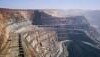
Pascua Lama Mining Project On Hold
Differing tax rules in Argentina and Chile, lawsuits and other obstacles have created uncertainty for the launch of the controversial gold mining project in Pascua Lama, high in the Andes Mountains, by Barrick Gold Corporation.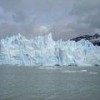
Tourism at the End of the World
So-called “climate tourism” is a mix of legitimate interest in protecting nature, the desire to see rare wildlife on the verge of extinction, and, of course, the search for profit.CHILE: Copper Boom – Cui Bono?
According to global forecasts, the price of copper, Chile’s main export, will remain high in 2008 thanks to strong demand from China. But just who will benefit from this bonanza is up for debate.CLIMATE-NIGERIA: Inefficient Gas Flaring Remains Unchecked
"The Federal Government policy to stop gas flaring commences on Jan. 1, 2008, and any company which flares gas after that time would be shut down." This was the strong warning from the Nigerian government in October last year to multinational oil companies operating in the country.ENVIRONMENT: Report Finds Rising Tide of Green Financing
There appears to be hope for the planet yet.« Previous Page — Next Page »


Through our global network of local writers, we are continuing our award-winning coverage of global and local environmental challenges, with a focus on the people for whom the ecosphere matters in a direct way: rural dwellers who have little means to protect themselves against adverse conditions; communities that need to switch to sustainable development in order to survive; poor women and children, who are the most vulnerable in natural disasters. Sponsored by the United Nations Environment Program (UNEP), the United Nations Development Program (UNDP) and The World Bank (WB), IPS also maintains the award-winning Tierramérica, a specialised information service on environment and development.

The Week with IPS

Tracking global progress towards a sustainable world


