
Sunday, November 22, 2026



News and Views from the Global South
Environment
Ecobreves – HONDURAS: Activists Demand New Forestry Agency
The Olancho Environmentalist Movement (MAO) in eastern Honduras is urging the government to create the Institute of Forestry Conservation to execute the related law, approved two months ago.Ecobreves – ARGENTINA: Youth Concern for Water
More than 200 young people will gather in December in the eastern Argentine city of Chascomús to celebrate the first National Water and Youth Conference.
Hope-Filled Venom
Cuban scientists will conduct clinical trials of the anti-cancer properties of the venom from a scorpion native to the Caribbean island. They have administered it to more than 8,000 patients since 2000.Ecobreves – BRAZIL: Fish Farm Concessions for Government Dams
Brazil's Fisheries and Aquaculture Secretariat is offering concessions for raising fish in areas near dams and other public water bodies, with the aim of legalizing the status of clandestine fisherfolk.Ecobreves – MEXICO: Consumer Watchdog Blames Tobacco Companies
Corporate interests are feeding the "I Smoke" campaign in Mexico, an effort by smokers against reforms that would put stricter limits on cigarettes, according to the non-governmental organization Power of the Consumer (El Poder del Consumidor).
ENVIRONMENT-FIJI: Vanishing Fish Stop Careless Waste Dumping
If villagers used to eating fish caught fresh from the sea start switching to tinned fish, there must be something wrong somewhere.ENVIRONMENT-ANTARCTICA: Accidents Will Happen – So Be Prepared
The second accident this year involving a cruiseliner in the Antarctic is alarming the countries that protect and conserve the frozen continent, which are persisting in their demands for penalties in cases of disasters that cause pollution.COMMONWEALTH: Poverty and Climate Change in the Spotlight
The Commonwealth Heads of Government Meeting (CHOGM) has opened with calls for the gap between rich and poor countries in the 53-member grouping to be addressed.HEALTH: Toilet Association Needs Women on Top Seats
It was a happy day for Sim Jae-Duck. "The World Toilet Association (WTA) history has begun,’’ said the president of the newly formed association at the close, Friday, of the four-day assembly in which it was formally established.
MOZAMBIQUE: Committees for Water – But Sometimes in Name Only
Impoverished residents in the suburb of Carrupeia in Nampula, Mozambique's third largest city, do not have access to potable water because their water committee has effectively ceased to function.
BRAZIL: Sanitation a Reality on Paper Only
The main sanitation plan for the southern Brazilian state of Rio Grande do Sul is 12 years old, has survived four state governments and carries a price tag of 220 million dollars - but has yet to be implemented.CLIMATE CHANGE: EU Swerves Away From Taxing Car Pollution
European Union governments look set to reject calls for taxing cars based on their contribution to climate change.DEVELOPMENT: GDP Poor Gauge of Well-Being
Conventional measures of economic success do not take sufficient account of the social and environmental challenges of the twenty-first century, according to senior European Union economists.
ENERGY-BRAZIL: Pray, Cheer, and Do the Rain Dance to Stave Off Crisis
An energy crisis will hit Brazil in 2009 or 2010, and not even the discovery of vast undersea oil and gas reserves with "enormous potential yields," as announced by the government, can stave it off, warn experts.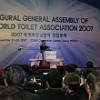
HEALTH: Talking About a Toilet Revolution
The rhythmic beat at the inaugural conference of the World Toilet Association seemed to roll away cultural taboos surrounding the act of defecation.ENVIRONMENT-PERU: A (Toxic) River Runs Through It
The Mantaro river basin, one of the main water sources in Peru’s central Andes mountains, is a dump for toxic substances, according to an independent scientific study. Lead levels, for instance, are 180 times higher than those accepted by the World Health Organisation (WHO).
Q&A: 'Out-of-the-Box Solutions Needed to Solve World's Sanitation Problems'
Born in a lavatory, South Korean legislator Sim Jae-Duck prefers to be addressed as ‘Mr. Toilet’ and hopes to die in one too. He moved into a home shaped like a giant toilet bowl in time for the launch, in Seoul, of the World Toilet Association (WTA) general assembly from Nov. 21-25.AUSTRALIA: Uranium Supply to India – Hot Election Issue
Analysts say that the stalling in the Indian parliament of the India-United States civilian nuclear agreement could prove convenient for the opposition Australian Labor Party (ALP) - if it wins the Nov. 24 elections - to avoid supplying uranium to India.CLIMATE CHANGE: Kyoto on Track, Despite Some Slackers
Total greenhouse gas emissions of 40 industrialised countries rose to a near all-time high in 2005, but the Kyoto Protocol will still exceed its reduction targets, a United Nations agency said two weeks before political leaders meet in Bali, Indonesia to begin negotiations on a new and more aggressive treaty to battle climate change.
ENVIRONMENT-US: An E-Waste Free-for-All
U.S. citizens will buy 30 million new digital televisions this year alone, sending their old lead-laden TVs to the dump, or more likely, overseas to China or India.HEALTH: U.N. Highlights Global Sanitation Disaster
The world's sanitation crisis, caused primarily by the lack of toilet facilities for over 2.6 billion people, is "an insult to humanity", says the Geneva-based Water Supply and Sanitation Collaborative Council.« Previous Page — Next Page »


Through our global network of local writers, we are continuing our award-winning coverage of global and local environmental challenges, with a focus on the people for whom the ecosphere matters in a direct way: rural dwellers who have little means to protect themselves against adverse conditions; communities that need to switch to sustainable development in order to survive; poor women and children, who are the most vulnerable in natural disasters. Sponsored by the United Nations Environment Program (UNEP), the United Nations Development Program (UNDP) and The World Bank (WB), IPS also maintains the award-winning Tierramérica, a specialised information service on environment and development.

The Week with IPS

Tracking global progress towards a sustainable world


