
Monday, November 23, 2026



News and Views from the Global South
Environment
ARGENTINA: Groups Lobby Congress for Changes to Mining Laws
People from 14 Argentine provinces visited Congress this week to call for changes in the country’s mining code, which grants substantial tax incentives that have drawn foreign corporations with poor environmental records.
ARGENTINA: A Crack in Dam Safety
More than 500 dams around the world have collapsed since the mid-20th century. In Argentina, ageing and inadequate maintenance of dams built before the 1970s, the lack of coordination amongst regulatory bodies, and budget shortfalls are giving a boost to the latent threat.US-INDIA: ‘123’ Nuclear Agreement Completed
India and the United States have announced a bilateral agreement permitting the export of U.S. civilian nuclear technology to India in exchange for a promise that the South Asian giant will allow International Atomic Energy Association (IAEA) inspectors access to its nuclear facilities.
ENVIRONMENT: Tiny Tuvalu Fights for Its Literal Survival
The second smallest nation on Earth hopes to turn itself into an example of sustainable development that others can emulate.DEVELOPMENT-NAMIBIA: No Water In Babylon
Cardboard and rickety tin structures jostle for space on a barren outcrop in the sprawling suburb of Katutura in Namibia’s capital Windhoek. A putrid smell hangs in the still, afternoon air as flies wing their way over the debris.ENERGY: Biofuels Pushing Up Food Aid Prices
A dramatic increase in the production of biofuels has led to rising food prices with serious implications for developing countries reliant on food aid to combat famine.ENVIRONMENT-CHINA: Jittery Officials Thwart Green GDP Report
The pollution cost tally is becoming a potentially explosive political issue in China.BRAZIL: In Search of Sustainable Ethanol
To curb international criticism of its cane alcohol industry, the Brazilian government announced that it will ban new sugarcane fields in the Amazon region and in the vast Pantanal wetland.
SOUTHERN AFRICA: Unequal Water Resources Present a Challenge
Water resources are unevenly distributed throughout the countries of Southern Africa. The region boasts of some of the world’s largest lakes and rivers, but is also a land of vast deserts.
HEALTH-US: Tiny Town Demands Justice in Dioxin Poisoning
A U.S. health agency has made research subjects of people in tiny Mossville, Louisiana by repeatedly monitoring dangerously high levels of dioxin in their blood while doing nothing to get the community out of harm's way, residents say.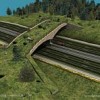
BIODIVERSITY: “Wildways” Would Bridge a Fractured Continent
Before deforestation and sprawl fragmented North America's wilderness into isolated islands of bio-homogeneity, the largest of carnivores and smallest of rodents roamed the expansive continent at will.ENVIRONMENT-PAKISTAN: Relief for Flood Victims – Too Little, Too Late
''Our stuff is already packed and we’re ready to evacuate," said Allah Rakha,50, at a mobile medical camp set up on the Main Nara Valley (MNV) embankment which is, miraculously, still standing up to rainy weeather and pressure from flood waters.
Q&A: Caribbean Alliance to Protect Humpback Whales
In December 2006, marine mammal sanctuaries in the Dominican Republic and the United States set up an alliance to protect some 900 humpback whales. Behind that initiative was the tenacity of Nathalie Ward, director of the Eastern Caribbean Cetacean Network (ECCN).
ENVIRONMENT-GREECE: Recycling Begins, At Last
Household waste recycling is on the rise in Greece but there is still a long way to go before the cleanup is complete.ENVIRONMENT-NIGERIA: Rich in Oil, Dependent on Firewood
It is a paradox of note: the fact that while Nigerians live in the world's sixth-largest oil producer, most of them still rely on wood for their fuel.INDIA/US: Nuke Deal – Breakthrough or Bad Bargain?
After tortuous negotiations spread over four days in Washington, the United States and India have reported "substantial progress" on a bilateral agreement on civilian nuclear cooperation, but said they would now "refer the issue to our governments for final review."
A Crack in Safety of Argentina's Dams
Argentina may face a human and environmental disaster if it doesn't pass a law on dam safety that takes into account the appropriate risk factors, warn experts.Ecobreves – HONDURAS: A Push for Small Hydroelectric Dams
Four communities in the Río Plátano biosphere reserve, which connects the eastern Honduran departments of Olancho, La Mosquitia and El Paraíso, are promoting renewable energy projects to develop their communities.Ecobreves – BRAZIL: List Released of Slave-Labor Businesses
In a study released this month by Brazil's Labor Ministry, 192 individuals and businesses were found to be exploiting workers in conditions similar to slavery. In the past few years, more than 20,000 workers have been freed.Ecobreves – MEXICO: Campaign Against Misleading Food Ads
The Mexican non-governmental group Consumer Power, whose complaint won the removal of children's breakfast cereal advertising from television, is now preparing action against similar ads and pushing for legislative regulation.Ecobreves – ARGENTINA: Alternative Energy for Rural Schools
A project by ecologist and civil society groups in Argentina launched this month will bring wind and solar energy to 125 rural schools across the country that lack access to the electrical grid.« Previous Page — Next Page »


Through our global network of local writers, we are continuing our award-winning coverage of global and local environmental challenges, with a focus on the people for whom the ecosphere matters in a direct way: rural dwellers who have little means to protect themselves against adverse conditions; communities that need to switch to sustainable development in order to survive; poor women and children, who are the most vulnerable in natural disasters. Sponsored by the United Nations Environment Program (UNEP), the United Nations Development Program (UNDP) and The World Bank (WB), IPS also maintains the award-winning Tierramérica, a specialised information service on environment and development.

The Week with IPS

Tracking global progress towards a sustainable world


