
Monday, November 23, 2026



News and Views from the Global South
Environment
PERU: Referendum on Mine Unlikely to Determine Its Fate
The Río Blanco mining project has been a bone of contention in the mountains of Piura, in northern Peru, for four years. A local referendum will be held to settle the issue among the small farming communities, where most of the residents are against the mine, according to a recent poll.ENVIRONMENT-ALBANIA: No Time to Waste
Albania cannot hope to become a major tourist destination unless it solves its waste management problem. Seeing this, authorities are wasting no more time in taking action.TRADE: EPAs May Stifle Uganda's Struggling Flower Industry
Uganda's flower industry needs government incentives and preferential European Union (EU) access to succeed, say members of the east African nation's floricultural sector.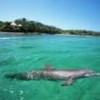
CARIBBEAN: Unknown State of Whales and Dolphins
The Wider Caribbean region is the habitat of a quarter of the planet's sea mammals, but little is known about the state of their conservation here, warn experts.ENVIRONMENT-JAPAN: Quake Devastates Nuclear Power Plans
Reports of radiation leakages at a nuclear power plant, following the Niigata earthquake on Monday, have raised widespread public alarm and dealt a devastating blow to the government’s plans to boost the nuclear power industry, both domestically and abroad.ENVIRONMENT: Act Now on Global Warming – Top US Companies
The chief executives of 160 largest United States companies released a new policy statement on climate change here, Tuesday, warning that ‘’the consequences of global warming for society and ecosystems are potentially serious and far-reaching’’ and asserting that ‘’the time for action is now.’’
COLOMBIA-ECUADOR: Coca Spraying Makes for Toxic Relations
Ecuador is making its final preparations to bring suit against Colombia in the International Court of Justice at The Hague over anti-coca spraying carried out by Colombia along their shared border. Quito had already given notice of its intentions.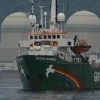
ENERGY: Nuclear Power No Panacea, Critics Say
The nuclear mishap caused by Monday's earthquake in Japan has unleashed another wave of environmental concerns about the use of nuclear technology to meet the world's energy needs.ECONOMY-MALAWI: Uranium Mining Sparks Controversy
Malawi will have its first-ever modern mining project located in the northern town of Kayelekera in Karonga by early next year if plans by an Australian mining company, Paladin (Africa) Limited, are successful. In April this year, the Malawi government granted the mining company a licence to exploit up to 34,5 million tons of uranium.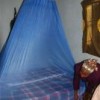
HEALTH-MOZAMBIQUE: Enter Malaria, Another Companion of HIV/AIDS
Anita Elena looks frail after months of chronic diarrhoea. ‘‘I prefer this illness to malaria because malaria kills you rapidly,’’ says Elena, sitting on a reed mat in front of her makeshift two-roomed stick and mud home, which she shares with her husband and three children. ‘‘My older brother died of malaria five years ago. He went rapidly.’’
HAITI: A Land Crumbling Beneath Their Feet
Dardy Saint-Jean gazes at the rock-strewn river coursing through his village and shakes his head in disgust.ENVIRONMENT: UNEP Faults Asian Development Bank Project
A sharp difference of opinion between the Asian Development Bank (AsDB) and the United Nations Environment programme (UNEP) has surfaced over a flagship venture of the Manila-based financial institution.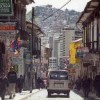
BOLIVIA: La Paz Struggles Against Suffocation
The noise of traffic, dissonant car horns, people marching and shouting slogans, and firework and dynamite explosions is beginning to suffocate the urban centre of La Paz, Bolivia's seat of government, and is forcing consideration of medium term solutions.MALAWI: ”All-Day Electricity”-As Long As It Is Not Peak Time
Patients have over many years frequently been denied scheduled surgical operations at the Holy Family Hospital in Malawi’s southern region due to abrupt power cuts.ALBANIA: Preserving a Beauty Called Biodiversity
It takes a short walk from the famous Velipoja beach in Shkodra town on the Adriatic coast to put behind the stresses of modern life, and the beach attractions themselves.Ecobreves – HONDURAS: Financing for Indigenous Farming
From August and for the next five years, the Honduran government will grant loans totaling 15 million dollars to 45,000 indigenous families in the western part of the country in an effort to promote sustainable development projects.Ecobreves – VENEZUELA: Mysterious Oil Spill
An oil spill of unknown origin and quantity has since Jun. 29 affected nine beaches along about 50 kilometers of the northeastern Venezuelan peninsula of Paria, near Trinidad and Tobago.Ecobreves – CHILE: Garbage Collectors, Unite!
On Jul. 11 in Chile, the National Movement of Garbage Collectors was born. With more than 200 members, the celebrated by marching under the slogan "Organized collectors will never be stepped on".
Unknown State of Caribbean's Whales and Dolphins
Accidents involving fishing nets, which kill 300,000 cetaceans -- whales, dolphins and porpoises -- each year, are difficult to estimate in the Caribbean, where artisanal fishing is the norm.Ecobreves – BRAZIL: Sao Paulo Organic Oranges for the World
Of every 10 glasses of organic orange juice consumed in Europe and the United States, 8.5 are produced from fruit grown in groves in the north of Brazil's Sao Paulo state that are members of Grupo Montecitrus.Ecobreves – CUBA: Preparing Mangroves for Climate Change
Experts and residents of Cuba's Ciénaga de Zapata, one of the largest marshes in the Caribbean islands, are preparing for the impacts of climate change on the area's mangroves, coastal vegetation that provides a home to a great array of animal life.« Previous Page — Next Page »


Through our global network of local writers, we are continuing our award-winning coverage of global and local environmental challenges, with a focus on the people for whom the ecosphere matters in a direct way: rural dwellers who have little means to protect themselves against adverse conditions; communities that need to switch to sustainable development in order to survive; poor women and children, who are the most vulnerable in natural disasters. Sponsored by the United Nations Environment Program (UNEP), the United Nations Development Program (UNDP) and The World Bank (WB), IPS also maintains the award-winning Tierramérica, a specialised information service on environment and development.

The Week with IPS

Tracking global progress towards a sustainable world


