
Tuesday, November 24, 2026



News and Views from the Global South
Environment
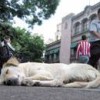
Thousands of Pets Abandoned During Summer Vacation
Every year in Italy, some 300,000 dogs and cats are left on the streets by their owners. Eighty-five percent of these household pets die within 20 days.Ecobreves – GUATEMALA:: Looters in the Ruins
Most of the archeological sites in the northern Guatemalan department of El Petén, cradle of the Maya culture, are at the mercy of looters due to the lack of funding to pay for guards.Ecobreves – HONDURAS: Betting on Organic Bananas
The government of Honduras and the multinational corporation Chiquita Banana (subsidiary of the U.S.-based United Brands Company) are planning to cultivate 200 hectares of organic banana at the end of the year.Ecobreves – MEXICO: Water Without Salt
- Scientists at the public Autonomous National University of Mexico (UNAM) are developing a megaproject to desalinize sea water, using renewable energy in an effort to provide the essential resource to urban centers in the country's desert northwest.Ecobreves – BRAZIL: Controversial Tires
On Sept. 4 will be the second hearing of the World Trade Organization (WTO) for debate on the restrictions of imports of recycled tires in Brazil.Ecobreves – ARGENTINA: Stop Atomic Credits
- Environmental, civil society and neighborhood organizations in the central Argentine province of Córdoba are calling on the World Bank to halt credits to the National Atomic Energy Commission, CNEA.Ecobreves – BRAZIL: Traditionals to Have Own Policies
A national proposal that would benefit the 4.5 million members of Brazil's traditional peoples and communities will be drafted by a commission of 15 of their representatives and 15 government delegates by the end of August.NEPAL: Undying Hunger in the Hinterland
Here on the narrow trails carved into the steep, emerald hills that plunge into the winding Karnali River hundreds of metres below, villagers have one thing on their minds: emergency rice.CENTRAL AMERICA: Gold Fever Strikes Again
Untouched landscapes, attractive concessions and weak environmental legislation are driving transnational mining companies to seek new options for exploration and exploitation of gold in Central America.EUROPE: Swedish Nuclear Incident Sparks Safety Concern
While the sudden scram of a Swedish nuclear reactor Jul. 25 is yet to be thoroughly clarified, the incident has fuelled a longstanding rift between opponent voices on Swedish nuclear power safety.DEVELOPMENT-SINGAPORE: Who’s Water Wally?
Even as Water Wally celebrates his first birthday Wednesday - on Singapore's National Day, no less - some Singaporeans are still clueless about what he represents. In fact, many have not even heard of Water Wally.MIDEAST: Bombing Stalls Cleanup of Massive Oil Spill
As Israeli bombs continue to fall from the skies across Lebanon, destroying homes, parks, roads, bridges, forests, hospitals and power stations, scientists say the enormous amount of toxic waste unleashed by the attack will continue to affect human lives and the environment long after the fighting is over.ECONOMY-US: Oil Field Closure Revives Energy Policy Debate
Despite rhetoric from Washington that the United States must wean itself from dependence on oil, the shutdown of a BP oil field in the state of Alaska has shown how far the country remains from that goal and the lack of a consensus on how beat to achieve it.POLITICS: Activists Recall Hiroshima as Nuclear Worries Grow
As the war between Israel and Lebanon approaches the one-month mark and the U.S. continues to pursue expansion of its nuclear arsenal, people around the world will stop to remember Aug. 7, 1945.LABOUR-COLOMBIA: Flower Power – But Not for the Workers
The Free Trade Agreement (FTA) between Colombia and the United States that could be signed in October or November this year will maintain the tariff exemptions already enjoyed by Colombia's flourishing flower industry. But there are no plans for higher wages and better working conditions for the industry's 100,000 workers.ENERGY-NIGERIA: ‘Solar Power Brings Relief to Villagers’
Bishop Kodji, a small fishing and canoe carving island in the Atlantic Ocean off Nigeria's sprawling commercial hub of Lagos, has become the first village to be electrified under the Lagos State government's pilot solar energy project..ENVIRONMENT-CARIBBEAN: Beaches and Marine Life in Danger
The image of beach paradise, which for more than two decades has been the economic mainstay of many Caribbean countries, could disappear as a result of the increasingly frequent hurricanes and rising sea levels, but also the consequences of human activity.
Gold Fever Strikes Again in Central America
Multinational corporations are interested in developing more than 250 projects in the region. The affected communities are mobilizing and demanding their right to information.
Italian Eco-Friendly Valley Is Model for Europe
In the last 14 years, the residents of Varese Ligure have brought into practice an ingenious way of life and development based on respect for the environment.Ecobreves – BRAZIL: Innovative Hydrogen Buses
Five buses fueled by hydrogen will circulate in Sao Paulo and four neighboring cities beginning in 2007, with innovations similar to those in industrialized countries.Ecobreves – VENEZUELA: Love for the Mangrove
The exposition "For Love of the Mangrove", organized by the National Center for Improvement of Science Education, will run through August at the Lía Bermúdez Art Center in the western Venezuelan city of Maracaibo.« Previous Page — Next Page »


Through our global network of local writers, we are continuing our award-winning coverage of global and local environmental challenges, with a focus on the people for whom the ecosphere matters in a direct way: rural dwellers who have little means to protect themselves against adverse conditions; communities that need to switch to sustainable development in order to survive; poor women and children, who are the most vulnerable in natural disasters. Sponsored by the United Nations Environment Program (UNEP), the United Nations Development Program (UNDP) and The World Bank (WB), IPS also maintains the award-winning Tierramérica, a specialised information service on environment and development.

The Week with IPS

Tracking global progress towards a sustainable world


