
Sunday, November 29, 2026



News and Views from the Global South
Environment
Ecobreves – PERU: Recycling Plan for Lima
The Peruvian non-governmental Office of Environmental Assessment and Consulting is designing a plan to organize the efforts of some 5,000 informal garbage collectors, who recycle 10 percent of Lima's solid waste.Ecobreves – COLOMBIA: Dumps Threaten Aircraft
A program to relocate the garbage dumps near the northern Colombian airport of Barranquilla and a citizen education campaign aim to put an end to flight safety problems.Ecobreves – COSTA RICA: Crocodile Center Opens Its Doors
On Sep. 26 the first center dedicated to environmental education and research of crocodiles and caimans opens its doors in Costa Rica.Ecobreves – NICARAGUA: Respiratory Illnesses on the Decline
The incidence of acute respiratory ailments in Nicaragua decreased 23 percent in the first nine months of this year, compared to the same period in 2002, says Maribel Orozco, director of epidemiological monitoring at the Ministry of Health.Ecobreves – HONDURAS: Ten Years Protecting the Environment
The Honduran non-governmental Vida Environment and Development Foundation has under its custody, after a decade of existence, 300,000 hectares of protected areas.ENVIRONMENT-ARGENTINA: Seeking Safeguards for Vast Wetlands
Scientists, environmentalists, farmers, fisher-people and politicians in Argentina are coming up with innovative formulas for the joint management of three million hectares of wetlands in the Parana-Paraguay river basin, one of the world's biggest reservoirs of freshwater and biodiversity.DEVELOPMENT: World Bank Backpedals on Environment, Groups Charge
Activists are accusing the World Bank of sacrificing environmental and social balance in poor nations by funding large projects like dams, power plants and pipelines as part of its new strategy to back ''high-risk, high-reward'' projects.SCIENCE: Climate Change Cutting Crops, Warn Researchers
World cereal stocks are plunging to their lowest levels in recent history and might not recover due to climate change, experts say.CARIBBEAN: Region Disputes Need to Capture Dolphins
As a certified scuba diver, David Smith gets a deep thrill every time he spots a dolphin at sea. It is a joy he knows most people cannot share, so he understands the appeal of viewing dolphins in captivity.ENVIRONMENT-AFRICA: Renewed Efforts to Protect Endangered Species
The President of Madagascar Marc Ravalomanana has announced that his country intends increasing its protected forest, wetland and marine ecosystems from 1.7 to six million hectares.INDIA: Prawn Farms, Erosion Eat into World’s Largest Delta
Every morning, Santipada Ghorai is out on his ricket wooden boat, surfing carefully on the River Ganges in the picture-perfect maze of rivers and creeks that cut through the mangroves of the Indian Sunderbans.NEPAL: ‘Dirty’ Cars to Leave Residents Choking in Polluted Air
Nepal's environmentalists are up in arms over a government decision this month to allow imports of ‘‘polluting'‘ vehicles into the already heavily polluted environment of Kathmandu, the capital.BHUTAN: Impact of Climate Change Rises as Glaciers Melt
In the ‘Land of the Thunder Dragon', people have always lived in close harmony with the environment and climatic changes were never a national concern, until the hazards of the ‘greenhouse effect' reached this Himalayan kingdom.ENVIRONMENT-JAPAN: Gov’t Takes Action on Influx of Exotic Pets
When Tomoharu, a 40-year-old businessman, decided he wanted an exotic pet to keep him company, he checked the Internet and was presented with a mind-boggling array of choices.ENVIRONMENT-VENEZUELA: Life-Protecting Lightning
Venezuela's spectacular Catatumbo lightning phenomenon, which contributes to restoring the Earth's atmospheric ozone layer, continues today thanks in great part to the marshlands national park at the southern end of Lake Maracaibo.ENVIRONMENT-LATIN AMERICA: Protected Areas – On Paper Only
Nearly 25 percent of Latin American territory is under some sort of nature protection legislation, but just a half-dollar per hectare goes towards management and monitoring of these areas, says a report by the United Nations Environment Programme (UNEP).ENVIRONMENT: World Ozone Day Aims at Children’s Health
Two United Nations agencies have geared up to protect children from the harmful effects of the sun's rays, announcing a collection of educational materials on International Day for the Preservation of the Ozone Layer.Conservationism Has Not Reached the Seas
Since 1962, the year of the first World Parks Congress, the number of protected areas has jumped from two million square km to over 18 million today. But barely 0.5 percent of the earth's seas and oceans are included in that category.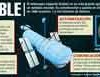
The Hubble's Days Are Numbered
If no new maintenance missions are sent, the useful life of the magnificent telescope-satellite will come to an end in just three years. Much depends on a renewal of space exploration efforts by the United States.
World Ozone Day
The scientific community estimates that the ozone layer, which filters the ultraviolet rays of the Sun, could recover its density by the middle of this century. Recent studies show an improvement, a closing of the so-called ozone hole, but only in the upper stratosphere.Ecobreves – VENEZUELA: Bacteria Against Contamination
The chemistry department of the University of Carabobo in Valencia, central Venezuela, is investing the use of thermophile bacteria, which exist at temperatures of 40 to 60 degrees Celsius, as biological catalysts for destroying organic material that has contaminated Cabriales River and Lake Valencia.« Previous Page — Next Page »


Through our global network of local writers, we are continuing our award-winning coverage of global and local environmental challenges, with a focus on the people for whom the ecosphere matters in a direct way: rural dwellers who have little means to protect themselves against adverse conditions; communities that need to switch to sustainable development in order to survive; poor women and children, who are the most vulnerable in natural disasters. Sponsored by the United Nations Environment Program (UNEP), the United Nations Development Program (UNDP) and The World Bank (WB), IPS also maintains the award-winning Tierramérica, a specialised information service on environment and development.

The Week with IPS

Tracking global progress towards a sustainable world


