Languages
Monday, October 5, 2026



News and Views from the Global South
Environment
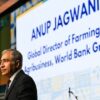
Connecting the Dots: Quality Seed, Resilient Food Systems and Good Health
It is often said that the quality of seed determines the quality of the produce and, consequently, the sustainability of the entire agricultural value chain, influencing everything from crop yields to nutritional value.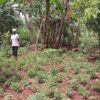
From Seed to Canopy: How a GEF-Funded Smallholder Project is Restoring the Environment, Building Livelihoods
As 52-year-old Alice Onyango walks through her farm in Siaya county, Kenya, you can tell she is proud of her trees, as some tower over her, providing her with shade, while others seem ready to provide her with fruit for the market.
Developing Countries Feel Squeeze from Lower Natural Resource Revenue & Falling Foreign Aid
Developing countries face major difficulties as income from natural resource extraction industries decreases and wealthier nations reduce their aid.
Brazil’s Indigenous Communities Receive $9M in GEF Funding to Protect Lands, Traditions Under Threat
On Brazil’s northeastern coast, the Indigenous community, Tremembé da Barra do Mundaú, lives on a preserved stretch of land shaped by mangroves, dunes, and deserted beaches. The group of around 160 families is led by women and depends on the 3,500-hectare territory for fishing and subsistence farming.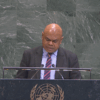
UN General Assembly Votes for Resolution on ICJ Advisory Ruling on Climate Obligations
Member states this week (May 20) deliberated over a draft resolution on states’ obligations in respect of climate change following the advisory opinion from the International Court of Justice (ICJ). The General Assembly agreed to take measures to uphold the ICJ’s advisory opinion for member states to meet their existing obligations to climate justice under international law and multilateral frameworks.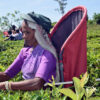
Tea’s Future Depends on Its Farmers
The tea in your cup this morning began its journey in someone else's hands. Hands whose work most of us never think about. Almost certainly, those hands belonged to a smallholder farmer tending a small plot of land, plucking leaves by hand beneath long mornings of mist and rain.
The Iran War Exposes the Fragility of Our Fuel-Dependent Food System
Sharp surges in energy, fertilizer, and food prices triggered by the ongoing conflict in the Persian Gulf strikingly illustrate the deep interconnections between geopolitical conflict, food insecurity, and the fragility of fossil fuel–dependent food systems.
The 3Ds for a Credible Post-2030 Development Agenda
Just four years of the Agenda 2030 for Sustainable Development remain. What comes after 2030 is already a political battleground.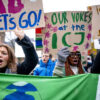
The UN Vote that Could Reshape Climate Justice
Normally, resolutions voted at the United Nations General Assembly do not make the headlines. As nonbinding and mostly symbolic, rich in principles yet empty and lacking the power to carry consequences, these statements are shrugged off and ignored.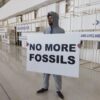
India: Climate Diplomacy Questioned After COP33 Hosting Withdrawal
India has withdrawn its bid to host the 2028 United Nations climate summit, a move that indicates a recalibration of its global climate engagement even as it projects itself as a leader in renewable energy and climate action.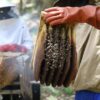
One of the Oldest Agricultural Innovations Needs New Actions
For thousands of years, humans have kept bees. Beekeeping is a key agricultural activity, yet its full potential remains largely unrealized. Beekeeping produces far more than honey and generates far more income than many have chosen to acknowledge.
‘Do More With Less’: GEF CEO Claude Gascon on Speed, Scale and Reform
As governments prepare for the Eighth Assembly of the Global Environment Facility (GEF) – scheduled to be held from May 30 to June 6 in Samarkand, Uzbekistan – the stakes are unusually high.
UN Weather Agency Warns of Escalating Climate Extremes Across Caribbean and Latin America
Faster-than-average sea level rise, intensifying hurricanes, extreme heat and worsening swings between drought and flooding are increasing pressure on Latin America and the Caribbean, according to a new report released Monday, May 18 by the World Meteorological Organization (WMO).
Stop the Madness: Civil Society Cannot Thrive on Burnout
In an era when civil society funding is in decline, it’s time to rebel against a broken system.
Africa’s Golden Future
It is very appropriate that this Africa Forward Summit is being held in Kenya. Two weeks ago, a Kenyan marathon runner, Sabastian Sawe, did what had been considered impossible: by running a marathon in under two hours! What we have set ourselves here is also a marathon—and we must show the same resilience and perseverance that Mr. Sawe did.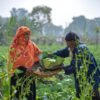
Building Resilient Food Systems in an Age of Disruption
The latest shock to global food systems, triggered by conflict in the Middle East and disruptions around the Strait of Hormuz, has once again exposed a fragile truth: the world’s food systems remain highly vulnerable to external shocks.
Field-Based Research Is a Lifeline for Zimbabwe’s Food Security
Agriculture sustains millions of people in Zimbabwe, serving as a vital source of both food and income. But climate-related pressures affecting land, crops, rainfall patterns, and increasing pest outbreaks are threatening smallholder farmers’ harvests, leaving them food insecure.
The GEF Leads Global Drive to Tackle Shipping Threat to Oceans
Under the warm waters off Tanzania’s Mafia Island, marine scientist Asha Mgeni hovers above a coral reef she has studied for years. Small fish dart through the currents. To most divers, the reef appears pristine. But Mgeni notices something unusual.
Norway’s Funding Cutoff Is a Wake-Up Call for the Plastics Treaty Negotiations
Norway’s reported decision to review and place on hold aspects of its funding to the United Nations Environment Programme (UNEP) should be understood as more than a budgetary matter. It is a political signal. It is also a warning that the global plastics treaty negotiations may now be approaching the point at which governments must decide whether the present UNEP process can still deliver the treaty they promised, or whether a different pathway is required.
Ambitious Great Green Wall Shows Slow, Steady Progress in Strengthening Landscapes, Improving Livelihoods
In 2021, Gadeja Shehu and about a hundred farmers in Garbadu village, Zamfara State in northwestern Nigeria, were invited by officials of the National Agency for the Great Green Wall to plant trees across a large stretch of land in their community.
Food Systems and Policies Undermining Food Security
Transnational agribusinesses increasingly shape food policies worldwide. Claiming to best address recent food security concerns, they seek to profit more from innovations in food production, processing, and distribution.« Previous Page — Next Page »


Through our global network of local writers, we are continuing our award-winning coverage of global and local environmental challenges, with a focus on the people for whom the ecosphere matters in a direct way: rural dwellers who have little means to protect themselves against adverse conditions; communities that need to switch to sustainable development in order to survive; poor women and children, who are the most vulnerable in natural disasters. Sponsored by the United Nations Environment Program (UNEP), the United Nations Development Program (UNDP) and The World Bank (WB), IPS also maintains the award-winning Tierramérica, a specialised information service on environment and development.

The Week with IPS

NEXT STOP - SDGs
Tracking global progress towards a sustainable world
Tracking global progress towards a sustainable world


