Languages
Wednesday, November 11, 2026



News and Views from the Global South
Water & Sanitation
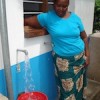
U.N. Water Conference Focuses on Cities
As a U.N. conference on water opens in South Africa today, the country's Council for Scientific and Industrial Research has repeated warnings that the country faces a water supply crisis. Experts attending the three-day conference will consider the challenges posed by growing demands, migration and water resources potentially limited by careless use and climate change.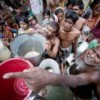
A Moment of Silence for Dying Millions on World Water Day
When the international community commemorates World Water Day next week, perhaps it should ponder the words of U.N. Secretary-General Ban Ki-moon, who once remarked he does not expect people the world over to stop what they are doing and observe a moment of silence, come Mar. 22.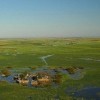
Zambezi Floods Displace Thousands in Namibia
Thousands of people and livestock in the Caprivi Strip have had to be evacuated as annual floodwaters rise in the Zambezi. However, loss of life has been kept to a minimum as informal warning systems prove to be effective.SOUTHERN AFRICA: Plumbing Grey Data for Clear Water
They come like pilgrims to the Department of Geological Surveys office in Lobatse, 120 kilometres south of the Botswanan capital. In the sparsely furnished offices there, they pore over charts, trying to take the guesswork out of choosing where to sink a borehole.WATER: Working Together on River Management
Postwar Angola is keen to expand irrigation for much-needed development, Namibia is prioritising clean drinking water and sanitation, while Botswana wants to preserve the integrity of the world-renowned Okavango Delta for tourism.
NAMIBIA: Water in the Kambashu
For Namibia's capital city, the goal of sustainable water and sanitation is a major challenge for the 21st century.
MALAWI: In Praise of Dry Sanitation
At its best it is waterless, odorless, eminently affordable and has a rich fertiliser as byproduct, yet for residents of Malawi's informal settlements, dry sanitation retains a whiff of the unwanted.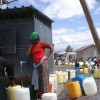
KENYA: Profiting From Better Sanitation
She contributed towards building toilets for her community; in return Teresia Wasuka is getting a home to call her own.
SOUTHERN AFRICA: Tri-Partite Agreement Presages Wider Zambezi Agreement
Mozambique, Zambia and Zimbabwe are poised to sign a memorandum of understanding to improve power generation along the length of the Zambezi River.Malawi Business Keen on Power From Mozambique
The feasibility study looking at connecting Malawi's electricity grid to Mozambique's Cahora-Bassa hydropower station was completed 15 years ago; a price for power was long ago agreed by the respective governments: but somehow the project is yet to go ahead.SOUTHERN AFRICA: Energy Pie Greater Than the Sum of its Parts
Two million compact fluorescent lamps will be distributed to households and industry in Malawi by June, in just one of several measures to bridge the gap between electricity supply and demand. Across Southern Africa, energy shortfalls threaten to choke development.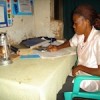
ENERGY-DR CONGO: Small Is Beautiful – And Electrifying
While discussion of hydroelectric power on the Congo River is dominated by the massive Grand Inga project and the dream of power for the entire continent, construction of a series of smaller dams to benefit local communities may produce tangible results much more quickly.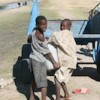
SOUTHERN AFRICA: Securing Safe Water for a Million More
Long years of armed conflict have obstructed development in the areas on either side of the Angola-Namibia border. Now a 45 million dollar infrastructure upgrade is set to improve access to clean drinking water and decent sanitation for one million people.SOUTHERN AFRICA: Together Against the Rising Water
A decade after heavy floods wrecked havoc in Southern Africa, the region is better prepared to monitor and respond to seasonal flooding. This is thanks as much to the growing strength of transboundary institutions as it is to technical improvements.ZIMBABWE: Filtering Fact From Fiction About D.I.Y. Water Treatment
The southern Zimbabwean city of Bulawayo has not been spared the heavy rains that have fallen across Southern Africa; the water is welcome in this semi-arid part of the country, but the coming of the rainy season has provoked fresh memories of the 2008 cholera epidemic.
SWAZILAND: Heavy Rains Welcome in the Mountain Kingdom
There's nothing quite like the enthusiasm that rises from the earth when rains come at last to a drought-stricken region. While heavy rains have caused extensive flooding across Southern Africa, with fears of worse to come, in at least one corner of the region the community is gazing with joy at an overflowing dam.
ZAMBIA: Unsolved Riddle of Sustaining Water Utilities
Sebastian Chilekwa’s job title at the Luapula Water and Sewerage Company is "Managing Director of Dilemma". Or it should be.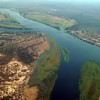
Floodwaters Rising Across Southern Africa
As South Africa declares a national disaster due to flooding, other countries in the region hold their breath while water levels continue to rise.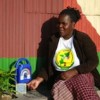
Mozambique Prepares for Worst Floods in 10 Years
Flood alert levels are on orange in parts of Mozambique as disaster management services mobilise to respond to flooding potentially as bad as the catastrophe in 2000.
Malawi Missing Its Local Government
An hour and fifteen minutes each day: Melina Kalunga has plenty of time to measure how long it takes to resolve a legal battle over Malawi's Electoral Commission.
DR CONGO: Promise of Potable Water for Kikwit
When the ground is broken for the Kakobola dam, engineers just might be able to hear the jubilation in the city of Kikwit, 200 kilometres away. The city's million residents are desperate to improve their water supply.« Previous Page — Next Page »





The Week with IPS

NEXT STOP - SDGs
Tracking global progress towards a sustainable world
Tracking global progress towards a sustainable world
