Languages
Sunday, November 8, 2026



News and Views from the Global South
Featured

Tuberculosis: A Disease of the Poor Begs For Rich Funding
The United Nations General Assembly is convening a high-level meeting on Tuberculosis (TB) to get a political commitment for increased funding for programmes and research to end an old disease that today kills more people than AIDS and COVID.
Water Harvesting Boosts Agriculture in Brazil’s Semiarid Northeast
"The rainwater tanks are the best invention in the world for us," said Maria de Lourdes Feitosa, 46, who recalls the deadly droughts of the past in Brazil's semiarid Northeast region.
Land Beneficiaries Lament Worsening Poverty in Resettled Areas
Located between two heavily-deforested mountains, Nakadanga Trust in Machinga District in southern Malawi looks lifeless. It is isolated away from all other original communities. Here, the houses are made of mud bricks and they are grass thatched. There is no source of potable water in the area. There is no school nearby, no health centre and no shops for groceries.[related_articles]
Gender-Based Violence: Why Victims Do Not Leave
In almost every conversation I’ve had about gender-based violence (GBV), the question “why don’t they leave?” inevitably comes up. After many years of working in this space, I have learned that the answer is not as simple as we think. The nature of GBV is quite complex. Numerous layers and factors affect individuals both internally and externally.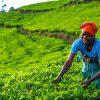
African Women Seek to Boost Innovation and Creativity in Agribusiness
Adeline Umukunzi, a 28-year-old woman mushroom farmer in Musanze, a district located about 100 km north of the capital Kigali, said women have often been the unseen faces of agribusiness in Rwanda. "Women have always played a vital role in agriculture, but behind the scenes. We are starting to see more and more female faces in agribusiness," she told IPS.
Questions Arise About Youth Commitment to Democracy After Nigerian Elections
As Nigeria’s newly-elected president Bola Tinabu seems to be making his mark by undoing many of his predecessor’s policies - another battle is being waged in the courts between him and one of his rivals Peter Gregory Obi.
Inequitable Distribution of COVID Vaccines Tied to Power and Money
 The reasons that led to inequitable distribution of COVID vaccines during the pandemic have been inherent in the global pharmaceutical supply chain for decades and contributed to serious adverse consequences for global south countries, as was evident with HIV and Ebola. Further, those issues will likely contribute to inequities with regard to vital medicines in the future. This story by IPS Correspondent and IWMF Fellow Jewel Fraser highlights that the inequity issue is definitely not due just to the pandemic but an ongoing one.

Women’s Savings in Zimbabwe Struggle Under Weight of Unstable Currency
For years, self-employed and unemployed women in Zimbabwe formed neighbourhood "clubs" where they pooled money together for everything from buying bulk groceries to be shared at the end of the year to meeting funeral expenses.
The Common Good, or Transactional Religion?
For the last 30 odd years, I have maintained that religions matter. I noted the reasons for why they matter, and always listed how they matter ---as social service providers, as first responders in humanitarian crisis; as mediators in tensions and conflicts, as upholders of common good and the values of humanity; as protectors of children and of the most vulnerable; and even as political actors.
The USA’s Systemic Racism includes Its Wars
A recent Justice Department report concluded that “systemic” racial bias in the Minneapolis Police Department “made what happened to George Floyd possible.”
Rohingya Camps Become Dengue Hotspots in Bangladesh
With the monsoon in Bangladesh, Rohingya refugee camps in Cox's Bazar have emerged as a dengue hotspot, with the mosquito-borne disease continuing to spread among the stateless refugees. "A total of 1,066 dengue cases were reported in highly cramped refugee camps in Cox's Bazar up to May 23 this year, while the case tally was only 426 among the local community there," Dr Nazmul Islam, Director of Disease Control and Line of the Directorate General of Health Services (DGHS), said.
Out-Trumping the Trump
It’s been seven months since Florida Governor Ron DeSantis celebrated a brilliant re-election victory in the midst of an otherwise mixed Republican midterm performance. He had come in with nearly 20 per cent more votes than Democrat Charlie Crist.
Women Suffer Harassment and Discrimination on Chile’s Public Transport
Sexual harassment and discrimination are daily realities for women on public transport in Chile and also an obstacle for plans to expand mass transit in order to reduce pollution in several cities in this South American country.
When the President of the General Assembly Was Given a Seat at a Summit— a Back Row Seat
When the United Nations commemorated ‘International Day of Women in Diplomacy’ last week, the President of the General Assembly (PGA) Csaba Kőrösi rightly pointed out the woeful absence of women to hold that position in the UN hierarchy. “Women have played a central role in the history of the United Nations ever since the signing of the UN Charter,” he said, “but out of the 78 people elected to my role, President of the General Assembly, only four have been women.”
South Sudan President, Education Cannot Wait Jointly Announce Extended Multi-Year Education Response for Crises-Impacted Sudanese Children
South Sudan is experiencing one of the most severe crises in the world today, causing fragility, instability, and economic stagnation. While a peace agreement was reached in 2018, sporadic intercommunal violence and climate-induced disasters continue to spur displacement. More than 2.2 million people are internally displaced. Another 2.3 million have fled to neighboring countries as refugees.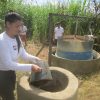
Biodigesters Boost Family Farming in Brazil
"The biodigester really gives a huge boost to those who have the courage to do things," said Maria das Dores Alves da Silva, based on her own experience as a 63-year-old small farmer.
Medical Abortion Expands Women’s Rights in Argentina
Viviana Mazur is a doctor at the Santojanni Hospital in Mataderos, a working-class neighborhood in Buenos Aires. She has witnessed the advances in women's rights in Argentina, where until 2020 abortion was only allowed on two grounds, while it is now available on demand up to 14 weeks of pregnancy.
Ukraine: Environmental Crisis Compounds Humanitarian Disaster Following Dam Destruction
As well as creating a humanitarian crisis, the destruction of the Nova Kakhovka dam in Ukraine has wrought enormous environmental damage which may never be undone, ecologists have said. The collapse of the dam in the Kherson region on June 6 put more than 40,000 people in immediate danger from flooding and left hundreds of thousands without access to drinking water, according to Ukrainian officials.
Myanmar: Military Junta Gets a Free Pass
The violence keeps coming in Myanmar, under military rule since February 2021. The junta stands accused of war crimes and crimes against humanity, with evidence of systematic use of killings, rape, torture and other gross human rights violations in its attempt to suppress forces demanding a return to democracy.
If Governments Have the Tools to Stop Fishing-Related Deaths, Why Aren’t They Being Used?
Long before Hollywood highlighted the dangers of commercial fishing in The Perfect Storm, Deadliest Catch and other programming, governments around the world knew that this was one of the most hazardous jobs, killing thousands of fishers every year.
Global Community Celebrates Medical Innovations and Milestones Since Defining Leprosy Discovery 150 Years Ago
The 1873 discovery of Mycobacterium leprae, the causative agent of leprosy by Norwegian doctor Gerhard Armauer Hansen, remains one of the greatest paradigm shifts in medical history, a true revolution.« Previous Page — Next Page »





The Week with IPS

NEXT STOP - SDGs
Tracking global progress towards a sustainable world
Tracking global progress towards a sustainable world
