Languages
Sunday, November 8, 2026



News and Views from the Global South
Featured

Indian Christians Seek Equal Rights for Dalit Converts
Renuka Kumari is a 45-year-old Christian woman from the Dalit community in India's northern state of Uttar Pradesh. She faces numerous challenges every day and hopes for a day when her struggles will end and she can lead a comfortable life.
Are Countries Ready for AI? How they can Ensure Ethical & Responsible Adoption
From ChatGPT to deepfakes, the topic of artificial intelligence (AI) has recently been making headlines. But beyond the buzz, there are real benefits it holds for advancing development priorities.
State-Sponsored Killings Rise to Record Highs
When the Taliban captured power back in 1996, one of its first political acts was to hang the ousted Afghan President Mohammed Najibullah in Ariana Square Kabul. Fast forward to 15 August 2021, when the Taliban, in its second coming, assumed power ousting the US-supported government of Ashraf Ghani, a former official of the World Bank, armed with a doctorate in anthropology from one of the most prestigious Ivy League educational institutions: Columbia University.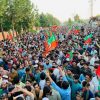
What does Imran Khan’s Arrest, Protests Mean for Pakistan?
The arrest of former Prime Minister Imran Khan on alleged corruption charges has led to the deterioration of law and order with attacks on army offices for the first time since the country came into being in 1947.
The New Development Bank in the Asian 21st Century: A Golden Opportunity for the Global South
Asia is the fastest growing and most dynamic region of the world according to a recent IMF Report; “Recovery Unabated Amid Uncertainty”. 1 Asia and the Pacific will contribute around 70 percent of global growth this year as expansion accelerates after Covid-19 supply chain disruptions, with ongoing geopolitical turmoil and war in Europe, as well as, various hybrid over the horizon cyber and kinetic attacks targeting Indian Ocean ports and shipping.
Violence Knows No Borders
Events in Sudan have been a constant topic of conversation in Cairo's coffee houses since the violence erupted there four weeks ago. The images of almost 30 Egyptian soldiers briefly detained in Sudan by Rapid Support Forces (RSF) militias and the death of an Egyptian diplomat in Khartoum caused a stir in Egypt.
USAID Offers Protection to Journalists & NGOs Facing Defamation Lawsuits
The world’s news media -- both under authoritarian regimes and democratic governments-- continue to come under relentless attacks and political harassment.
Finding Ways to Feed South Africa’s Vast Hungry Population
In the deep rural village of Jekezi in South Africa's Eastern Cape, most young and able-bodied people have fled the area, leaving behind people with disabilities, the elderly, and children.
Amid Power Cuts in Zimbabwe, Food Preservation Made Easy by Grannies
Amid silent refrigerators spawned by crippling electricity cuts, township grannies are relying on their smarts and traditional preservation: roasting and smoking meat over fires as they attempt not to throw away food.
Parliamentarians Ask G7 Hiroshima Summit to Support Human Security and Vulnerable Communities
Parliamentarians from more than 30 countries agreed to send a strong message to the G7 Hiroshima Summit in Japan later this year, focusing on human security and support of vulnerable communities, including women, girls, youth, aging people, migrants, and indigenous people, among others.
Climate Change Threatens Kenya’s Historical Sites in Coastal Region
Along coastal Kenya, historical sites and monuments are threatened due to the impacts of climate change—structures along the Indian Ocean are falling to ruin or collapsing into the ocean because of high tides.
New Mosquito Species Could Derail Fight Against Malaria
‘Urban’ Kenya has been alerted because new mosquito species, Anopheles stephensi, threatens to derail decades of effort made in the fight against malaria.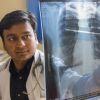
Can a Pledge to End TB Stick This Time Around?
This week, the United Nations will host two days (May 8-9) of preliminary talks to plan a larger conference on tuberculosis (TB) in September. These preliminary talks will be held in New York City, the epicenter of the last significant surge of TB cases in the United States (U.S.) thirty years ago.
Theatre Used to Dispel Polio Immunisation Myths in Pakistan
Pakistan, one of two polio-endemic countries in the world, has started staging theatrical dramas to promote immunisation in an attempt to encourage parents who refuse to allow their children to be vaccinated.
Uzbekistan: A President for Life?
Where will you be in 2040? For Uzbekistan’s President Shavkat Mirziyoyev, the answer is: in the Kuksaroy Presidential Palace. That’s the chief consequence of the referendum held in the Central Asian country on 30 April. With dissent tightly controlled in conditions of closed civic space, there was no prospect of genuine debate, a campaign against, or a no vote.
Women’s Cooperatives Work to Sustain the Social Fabric in Argentina
Nearby is an agroecological garden and a plant nursery, further on there are pens for raising pigs and chickens, and close by, in an old one-story house with a tiled roof, twelve women sew pants and blouses. All of this is happening in a portion of a public park near Buenos Aires, where popular cooperatives are fighting the impact of Argentina's long-drawn-out socioeconomic crisis.
In Sudanese Conflict, Either You Lose Everything, or You Die
On the first day of the Muslim holiday of Eid al-Fitr, Saber Nasr, a young Egyptian man of 20, developed a fever.
The Workweek Is Still Long in Latin America
The reduction in the workweek recently approved by the Chilean Congress forms part of a trend of working fewer hours and days that is spreading in today’s modern economies, but also highlights how far behind other countries in Latin America are in this regard.
An Afghan Appeal to UN Leadership
We are a group of Afghans living in the country and working across sectors including peace, civil society, humanitarian aid, human rights, media, and the private sector, and are working to promote dialogue and seek long-term solutions for our country.
A Letter from Kabul
I am writing from Kabul where I have been living for this past 11 months. I consider myself a friend of Afghanistan, a country full of contrasts that I know since 1986; I have lived here for a little over 12 years.
Drone Journalism Holds Great Potential to Improve Safety of Journalists in Africa’s Volatile Situations
In a departure from the past, where journalists in Kenya have freely covered anti-government protests unharmed, a series of events that unfolded in March 2023 have heightened fears of the re-emergence of brutal physical attacks on journalists. According to the Media Council of Kenya, in a span of two weeks, more than 25 journalists were harassed, arrested and held in police cells, physically attacked, expensive equipment destroyed and footage deleted during the opposition-led demonstrations.« Previous Page — Next Page »





The Week with IPS

NEXT STOP - SDGs
Tracking global progress towards a sustainable world
Tracking global progress towards a sustainable world
