Languages
Wednesday, October 7, 2026



News and Views from the Global South
Featured

In the Heart of the Amazon: COP 30 and the Fate of the Planet
My recent visit to Brazil coincided partly with the Conference of the Parties (COP) 30, the 30th United Nations Climate Conference in Belém. Although I did not attend COP 30, I was very fortunate to visit the Amazon.
Displaced Farmers in Southern Lebanon Still Denied Access to Land
Food security and livelihoods in southern Lebanon are under severe threat as the repercussions of Israeli bombing continue to be felt across the region, a report released today (NOV 10) has warned.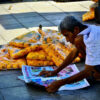
United in Diversity: the Asia-Pacific Region’s Path to Inclusive Social Development
The Second World Summit for Social Development, held in Qatar earlier this month, marked an important moment for global efforts to advance inclusive, equitable and sustainable development. Throughout the Summit, contributions from the Asia-Pacific region demonstrated that diversity is not a barrier but a strength in crafting people-centred solutions.
Turning Indigenous Territories From ‘Sacrifice’ Zones to Thriving Forest Ecosystems
A report by the Global Alliance of Territorial Communities (GATC) and Earth Insight paints a stark picture of how extractive industries, deforestation, and climate change are converging to endanger the world’s last intact tropical forests and the Indigenous Peoples who protect them.
Mayor Mamdani for New York, for Multicultural Dignity
The New York City mayoral elections captured the world’s attention with an excitement normally reserved for the United States presidential elections. It all culminated on Tuesday night with Zohran Mamdani’s decisive victory, signaling that hope was emerging after a period of anxiety and uncertainty for the United States. Zohran Mamdani will represent and govern New York City, one of the world’s wealthiest and most high-profile cities.
Brazil’s Biofuels Push Undermines Environmental Integrity at COP30
President Prabowo Subianto welcomed his counterpart Luiz Inacio Lula da Silva of Brazil to Jakarta recently to strengthen ties between the fast-growing economies.
US Skips High-Level Presence at COP30 Climate Summit
“Has the world given up fighting climate change?” was a rhetorical question posed recently by the New York Times, perhaps with a degree of sarcasm. It might look that way, says Christiana Figueres, a founding partner of the nongovernmental organization Global Optimism, “as US president Donald Trump blusters about fossil fuel, Bill Gates prioritizes children’s health over climate protection, and oil and gas companies plan decades of higher production.”
What’s Now Needed is Political Courage, Says UN SG Guterres at COP30
Political courage is the biggest obstacle to limiting the rise in global average temperature to no more than 1.5°C, said UN Secretary-General António Guterres.
Nuclear Disarmament Conversations Cannot Lose Traction
In recent days, nuclear state leaders have flouted the regulations and norms around nuclear non-proliferation and are flirting more openly with nuclear might in the name of projecting strength.
Global Emissions Falling Too Slowly, Expert Urges Renewables Push, Fair Finance
A decade has passed since the adoption of the Paris Agreement, and a United Nations synthesis report released ahead of COP30 in Belém shows that "Parties are bending their combined emission curve further downwards, but still not quickly enough."
The World’s Forests Cannot Wait: Why COP30 Must Center Indigenous Peoples’ and Local Communities’ Leadership
As world leaders prepare to gather in Brazil for COP30 next week, they will convene in the heart of the Amazon -- a fitting location for what must become a turning point in how the world addresses the intertwined crises of climate change and biodiversity loss.
Power-Sharing —Boomers and Gen Z Face Off at the ICSW
The message is clear: today’s youth are not “wishy-washy.” They are not just the future—they are the present, full partners in shaping it, and “power-sharing” is the new mantra. The veterans of activism are being reminded not merely to listen but to hear and to leave their egos at the door.
Deliver Emission Cuts, or Risk Locking the World Into ‘Catastrophic Warming’
The world is falling dangerously short of meeting the Paris Agreement goals, with global greenhouse gas emissions rising to record levels and current national pledges still far off the mark, the United Nations Environment Programme (UNEP) said in its Emissions Gap Report 2025: Off Target.
Tanzania’s Post-Election Turmoil Deepens Economic and Social Woes
At dawn in Manzese, a dusty township on the outskirts of Dar es Salaam, silence hangs where the sounds of commerce once roared. The township, usually crowded with street cooks, vegetable vendors, mechanics, and motorcycle taxis snaking through the morning rush, stood eerily empty. Shutters are pulled down, wooden stalls abandoned, and the air is heavy with the smell of burnt rubber. For five days, the township’s bustling economic life has been paralyzed—leaving residents unable to buy food or access basic services.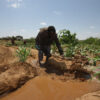
COP30: New Faces, Old Issues: What Must Change if Global Climate Talks Are to Deliver Justice for Africa
Three decades after the first Climate COP, the multilateral climate process – which was intended to serve as an instrument of justice and a guardian of the planet’s atmosphere – has fallen far short of its goals.
COP30: The Real Solution to Climate Change Could be Through International Law
At COP15, the developing countries were calling for the temperature to not rise above 1.5 degrees and they ignored the Copenhagen Accord which agreed to 2.0 degrees
Rajagopal PV’s Blueprint for Another World: Peace
"If nations can have defense ministries, why not peace ministries?" asks Rajagopal PV, the soft-spoken yet formidable founder of Ekta Parishad. "We are told to see issues through a gender lens—why not a peace lens? Why can’t we imagine a business model rooted in non-violence or an education system that teaches peace?”
As COP30 Nears, We Need All Effective Climate Solutions
A new global study has challenged a key assumption in climate planning: that the planet’s geological “carbon vault” is vast enough to hold all the carbon dioxide (CO₂) we might one day choose to bury underground after we remove it from the atmosphere. It isn’t.
Lawmakers Urged to Consider Emerging Drivers of Child Marriage
Closing the chapter on child marriages is still a distant ambition in the Southern African Development Community (SADC) region, and despite great strides at developing and passing legislation to eradicate it, existing and emerging drivers are still at play, making youngsters vulnerable to the practice.
Financing Tropical Forests now is a COP30 Solution that’s Already Working
As the world prepares for COP30 in Belém, all eyes are on Brazil’s proposed Tropical Forests Forever Facility (TFFF)—a bold plan to reward countries for keeping forests standing. It represents a vital part of the long-term vision we need for global forest protection.
Humor, Courage, and Coffee: Inside Asia’s Independent Media Resistance
In Pakistan, journalism is a risky profession—and the danger only intensifies if you’re a woman, young, and a freelancer, says 30-year-old Saba Chaudhry, a journalist from a village near Narowal, in Punjab province.« Previous Page — Next Page »





The Week with IPS

NEXT STOP - SDGs
Tracking global progress towards a sustainable world
Tracking global progress towards a sustainable world
