Languages
Thursday, November 5, 2026



News and Views from the Global South
Featured
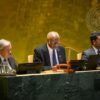
Does the UN Overstep Its Responsibility to Protect Mandate?
The UN has been criticized by some member states for overstepping the mandate of its Responsibility to Protect (R2P) doctrine during a debate in the General Assembly.
African Fish Workers Excluded From International Trade Deals: Report
A new report has raised concerns about the exclusion of African fish workers from trade protocols between their governments and developed countries, resulting in impoverished communities relying on fishing.
Post-Earthquake Myanmar Faces ‘Immense’ Suffering, Cannot Be Forgotten
“Myanmar cannot become a forgotten crisis,” Jorge Moreira da Silva, Executive Director of the United Nations Office for Project Services (UNOPS), has said. “This country has faced cyclones, war, conflict, violence, climate and now immense suffering.”
Democracy under Attack: Why the World Needs a New UN Special Rapporteur
When tanks rolled through Myanmar’s streets in 2021, civil society groups worldwide sounded the alarm. When Viktor Orbán systematically dismantled Hungary’s free press, democracy activists demanded international action. And as authoritarianism returns to Tanzania ahead of elections, it’s once again civil society calling for democratic freedoms to be respected.
Multi-Year Drought Gives Birth to Extremist Violence, Girls Most Vulnerable
While droughts creep in stealthily, their impacts are often more devastating and far-reaching than any other disaster. Inter-community conflict, extremist violence, and violence and injustice against vulnerable girls and women happen at the intersection of climate-induced droughts and drought-impoverished communities.
From Parliaments to the G20: A Call to Champion Women’s Sexual & Reproductive Health & Rights
About 21 million adolescent girls get pregnant annually in low- and middle-income countries. Beyond the numbers lie lost futures and deepening cycles of poverty that undermine girls’ education, wellbeing, and, ultimately, national development.
Science Is Useless if No One Understands It
Despite delivering life-saving medicines, more nutritious crops, and transformative technologies like artificial intelligence (AI), science remains widely misunderstood, polarizing, and underappreciated. Much of this, experts say, comes down to one persistent issue: poor communication.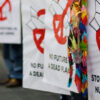
US Mayors Renew Call for US to Lead World–Back from Nuclear Brink
July 16, 2025, will mark the 80th anniversary of “Trinity,” the first nuclear test detonation, at Alamagordo, New Mexico, and August 6 and 9 will mark the 80th anniversaries of the United States atomic bombings of Hiroshima and Nagasaki. Rather than commemorating those somber anniversaries as a grim reminder of the past, this year they serve as a foreboding warning of what may be to come.
As FfD4 Kicks Off in Spain, Global Cooperation Still Matters
As the Fourth International Conference on Financing for Development (FfD4) kicks off in Sevilla, Spain, the stakes couldn’t be higher.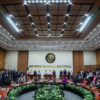
Mexico’s Judicial Elections: A Democratic Mirage
On 1 June, Mexico made history by becoming the only country in the world to elect all its judges by popular vote, from local magistrates to Supreme Court justices. This unprecedented process saw Mexican voters choose candidates for 881 federal judicial positions, including all nine Supreme Court justices, plus thousands at local levels across 19 states. Yet what the government heralded as a transformation that made Mexico the ‘the most democratic country in the world’ may turn out to be a dangerous deception.
The Young Nigerian Innovator Lighting Up Communities With Recycled Solar Innovation
When Stanley Anigbogu heard his name announced as the 2025 Commonwealth Young Person of the Year in London earlier in March, he could hardly believe it. He had not expected to win, especially among a pool of brilliant nominees from across the globe.
‘Enabling Machines to Make Life and Death Decisions Is Morally Unjustifiable’
CIVICUS discusses autonomous weapons systems and the campaign for regulation with Nicole van Rooijen, Executive Director of Stop Killer Robots, a global civil society coalition of over 270 organisations that campaigns for a new international treaty on autonomous weapons systems.

A Crisis-Stricken UN’s Frantic Hunt for Low-Cost Locations—away from New York & Geneva
In the US, the success of a business enterprise or the value of real estate is reflected in a repetitive and alliterative phrase: “LOCATION, LOCATION, LOCATION”. As the UN continues its plans for system-wide restructuring-- amidst a growing liquidity crisis-- one of the key issues on the negotiating table is the re-location of UN agencies: a choice between high-cost and low-cost duty stations.
What the Ceasefire Between Israel and Iran Means for Israel-Palestine Conflict
The Trump administration announced on June 23 that a ceasefire agreement between Israel and Iran had been reached following 10 days of conflict between the two nations and the United States’ bombardment of three nuclear sites in Iran. The establishment of the ceasefire will return focus back to the conflict between Israel and Palestine and the ongoing humanitarian crisis.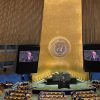
A Growing Gap between Principle and Implementation: 20 Years of Responsibility to Protect
United Nations member states this week reiterated their commitment to the prevention of genocide, war crimes, ethnic cleansing and crimes against humanity—at a time when world powers are failing to meet these obligations.
Increased Demand for Cobalt Fuels Ongoing Humanitarian Crisis in the Democratic Republic of the Congo
The demand for cobalt and other minerals is fueling a decades-long humanitarian crisis in the Democratic Republic of the Congo (DRC). In pursuit of money to support their families, Congolese laborers face abuse and life-threatening conditions working in unregulated mines.
Lawmakers in Maldives Pledge to Support Women Leaders
A meeting of parliamentarians in Malé, the Maldives, pledged to provide an enabling environment for emerging women leaders by supporting them and promoting a political culture rooted in mutual respect, inclusivity, and equal opportunity.
Rising Temperatures, Rising Inequalities: How a New Insurance Protects India’s Poorest Women
As Deviben Dhaundhaliya, 45, a streetside seller of artificial jewelry, waits for her husband Devabhai to arrive and help her shift their iron-frame mobile ‘shop’ to the Bhadra Fort open-air marketplace in Ahmedabad city, she tells of how “as heat increased, my wares started melting under the direct exposure to the sun, or they got discolored.”
Poland’s Democratic Deadlock
Poland’s embattled Prime Minister Donald Tusk emerged bruised but still standing after his government survived a parliamentary vote of confidence on 11 June. He’d called the vote, which he won by 243 to 210, just days after the presidential candidate of his Civic Platform (PO) party suffered an unexpected defeat.
Now is the Time to Remake International Financing
Leaders heading to the 4th International Conference on Financing for Development taking place in Sevilla, Spain, from 30th June to 3rd July, know full well that they are operating in a moment of crisis.
How Many Developing Countries Are Forging Paths to Climate Accountability at SB62
A packed conference room buzzing with the energy of over 300 national experts, negotiators, and implementers discussed their submissions of the First Biennial Transparency Reports (BTRs) during the 62nd session of the Subsidiary Body for Implementation (SB62) negotiations taking place in Bonn, Germany.« Previous Page — Next Page »





The Week with IPS

NEXT STOP - SDGs
Tracking global progress towards a sustainable world
Tracking global progress towards a sustainable world
