Languages
Saturday, November 7, 2026



News and Views from the Global South
Featured
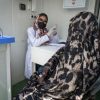
Society’s Self-Sabotage: How Discrimination Cripples Nations
One look at the headlines recently and anyone would know that cuts to foreign aid are jeopardizing hard-won progress on a range of issues. AIDS is one of them.
Siddis of India—a Unique Community Moves Into the Mainstream With Tourist Venture
The Siddi community, descendants of slaves from Africa, is now becoming more involved with mainstream enterprises, including a forest homestay venture—which is changing their fortunes after years of discrimination on the Indian subcontinent where they were originally enslaved.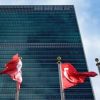
A Cash Crisis Forces UN to Re-Figure its Budget and Freeze Staff Hiring
Faced with an impending cash crisis primarily due to non-payment of dues by the US and over 100 other member states-- along with threats of a US withdrawal from the world body-- there were widespread rumors the United Nations was re-costing and reducing its approved budget for 2025 while deciding to freeze hiring new staffers.
International Women’s Day, 2025
Rule Breakers: The Compelling True Story of Afghan Girls Who Risked All to Learn
Like the Afghan robotics team, Education Cannot Wait (ECW), the global fund for education in emergencies and protracted crises in the United Nations, is breaking the 'rules' and continuing to educate young women in that country despite an edict from the Taliban denying girls a secondary school education.

Developing a Thriving e-vehicles Value Chain in Africa
African countries should join hands to make the most of their own resources and build a formidable electric vehicle ecosystem that could help fast-track realisation of SDGs.
International Women’s Day, 2025
UN: Women’s Rights Face ‘Unprecedented’ Pushbacks
Girls and women worldwide are facing growing threats to their security and rights, from threats to their education access to severe poverty and multiple forms of violence. In 2024, nearly one in four governments worldwide reported a backlash to women’s rights, as a new report from UN Women reveals. 
International Women’s Day, 2025
The Quest for a Female UN Secretary-General: Assessing the Probability
The United Nations has chosen “For ALL Women and Girls: Rights. Equality. Empowerment.” as the theme for International Women’s Day on March 8, 2025. This theme emphasizes the importance of equal rights, power, and opportunities for all women and girls, urging action to create a feminist future where no one is left behind.
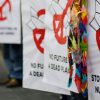
Nuclear Weapons, Far from Diminishing, Keep Rising
The United Nations, whose primary mandate is to maintain international peace and security, has been one of the longstanding leaders in the global campaign for a world without nuclear weapons. But the progress has been relatively slow – despite the growing number of anti-nuclear treaties. Perhaps the only consolation is the absence of a nuclear attack or a nuclear war in over 80 years.
International Women’s Day, 2025
In Zanzibar, Women Turn the Tide with Sponge Farming
In the early morning, as the tide pulls away, Zulfa Abdallah ties her scarf tightly around her head. She adjusts her goggles, places a snorkel across her forehead, and wades into the chest-deep waters off Jambiani village in Zanzibar. The Indian Ocean is her livelihood now, its waves offering a lifeline to women like her who confront challenges of poverty and climate change. 
International Women’s Day, 2025
It’s time for a Feminist Woman Secretary General at the UN
In 2025, the United Nations will celebrate 80 years of shaping global policies, fostering peace, and driving international development. Yet, in those eight decades, not a single woman has held the position of Secretary-General.

Anti-LGBTQI Legislation in Europe Curbs Speech Freedom, Democracy—Report
LGBTQI communities across Europe and Central Asia are being ‘weaponized’ by governments as part of a wider attack on fundamental human rights and freedoms, rights activists have warned.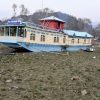
Not Seen in Living Memory: Kashmir’s Rivers Run Dry, Snow Disappears, and Hope Dissipates
The picturesque Kashmir Valley is battling nature’s fury. This time of year, its majestic mountains would typically be capped with thick snow, and its emerald streams would gush with fresh waters. However, none of these scenes are visible this year.
International Women’s Day, 2025
New Report Finds Sexist Laws Persist Worldwide
A new global report analyzing sex discrimination in laws reveals that while some commendable gains have been achieved in strengthening legal protections for women and girls over the past five years, progress remains slow, uneven, and increasingly under threat from a growing backlash against women’s rights.
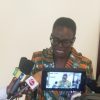
Tanzanian Speaker Calls for Urgent Investment in Youth to Harness Demographic Dividend
Speaker of the Tanzanian Parliament and President of the Inter-Parliamentary Union (IPU), Tulia Akson, has called for bold and immediate investments in young people to unlock the demographic dividend and accelerate sustainable development across Africa and Asia.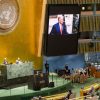
Is the UN Facing its Biggest Single Crisis in 80 Years?
The United Nations, in its nearly 80-year-old history, is on the verge of fighting for its survival, as the Trump administration continues with its threats to drastically cut funding and pull out of several UN agencies which provide mostly humanitarian assistance worldwide. Elon Musk, the tech billionaire, who acts as a virtual Prime Minister to President Trump, has called on the U.S. to exit the North Atlantic Treaty Organization (NATO) and the United Nations.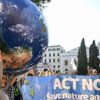
COP 16 Conference made Key Steps Towards a More Just Transition for Indigenous Peoples & Peasant Communities
With global temperatures continuing to break records and every global indicator of the health of the natural world showing decline, the need to quickly move away from fossil fuels and environmentally destructive practices has never been more apparent. But as has often been pointed out, how this ‘green transition’ is achieved matters.
COP16 Agrees to Raise Funds to Protect Biodiversity
The second round of the UN Biodiversity Conference, COP16, concluded in the early hours of Friday, February 28 in Rome, with an agreement to raise the funds needed to protect biodiversity.
Looming Tariffs Threaten Food Supplies
Who bears the brunt in trade wars? The answer is absolutely everyone. Not just the countries enacting or retaliating with tariffs and export bans, and not just the citizens of those countries. It’s everyone.
African Leaders Challenged To Unite Against Energy Transition Mineral Oppressors
Renewable energy and climate change activists have challenged African heads of state to take a united stance to safeguard essential mineral resources, particularly in the Democratic Republic of the Congo (DRC) and other parts of the continent, which are selfishly exploited by foreign miners with disregard for poverty-stricken local communities.
20 Years of the WHO FCTC: It’s Time to Make Big Tobacco Pay
The world took a historic step in the fight against tobacco when the World Health Organization Framework Convention on Tobacco Control (WHO FCTC) came into force—the first legally binding global health treaty of its kind.
Life-Changing Quarry Mining Shatters Lives in Zimbabwe
On Christmas Day in 2022, 27-year-old Thabani Dlodlo’s eight-year-old son drowned in a flooded pit dug up by quarry miners in the vicinity of Pumula North, a high-density suburb in Bulawayo, Zimbabwe’s second-largest city. As if that was not enough, just a week after New Year’s Day the following year, Dlodlo’s neighbor, 36-year-old Sethule Hlengiwe, also lost her six-year-old daughter after she drowned in another pit flooded with rainwater near her home in Bulawayo.« Previous Page — Next Page »





The Week with IPS

NEXT STOP - SDGs
Tracking global progress towards a sustainable world
Tracking global progress towards a sustainable world
