Languages
Sunday, November 8, 2026



News and Views from the Global South
Featured

COP 29: High Stakes for Small Islands Fighting for Climate Finance
Small Island Developing States (SIDS) are experiencing the most severe impacts of climate change. When leaders of those islands met in Antigua and Barbuda in May, they let the world know that achieving climate justice hinges on comprehensive climate finance.
Will the UN’s Pact of The Future Modernize the World’s Outdated Multilateral Systems?
While most world leaders who attended the United Nations inaugural Summit of the Future—a two-day high-level event at UN headquarters in New York meant to address the most pressing global challenges of the 21st century—agree that the world's aging multilateral system needs modernizing, not all agree on how to get there.
Georgia’s Dangerous Anti-LGBTQI+ Law
Georgia’s ruling party has put LGBTQI+ people firmly in the firing line ahead of next month’s election. On 17 September, parliament gave final approval to a highly discriminatory law that empowers the authorities to censor books and films with LGBTQI+ content, stop discussion of LGBTQI+ issues in schools, ban people from flying rainbow flags and prevent Pride events. The law excludes LGBTQI+ people from adopting children, bans gender affirmation surgery and refuses to recognise same-sex marriages of Georgians conducted abroad.
TikTok and WHO Join Efforts to Combat Misinformation
Today’s digital age is centered around TikTok, the short-form social media platform that hosts around 1 billion global users. Sensationalized or reductive videos often get the most engagement with young audiences, leading to the spread of misinformation on a global level.
It’s Time for Rich Polluters to Pay for the Climate Crisis They Created
The world is standing at a critical juncture. Climate change is not just a future threat—it’s here, and it’s already devastating lives. From record-breaking heat waves to floods and landslides, the planet is sending us clear signals that we cannot afford to ignore.
Bangladesh’s Chief Advisor Addresses UNGA Calling for International Cooperation, Freedom and Rights
In his first major address at the United Nations, the Chief Advisor of Bangladesh’s interim government, Dr. Muhammad Yunus, appealed to the international community to engage with a ‘new Bangladesh’ in the shared efforts to cooperate on global issues. Yunus arrived earlier in the week to attend the 79th United Nations General Assembly (UNGA) in New York. In the four days he was here, Yunus held meetings with a range of world leaders, notably UN Secretary-General António Guterres and US President Joe Biden. This would indicate there is good support for him and what he represents. On Friday, Yunus addressed the General Assembly, speaking in his native language, Bangla.
Inequality in Access to Abortion Rights in Latin America
The struggle for women's right to decide in Latin America and the Caribbean, for their access to legal, safe and free abortion continues in the region, with some countries fully criminalising it, others with severe regulations, and a few guaranteeing better conditions, while threats of regression persist.
Activists Call on World to ‘Imagine’ Peace, End Nuclear Arms
In any discussion of world peace and the future of humanity, the issue of nuclear arms must be addressed, and now. That was the message from a range of delegates at the “Imaginer la Paix / Imagine Peace” conference, held in Paris September 22 to 24, and organized by the Sant’Egidio Community, a Christian organization founded in Rome in 1968 and now based in 70 countries.
Easing Africa’s Debt Burdens: a Fresh Approach, Based on an Old Idea
The statistics are stark: 54 governments, of which 25 are African, are spending at least 10% of their revenues on servicing their debts; 48 countries, home to 3.3 billion people, are spending more on debt service than on health or education.
‘We Need Competitive Elections so Only Truly Committed States Are Elected to the UN Human Rights Council’
CIVICUS discusses the upcoming election of new members of the United Nations (UN) Human Rights Council with Madeleine Sinclair, New York Office Director and Legal Counsel at the International Service for Human Rights (ISHR).
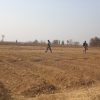
Rising Temperatures Devastate Agricultural Eden of India’s Kashmir Region
Abdul Hameed Sheikh sowed his crop, working tirelessly for days in his paddy field. The 52-year-old farmer, from central Kashmir’s Budgam area, religiously irrigated his 3-acre plot to keep the soil well hydrated. He waited for the rain, but days passed and it didn’t come.
World Governments, NGOs Announce $350m Investments in Sexual and Reproductive Health Services
On the heels of the Summit of the Future and the sidelines of the United Nations High-Level Meeting Week, governments and philanthropies pledged to commit at least USD 350 million to boost family planning, sexual and reproductive health and supplies on the national and global level. As enshrined in the newly-adopted Pact for the Future, seeking new international finance models is critical to solving the issues that the world faces today. The decision to pledge forward is a demonstration of commitment to ongoing health issues.
Dying for a Cause: Environmental Defenders in the Firing Line
In 2017, South African activist Nonhle Mbuthuma took a stand against the powerful oil giant Shell, halting their plans to explore the pristine Wild Coast. Despite facing death threats, she refused to back down. As a co-founder of the Amadiba Crisis Committee and a 2024 Goldman Prize winner, Mbuthuma continues to fight for her community’s rights and the environment. Her bravery reflects the countless risks land and environmental defenders face across the globe.
The Crucial Connection Between Climate Change and Mental Health
“Young people today are growing up with enormous uncertainty about their future. Climate change is a major driver of that uncertainty, but we weren’t talking enough about how the climate crisis impacts mental health,” researcher Dr. Emma Lawrance told IPS from her family home in Australia.
The UN Needs a Summit for the Present
The Summit of the Future has now ended, but the real and present world is still on fire. As the General Assembly, an annual ritual where dozens of heads of state descend on New York, kicks off, key questions about the role and future of the United Nations, a body that was created to maintain international peace and security almost 80 years ago, remain unanswered.
UN Charter: the Final Hurdle for Reform of the Security Council
When the "founding fathers" –regrettably, no "founding mothers"—created the United Nations 79 years ago, one of the biggest anomalies was bestowing the power of the veto to the five permanent members (P5) of the UN Security Council (UNSC): the US, UK, France, Russia and the Republic of China (later the People’s Republic of China).
Tanzania’s Maasai Women Adopt Climate-Smart Solutions To Tame Drought
In the scorching sun of Mikese village in Tanzania’s eastern Mvomero district, 31-year-old Maria Naeku tirelessly tends to her small vegetable patch. Each time she pulls a weed, the red soil stains her hands as she guides the trickle of water from a maze of pipes through an elevated bed to nurture her plants. In a drought-stricken area, Naeku's small garden is a lifeline for her family, giving them food and income.
Sustainable Peace in Afghanistan Needs Women on the Frontlines
Women in Afghanistan have continued to advocate for their rights and have called on the international community to not only stand in solidarity but to take decisive action to prevent the erosion of their rights and presence in public space.
Summit of the Future: Youth Driven Action Needed to Tackle Nuclear and Climate Crises
Driving the Summit of the Future’s core messages of international solidarity and decisive action are young people who are determined to address the intersecting issues that the world contends with today.
It Is Time to Save The Deep Sea
This week’s United Nations General Assembly marks nearly 20 years since the body first resolved to restrict bottom trawling on the world’s seamounts, submarine mountains that rise thousands of feet above the sea floor and comprise some of the most biologically rich marine ecosystems on the planet.
What does Russia Trade with Africa?
After two symbolic African leaders' summits, Russia's trading is steadily increasing but significantly in exports of military weapons and equipment. According to Kremlin reports, Russian President Vladimir Putin said the trade turnover between Russia and African countries had increased by almost 35% in the first half of 2023 despite international sanctions.« Previous Page — Next Page »





The Week with IPS

NEXT STOP - SDGs
Tracking global progress towards a sustainable world
Tracking global progress towards a sustainable world
