Languages
Sunday, November 8, 2026



News and Views from the Global South
Featured

In Zimbabwe’s Rural Areas, Bicycles Keep Girls in School
Rejoice Muzamani is studying in preparation for her next paper during the end-of-term examinations at Mwenje Primary School in Chiredzi, southeast Zimbabwe. The 13-year-old girl, who is in Grade 7 or final year of primary school, is not worried about leaving school early to make the 7-kilometer journey back home before dusk, risking attacks from wild animals.
With Climate Change, Government Apathy, Who Should Kerala’s Fishworkers Turn To?
Every morning before dawn, fishworkers along the shores of Kochi, Kerala, head out to sea, casting their nets in the shadow of the iconic Cheenavala—the Chinese fishing nets that have become a symbol of their community. I witnessed this time-honored tradition, once a reliable means of survival, now a daily gamble, a fight against unpredictable seas and shrinking fish populations.
The Future of Civic Freedoms: Lessons from My Time at CIVICUS
When I joined CIVICUS in 2019, I came in with two decades of work on influencing and monitoring public policies through grassroots and global activism. Joining CIVICUS as Secretary-General felt familiar, like returning home after a period of separation. My first international role in 2006 – as Campaign Director of the Global Call to Action against Poverty – was initially hosted by CIVICUS. One of my most memorable campaign endeavours, The World We Want 2015, was conceptualised in the basement of CIVICUS House in 2011.
Pakistan’s Digital Censorship—The Real Cost of Internet Disruptions
Over the past few months, Pakistan has been grappling with a persistent and disruptive internet slowdown, leaving millions of citizens frustrated.
Playing Nuclear Games: Tickling the Tail of the Promethean Nuclear Fire Dragon
In recent years, the rhetoric, strategy and practice of nuclear deterrence has grown riskier, more urgent, more dangerous, less stable, and increasingly in the hands of deficient leaders and policymakers.
Agroecology: The Game-Changing Solution to Global Food, Climate and Conflict Crises
Edward Mukiibi, President of Slow Food, champions agroecology as a transformative answer to the world's most pressing crises: food insecurity, climate change, and violent conflicts. In a world where these challenges intersect, Mukiibi called for an urgent rethink of our approach to food systems.
‘The Focus Should Be on Holding Social Media Companies Accountable, Not Punishing Individual Users’
CIVICUS discusses the recent Twitter/X ban in Brazil with Iná Jost, lawyer and head of research at InternetLab, an independent Brazilian think tank focused on human rights and digital technologies.

A Growing New Battle: Nuclear Weapons vs Conventional Arms
The warnings from the United Nations and from anti-nuclear activists are increasingly ominous: the world is closer to a nuclear war—by design or by accident—more than ever before. The current conflicts—and the intense war of words—between nuclear and non-nuclear states—Russia vs. Ukraine, Israel vs. Palestine and North Korea vs. South Korea—are adding fuel to a slow-burning fire.
“Escalation Dominance” . . . and the Prospect of More Than 1,000 Holocausts
Everything is at stake. Everything is at stake with nuclear weapons. While working as a nuclear war planner for the Kennedy administration, Daniel Ellsberg was shown a document calculating that a U.S. nuclear attack on communist countries would result in 600 million dead. As he put it later: “A hundred Holocausts.”
Empowering Change & Resilience: Social Protection in the Age of Megatrends
Social protection systems are essential to achieving the 2030 Agenda for Sustainable Development. However, social protection is insufficient across Asia and the Pacific, and the region is at risk from megatrends: climate change, demographic shifts and digitalization. Tens of millions of people have been pushed into extreme poverty since COVID-19, reversing past gains, and many millions more live precariously just above the poverty line.
Why Africa Should Embrace Territorial Markets to Withstand Climate Shocks and Crises
African policymakers, local leaders and the private sector have been asked to create an enabling environment that will help African traders and farmer folks build reliable systems for food security and resilience through territorial markets. During a week-long 2024 Africa Agroecological Entrepreneurship and Seed Festival in Harare, Zimbabwe, experts observed that persistent crises have shown the importance of resilient close-to-home ‘territorial’ markets that feed billions of people every day—from public markets and street vendors to cooperatives, from urban agriculture to online direct sales, and from food hubs to community kitchens.
The UN Cybercrime Convention: A New Repressive Tool in Disguise?
The UN Office on Drugs and Crime hailed the recently agreed Cybercrime Convention as a ‘landmark step’ in cooperating to tackle online dangers. But human rights organisations aren’t so sure.
Will Ukraine Benefit if IMF Ends its Punitive Fees on Debt Burdened Countries?
Over the coming month, the United States has a window of opportunity to lift a multi-billion-dollar burden from Ukraine, and other countries in financial distress, without costing the US taxpayer a dime.
Prostitution an ‘Egregious Violation of Human Rights’—UN Special Rapporteur
Reem Alsalem, the UN Special Rapporteur on Violence Against Women and Girls, calls prostitution a “system of violence” that does not benefit society at all, especially the women and girls forced into this system.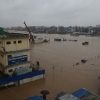
Nepal’s Deadly Flash Floods: What Went Wrong?
Nepal is trying to recover from recent flash floods and landslides caused by heavy rainfall over the last weekend of September, which claimed at least 226 lives. The mid- and eastern parts of the country, including the capital, Kathmandu, experienced the heaviest monsoon rains in two decades from September 26-28, leaving many parts of Kathmandu underwater. Experts say this is one of the deadliest and worst flash floods that impacted thousands of people in decades.
BRICS+ Prioritising Expansion to Fight Western Hegemony
In an interview with Sky News Arabia on September 20, Russian Foreign Minister Sergey Lavrov expressed scepticism but was straight to the point about the strategic expansion of BRICS, an association comprising Brazil, Russia, India, China and South Africa. Under Russia's BRICS presidency which began in January 2024.
Cuba’s Coastal Dwellers Mitigate the Effects of Climate Change
Every time a hurricane clouds the skies over the city of Manzanillo, in the eastern Cuban province of Granma, the sea pounds the Litoral neighbourhood, forcing many of the 200 families who live there to evacuate inland because of flooding. When the weather is calm, the sea penetrates subtly and constantly, salinizing the water table and eroding the coast, affecting the foundations of houses and artesian wells.
UN, Lebanon Launch $426 Million Humanitarian Emergency Appeal
The escalating hostilities between Israel and Lebanon have already threatened the safety and security of more than 1 million civilians, urging Lebanon’s government and the United Nations to take swift humanitarian action and call for international support.
Rejuvenating Tradition To Help Save Ancient Engineering Marvel—Dhamapur Lake
Dhamapur is a small village in Malvan taluka of west Sindhudurg district, housing the famous Dhamapur Lake. The Vijayanagar kings constructed an earthfill dam in 1530 A.D., creating a man-made lake surrounded by hills on three sides. Canals connect it to the Karli river, irrigating lush paddies and farms that grow the red Sorti and Walay rice varieties typical to the region.
Nuclear Annihilation Threatened by Revival of 20h Century McCarthy Era Cold War & Red Scare
The world may have dodged an immediate bullet when the US intelligence agencies warned, this week, that by giving in to Ukraine’s pleading for long range missiles that could attack targets deep into Russia, we would be poking the Russian bear beyond its patience without even influencing the outcome of the war in Ukraine’s favor.
‘Australia Must Turn Its Climate Rhetoric into Action’
CIVICUS discusses the recent Pacific Islands Forum (PIF) meeting in Tonga with Jacynta Fa’amau, Pacific Campaigner at 350.org, a global civil society organisation campaigning for climate action.
« Previous Page — Next Page »





The Week with IPS

NEXT STOP - SDGs
Tracking global progress towards a sustainable world
Tracking global progress towards a sustainable world
