Languages
Tuesday, November 17, 2026



News and Views from the Global South
Gender
POPULATION: UN Predicts 12 Billion if Family Planning Falters
The United Nations commemorated World Population Day Friday in the shadow of a staggering array of grim statistics: an estimated 200 million women worldwide want to delay or avoid pregnancy but are not using safe and effective family planning.POPULATION-PAKISTAN: Illegality Inducing Unsafe Abortions
For thousands of Pakistani women, the World Population Day message of ‘Family planning is a right, let’s make it real’’ must sound hollow when they must resort to unsafe, illegal abortions while a debate on whether termination of pregnancy is Islamic or not rages on.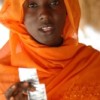
Q&A: Family Planning In Its Infancy in South Sudan
With few roads and almost no health and education infrastructure for the estimated 10 million people of South Sudan - an April census has yet to release any results - health care workers have an enormous task ahead of them.POPULATION-INDIA: One-Child Ideal Catching On
Ponni, 27, lay quiet on a missionary hospital bed in this small town, groggy from the anaesthetic administered to her for a caesarean delivery a couple of hours earlier.
HEALTH-SOUTH SUDAN: Welcome New Attention to Maternal Care
A vast pregnancy has swollen the tiny woman walking South Sudan's shining new maternity ward clutching two pieces of paper stapled together. She looks no more than 16, wide-eyed with recent pain.POPULATION-MIDEAST: Israel Fears the Womb More Than the Bomb
Israeli Prime Minister Ehud Olmert has laid it out in the starkest possible terms for his fellow Israelis. If they do not relinquish control of the occupied territories, he has warned them, Israel will ultimately cease to exist as a Jewish and democratic state.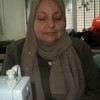
POPULATION-MIDEAST: Time Bomb Ticking Away in Gaza
Crowded into a tiny strip of territory of 360 square kilometres, plagued by poverty, malnutrition and unemployment, Gaza's 1.5 million people face a demographic time bomb as the fragile infrastructure struggles to cope with a soaring birth rate.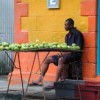
RIGHTS-SEYCHELLES: Problems In Paradise
Annette* is a small, lively woman in her early sixties. Married to an abusive husband - who once threw boiling water on her, landing her in hospital - she was not repeating the story with her alcoholic and drug-addicted son. Just as her husband was growing older and calmer, her son was getting increasingly violent.RIGHTS: U.N. Lacks Muscle to Fight Sex Abuse in Peacekeeping
When the United Nations Security Council adopted a key resolution last month critical of violence against women, the condemnation was also directed at the increasing number of peacekeepers, mostly soldiers, expelled from U.N. missions on charges of rape or sexual abuse.RIGHTS-ZIMBABWE: Women Bear Brunt of Violence
"We are too familiar with the violence that was meted upon numerous of us from 1890 when the colonialists came into our country right up to the most recent elections. Chief among these forms of violence is sexual violence, and it concomitant implication, HIV infection. Zimbabwean women now have the lowest life expectancy world wide because of HIV & AIDS - 34 years."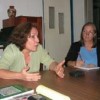
NICARAGUA: “The Women’s Movement Is in Opposition”
The action taken on abortion by the governing Sandinista National Liberation Front (FSLN) in Nicaragua is "a betrayal" of women, who were "key allies" of the 1979 revolution. Therefore there has been a "radicalisation of the women’s movement," which is declaring itself in opposition, activist Sofía Montenegro told IPS.
HEALTH-MALAWI: Water Woes in Model Hospital
Gladys Mawera's face is contorted with pain -– both she and her newborn baby survived a complicated birth three days ago - but she has not been able to take the painkillers and antibiotics prescribed to her by the medical personnel at the Chiradzulu District Hospital in southern Malawi. The hospital has been without water for five days.DEVELOPMENT-GHANA: No Place to Lay Their Heads
Agbogbloshie Market is a vibrant market in the heart of Accra, Ghana's capital, where one can buy almost anything. But the market is also the stage for a sad tale of many who gain nothing from the commercial bustle: hundreds of young girls from the northern part of the country who work as porters in Accra's markets.DEVELOPMENT: 'Aid From New EU Members Disregards Women'
Foreign aid budgets administered by the European Union's most recent entrants do not pay sufficient heed to the needs of women in poor countries, a series of new studies has found.POLITICS-ZIMBABWE: Media Blackout for Female Candidates
For activists campaigning to put more women into Africa's parliaments, the media has become a key battleground. All too often, female candidates are sidelined in election coverage, or reported on in a way that entrenches stereotypes of women rather than analysing the strength of their political and economic policies.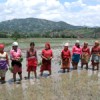
NEPAL: A Small Victory for Nepali Women
Representatives from the Madhesis, Janajatis, Dalits and other indigenous groups were present when Nepal’s newly elected constituent assembly sat for its very first meeting late last month, and 191 of the 601-member assembly were women.RIGHTS: Mistreatment of Widows a Poorly Kept Secret
Millions of women in many parts of the world are facing discrimination and abuse simply because they happen to be either widows or divorced, according to a new report released by a U.S.-based independent research organisation.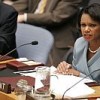
RIGHTS: Security Council Revisits Rape as Tool of War
Eight years after the U.N. Security Council passed a landmark resolution dealing with gender, peace and security, women and girls are still routinely victimised in conflict zones around the world, often in the most brutal and horrific ways.POLITICS-ZIMBABWE: "Getting People Participating Is a Process, Not an Event"
Amidst the turmoil surrounding the Jun. 27 presidential run-off in Zimbabwe, it is doubtless something of a challenge to muster enthusiasm for plans relating to the country's next general elections. Gender activists intent on having more women voted into office in 2013 are undaunted, however.RIGHTS: Poll Finds Scant Support for Criminalising Abortion
A new poll reveals that three-quarters of respondents in 18 geographically and culturally diverse countries reject the use of criminal penalties to discourage abortions.
THEATRE-US: Welcome to the Machine
"The Adding Machine" (1923) and "Top Girls" (1983) are separated by 60 years, but both used stylised techniques to portray workers as willing slaves of capitalism. That system has destroyed them, but they haven't the consciousness to know it. And they absorb attitudes that are racist and sexist.« Previous Page — Next Page »


Women make up half the world's population, but don't nearly share half of the world's wealth, well-being and opportunity. Two-thirds of the world poor are women, disproportionally exposing women to precarious living conditions, disease and unmitigated natural disasters. The media, meanwhile, remains a male-dominated sector in much of the world, contributing to women's voices lacking a crucial amplifier to put their concerns on political agendas and unleash the development potential of their ingenuity. Rather than then stereotypical victims of local and global forces, women are also organizer, innovators, conservators and community builders. These are some of their stories.

The Week with IPS

NEXT STOP - SDGs
Tracking global progress towards a sustainable world
Tracking global progress towards a sustainable world
