Languages
Tuesday, November 17, 2026



News and Views from the Global South
Gender
IRAQ: Home to Too Many Widows
Just about everyone in Iraq is a loser as a result of the occupation, but none more than women. One of the more obvious signs of that is the very large number of widows.MOLDOVA: Trafficking Not As Bad As the U.S. Thinks
Moldova is considered the main European source for human trafficking. A June 2008 report of the U.S. State Department downgraded Moldova to the category of countries that "neither meet the minimum conditions to combat trafficking, nor make efforts to meet those minimum conditions." But reality on the ground may not be so gloomy.EL SALVADOR: Lawmakers Against Therapeutic Abortion
The Salvadoran parliament has given its support to a "Libro de la vida" (Book of Life), which calls abortion "an abominable crime," precipitating a storm of criticism from women’s organisations that consider this blanket endorsement an evasion of serious debate on the issue.
DEVELOPMENT: 'Aid Must Budget for Women'
Women's rights will be further marginalised if gender equality is not funded by explicit budgeting, women and civil society groups say.HEALTH: Cultural Double Standards Undercut HIV/AIDS Fight
The United Nations says religion and culture continue to have a significant impact - both good and bad - on the spread and prevention of HIV/AIDS worldwide.NEPAL: Education Far More than ABCs – Experts
Far more than just the learning of ABCs and 123s, education should be playing a transformative role in children’s lives if it is to ensure them a better and more ‘equal’ and gender-responsive future.NEPAL: Gender Inequality in Education Has Deep Roots
A shortage of female teachers, lack of proper training, inadequate delivery of services and indifferent attitudes combine to add to gender inequality in education in this small Himalayan nation.
BOLIVIA: Domestics to Gain Healthcare Coverage
Domestic workers in Bolivia, most of whom are young indigenous women from the highlands region, are about to gain access to healthcare coverage.
RIGHTS-ARGENTINA: Raising Children Behind Bars
Soledad Acevedo was an 18-year-old mother of two eking out a living by means of menial casual work in 2002 when she was sent to prison in the Argentina province of Buenos Aires, accused of armed robbery and attempted homicide. Now she is 24, and is excited as she meets with IPS in her cell.ECONOMY-AFRICA: HIV/AIDS Reduces Children’s Education Chances
Children who live in communities with an HIV prevalence rate of 10 percent or more have half a year of schooling less than children in other communities.
DEVELOPMENT-GHANA: Women Ideal Shea Butter Producers
"Wherever I went, they laughed at me and called me 'Habiba the empty mouth.' I was always embarrassed," says 45-year-old Habiba Alhassan. "I could not afford to smile; I could not open my mouth in public, when I took photographs I had to close my mouth so that I wouldn't look ugly."TURKEY: Headscarves Ruling Leading to Bigger Confrontation
In Phase One of what has been called a "judicial coup", Turkey's Constitutional Court has ruled against amendments spearheaded by the Islamic-rooted ruling party to allow headscarves at universities. Headscarves are considered an expression of political Islam by opponents, and an expression of freedom by their proponents.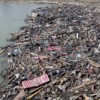
BURMA: One Million Survivors Not Yet Reached – U.N.
U.N. officials are giving the impression that the world body is making headway in helping the millions of survivors in Burma’s cyclone-hit Irrawaddy Delta.AFRICA: Women Say Regional AIDS Plan Falls Short
Despite the admirable progress made by some African countries in preventing and treating HIV/AIDS since 2000, 14 million Africans have died of AIDS in that time span, and an additional 17 million have been infected, says a new report on HIV/AIDS on the continent.INDIA: Forum Addresses Rural Energy Security
For poor rural women in India, access to energy connotes having the means to own a non-polluting stove and lantern that can help them cook, do household chores and earn a living. And yet even these basic needs are barely met - a majority of these women still spend much of their time and effort collecting firewood and cow dung for cooking and lighting.RIGHTS-COLOMBIA: Defending Women’s Defenders
After nearly six years of the "democratic security" policy of the government of rightwing President Álvaro Uribe, women activists in Colombia are as vulnerable to human rights abuses as ever, said female rights defenders who met recently in the Colombian capital.
WOMEN-MEDIA: Stuck at the Starting Gate
"We should not be all that surprised that we are stalled," says Jane Ransom, executive director of the International Women's Media Foundation (IWMF), referring to the absence of women leaders in media organisations.
WOMEN-MEDIA: Conspicuous By Their Absence
Observe any summit picture - you won't find many women. The mystery of female underrepresentation in the echelons of power persists: after so many decades of the feminist movement, why are women at the helm scarce? A look at the media sector may provide some answers.
INDIA: Public Hearings Grant Justice to Rural Women
The Indian state of Rajasthan is historically known for its cultural traditions and the epic tales of valour of its womenfolk are legendary. But sadly, today, this state fails to present a vibrant picture with regard to the status of its women who lead a backward existence.
CULTURE-CHINA: Nuder Than Nude
In a society that dictates how a woman should look - hourglass figure and shiny, long hair - Chinese artist Xiang Jing dares to turn stereotypes on their head and disturb those who view her fibreglass sculptures.MEDIA: Midwife for an Inclusive Society
Changing society to bring about greater respect for diversity requires the participation of the mainstream press, despite the combination of alternative media and the various forums, blogs and networks on the Internet that promote a more democratic flow of information.« Previous Page — Next Page »


Women make up half the world's population, but don't nearly share half of the world's wealth, well-being and opportunity. Two-thirds of the world poor are women, disproportionally exposing women to precarious living conditions, disease and unmitigated natural disasters. The media, meanwhile, remains a male-dominated sector in much of the world, contributing to women's voices lacking a crucial amplifier to put their concerns on political agendas and unleash the development potential of their ingenuity. Rather than then stereotypical victims of local and global forces, women are also organizer, innovators, conservators and community builders. These are some of their stories.

The Week with IPS

NEXT STOP - SDGs
Tracking global progress towards a sustainable world
Tracking global progress towards a sustainable world
