Languages
Wednesday, November 18, 2026



News and Views from the Global South
Gender
HEALTH: Commonwealth Event Debates Why AIDS Wears “the Face of a Woman”
The issue of women continuing to be at higher risk of HIV infection than men has received considerable attention at a gathering of women's affairs ministers from Commonwealth countries underway in Uganda's capital, Kampala.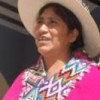
BOLIVIA: Not Another 500 Years of Marginalisation, Say Indigenous Leaders
"We prefer to defend our rights with bloodshed and die rather than wait another 500 years," says Esperanza Huanca, a Quechua Indian who is one of the 84 women in the constituent assembly that is rewriting Bolivia's constitution.Q&A: “I Said to Myself, Why Not Create an NGO Focused on the Dignity of Women?”
Later this year, Salamatou Traoré - a leading health worker in Niger - will be awarded a five thousand dollar grant from the United Nations Population Fund (UNFPA) in recognition of her work to assist women who suffer from fistulas. She is one of three persons being honoured by the agency for their efforts to uplift women.BOLIVIA: Safe Abortion Nearly Impossible Even in Cases of Rape
Bolivia's constituent assembly has just two months left to finishing rewriting the country's constitution. In 10 months of sessions, it has approved a single article, regarding the right to hold football matches at high altitudes, in response to the International Football Federation's (FIFA) ban on high-altitude international matches.HEALTH-RUSSIA: More Funding, But HIV/AIDS on the Rise
Russia's HIV infection rate continues to rise - most notably in the heterosexual and non-drug-using populations - despite steady increases in funds to fight the disease. Experts and medical researchers say dramatic changes in sexual attitudes and behaviour are essential if the trend is to be reversed.BURKINA FASO: Giving Political Parties a Legal Nudge
Awareness raising alone hasn't managed to bring about sufficient change...Perhaps quotas are now required. That's the thinking behind a law that will be put before Burkina Faso's parliament later this year, in an effort to increase the number of women in decision-making posts in the West African country's government.
BRAZIL: Homeless Take Fate into Their Own Hands
The occupation of the huge empty lot was carried out at night, by some 300 families. Just a few days later, there were nearly 5,000 families living in a sea of black tents in Valo Velho, a poor, sparsely populated neighbourhood in Itapecerica da Serra, on the outskirts of this Brazilian city.POLITICS-PHILIPPINES: Opposition Senate Won't Cramp Arroyo's Style
Although the official tally of votes cast for the senatorial election has still to be completed, two weeks after the May 14 elections, the latest round shows that eight candidates from the opposition party are inside the winning circle of 12.HEALTH-ARGENTINA: Abortion – No Longer a Taboo Subject
Capitalising on a more favourable public opinion, an alliance of civil society organisations in Argentina presented to Congress a draft law Monday for the legalisation of abortion in a country where illegal abortions are the main cause of maternal mortality.ICELAND: Change – But How Much? – in the Wake of Elections
There has been a change in the make-up of Iceland's ruling coalition after the recent parliamentary elections, which bodes for a new approach to health, education and farm policy. But how much change is in store regarding the environment, energy production and the Iraq war remains unclear.LABOUR-JAPAN: Working Women Set Their Sights Higher
When Manami Sato's mother started work at a large trading company almost three decades ago, she was hired as one of several female assistants, a job that included serving tea and copying files for male managers and was the norm those daysRIGHTS-ZIMBABWE: ”Women Politicians There to Serve The Men”
‘‘In terms of the number of women in government, yes, we are making progress. But if you dig deep about why these women were appointed you will find that they are only important when it is voting time,'' says Zhean Gwaze, a gender activist and journalist.
Q&A: “Eradicating FGM Lacks Political Will”
Senegalese author Khady Koita's celebrated book "Mutilée" hit book stores in Japan on May 19 and was an instant hit. Written originally in French it recalls the author's experience with the gruesome custom of female genital mutilation (FGM) and her work against the practice.PAKISTAN: Cleric Turns Heat on NGOs
''These foreign agents are against our religion. How can we allow them to work here when we know they come with an American agenda and support Israel?" asked Maulana Fazalullah, the pro-Taliban cleric, referring to non-governmental organisations (NGOs).
Q&A: “Abstinence Is Not the Only Way to Go”
Few aid programmes have been as controversial among activists and public health experts as the George W. Bush administration's abstinence-based HIV/AIDS treatment and prevention initiative, called the President's Emergency Plan for AIDS Relief (PEPFAR).Q&A: “It Was Thuggery. State Thuggery”
There has been widespread anger at the police beating earlier this month of Law Society of Zimbabwe President Beatrice Mtetwa and three other lawyers: Terence Fitzpatrick, Colin Kuhini and Chris Mhike.INDIA: Dalit Woman Stages a Political Revolution
The Hindi word 'Dalit' has entered the international lexicon in recent years as an evocative reminder of the unique cruelty and injustice of India's caste system.PAKISTAN: Despite Odds Village Girls Get an Education
Shumaila is sitting for her school certificate exam this month. But that does not relieve her from daily chores that include tending to dozen or so head of cattle.POLAND: Abortion Laws Not Strong Enough For Some
With the strictest abortion laws in Europe, one would expect any debates to revolve around its liberalisation. Yet in 21st century Poland, the abortion issue has been unsuccessfully raised by politicians seeking to strengthen anti-abortion legislation even further.POLITICS-BENIN: A Drubbing in National Elections Turns Attention to Local Polls
Out of 250 candidates, just a handful triumphed: not an impressive track record by any measure. So, Benin's women are already looking ahead to the next election.HEALTH: HIV-Positive Women Activists in Latin America Stand Tall
Patricia Pérez, an activist from Argentina who was diagnosed HIV-positive in 1986, has been nominated for the 2007 Nobel Peace Prize for her activism on behalf of women living with the AIDS virus. But her case is an exception to the rule.« Previous Page — Next Page »


Women make up half the world's population, but don't nearly share half of the world's wealth, well-being and opportunity. Two-thirds of the world poor are women, disproportionally exposing women to precarious living conditions, disease and unmitigated natural disasters. The media, meanwhile, remains a male-dominated sector in much of the world, contributing to women's voices lacking a crucial amplifier to put their concerns on political agendas and unleash the development potential of their ingenuity. Rather than then stereotypical victims of local and global forces, women are also organizer, innovators, conservators and community builders. These are some of their stories.

The Week with IPS

NEXT STOP - SDGs
Tracking global progress towards a sustainable world
Tracking global progress towards a sustainable world
