Languages
Thursday, May 14, 2026



News and Views from the Global South
Women & Economy
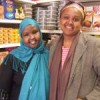
Somali Women Entrepreneurs Carve a Niche in Boston
Deeqo Jibril is always on the go. Whether she is tending to her four children or teaching breast cancer awareness classes to women in her community, the Somali-born community organiser is always up for a new challenge.DEVELOPMENT: IBSA Fund Packs Small But Sustainable Punches*
Despite only three million dollars a year coming into the India-Brazil-South Africa (IBSA) Fund for Poverty and Hunger Alleviation, it aims to pack punches above its weight with small but sustainable projects.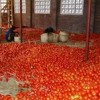
EAST AFRICA: Women Breaking Through Trade Barriers
For 12 years now, the women around Tsangano in Malawi’s southern district of Ntcheu have put together their tomato harvest, selling some 20 tons at the outdoor markets that abound in Lilongwe, the capital. But they have very little to show for their hard work.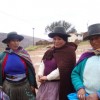
PERU: Local Gov’ts Fail to Prioritise Equality for Women
Legally, each of Peru's 25 administrative regions must have a plan for promoting equal opportunities for women. But over the last year, only 10 regions have actually allocated resources to the task of overcoming gender inequity, while another 10 have not even drawn up the compulsory equal opportunities plan.DEVELOPMENT: IBSA Fund Packs Small But Sustainable Punches
Despite only three million dollars a year coming into the India-Brazil-South Africa (IBSA) Fund for Poverty and Hunger Alleviation, it aims to pack punches above its weight with small but sustainable projects.
Kenyan Women Pulling Together Against Poverty
When it works, it's spectacular: Esther Ngonyo Njuguna's dairy project stands as testimony to the potential of microcredit schemes to boost rural incomes.
Q&A: “Microfinance Is Much More Than Just Credit”
A day after U.S. assistant secretary of state for south and central Asian affairs Robert Blake appealed to the Bangladeshi government to reconsider its dismissal of 70-year-old microfinance guru Muhammad Yunus from the Grameen Bank, IPS spoke with the president and CEO of Women's World Banking (WWB), currently the most comprehensive network of microfinance institutions (MFIs) in the world.POLITICS-ZAMBIA: Days of Male Domination Numbered
Elizabeth Phiri was so incensed when she was overlooked as a parliamentary candidate for the Patriotic Front in a 2008 by-election on the basis of her gender that she quit the party. Four years on, she has rejoined the party but remains pessimistic - but other women politicians see reasons to hope the 2011 elections will be different.BRAZIL: Rural Women Protest Use of Toxic Agrochemicals
Thousands of women farmers in Brazil demonstrated this week against the use of toxic weedkillers and pesticides on crops and in favour of agricultural techniques that protect their families' health.
Q&A: Rural Women Need Concrete Actions
Burundi will put U.N. Resolution 1325 on Women, Peace and Security into practice with a National Action Plan (NAP) that is ready to be signed within the coming months.Vicious Cycle of Maternal Mortality
Addressing the National Convention of the Medical Committee for Human Rights in Chicago, Illinois in 1966, Dr. Martin Luther King Jr. stated unequivocally that, "Of all the forms of inequality in the world, injustice in health care is the most shocking and inhumane."Q&A: ‘Doing Good and Doing Good Business Are Not Incompatible’
It is short sighted to dismiss the benefits or potential of engaging the private sector in human rights matters, says Sara Lulo, director of the Avon Global Center for Women and Justice at Cornell Law School.
TRADE: South African Imports Filling Zimbabwean Shop Shelves
When the government of national unity (GNU) was formed two years ago, Zimbabweans expected that the days of shop shelves being filled with imported consumer goods would soon be over.
BANGLADESH: Women Find a Way Out of Poverty
Twenty-one years ago, Munni Akter and her husband Shafiuddin could hardly afford two meals a day.
DEVELOPMENT-UGANDA: Better Coffee Brings Better Living Conditions
Producing quality Arabica coffee beans on the slopes of Mount Elgon in eastern Uganda is only viable once farmers are assured ready access to the global market. Fair trade has made this possible.
ENERGY-MALAWI: Rise in Paraffin Prices Leaves Traders in the Dark
Increasing energy prices have caused anxiety for many small-scale Malawian traders, especially those in rural areas and peri-urban areas who rely on paraffin for lighting their business premises.
KENYA: Flower Industry Still Not Back in Full Bloom
Kenya’s flower exporters are cautiously optimistic that the prospects for their industry will improve during 2011 after disaster struck in the form of volcanic ash and adverse winter weather conditions in 2010. But prices will be lower as the global economic recession still weighs heavily on their primary market, the European Union.CHINA: Men Becoming More Suicide-Prone
While new research indicates that China’s overall suicide rate has been in decline for the last two decades, some segments of the population – including urban males and the elderly – are increasingly likely to take their own lives, the result of breakneck social change in the world’s most populous country.
NAMIBIA: Basic Income Grant: ‘Let Others Taste What We Have Tasted’
A universal Basic Income Grant (BIG) would create laziness and dependence among Namibia’s poor, say politicians. A daring pilot project set out to prove that this untrue. IPS spoke to one of the beneficiaries of the BIG.
Q&A: Political Support Needs Financial Backing
"The agenda for women's rights and empowerment in each country must be supported by the political leadership," says Norah Matovu-Winyi, Executive Director, African Women's Development and Communication Network (FEMNET).
WORLD SOCIAL FORUM: Fisheries Need Transparent Regulation
Senegalese fishers participating in the 2011 World Social Forum (WSF) warned governments to "wake up to the ethical and transparent regulation of access to fisheries" to halt the overexploitation of this increasingly scarce resource.« Previous Page — Next Page »


Around the world, women make great contributions to different economies. From the field of business, to carrying the bulk of unpaid care, women are essential to economic growth. However, due to gender inequality, women face economic discrimination. Taking many forms, including disproportionate wages, greater exposure to vulnerable employment, and reduced economic opportunity, this inequality continues to curtail economic development. Yet women continue to work past these obstacles and reduce this disparity, furthering economic empowerment. These stories help to identify women’s economic struggles, and those that are working towards empowerment.

The Week with IPS

NEXT STOP - SDGs
Tracking global progress towards a sustainable world
Tracking global progress towards a sustainable world
