Languages
Thursday, November 19, 2026



News and Views from the Global South
Global Geopolitics
U.S. Reports Decry Curbs on NGOs, Internet, Minorities
Growing government harassment of civil society organisations (CSOs), restrictions on Internet use, and persecution of vulnerable minorities constituted three of the most worrisome trends that slowed the spread of human rights around the globe in 2010, according to latest annual edition of the State Department's massive "Country Reports".LIBYA: U.N. Experts Probe Human Rights Abuses
The international commission of inquiry established by the U.N. Human Rights Council to investigate alleged violations of human rights in Libya will start its mission next week, and report on all crimes, committed by anyone, including foreign powers.
Israel Hits Roadblock over Dismissal of War Crimes Charges
The Israeli government and South African jurist Richard Goldstone may be heading for a political confrontation over war crimes charges against Tel Aviv and a subsequent selective retraction of some of those charges.DEVELOPMENT: BRICS to Promote More Inclusive Global Partnership
At the upcoming Brazil, Russia, India, China and South Africa (BRICS) summit, to be held on the tropical Chinese island of Hainan Apr. 14, discussion will focus not only on deepening economic ties among members, but will also likely touch on global political events, including the crisis in the Middle East and North Africa. But China insists the club has no political agenda.CLIMATE CHANGE: Developing Countries Step In Where Richer Nations Fear to Tread
Led by countries like Indonesia, 48 developing nations are rolling out a range of pledges to voluntarily cut their respective emissions of greenhouse gases (GHG) by 2020, the year climate scientists say the earth’s rising temperature should peak by if an environmental catastrophe is to be avoided.Amid Uprisings, Africa Readies for Slew of National Polls
As the resounding cry for multi-party democracy reverberates violently throughout the Middle East, the African continent, long known for military rule and dictatorial regimes, is readying for a slew of presidential and parliamentary elections this year.
ENVIRONMENT: U.N. Tries to Put Its Own House in Order
In the past few years, United Nations headquarters in New York has undergone a transformation. Besides renovating the entire building, the U.N. is trying, as a leading international organisation, to take more responsibility and set an example for environmentally-friendly, sustainable practices by implementing such changes as cutting back on printing, posting more documents online, and creating water-saving measures.Arab Uprisings Break Down Media Stereotypes
Exhaustive media coverage of the wave of popular revolts sweeping the Middle East and North Africa has helped to dispel myths and stereotypes of Arabs and Muslims, and foster better cultural understanding, media experts said during a conference in Cairo on Wednesday.World Bank Chief Calls for Economic Reforms in Mideast
World Bank President Robert Zoellick on Wednesday pressed a Middle East and North Africa in the midst of the "Arab Spring" to promote vibrant civil societies and urged international financial and development institutions to hold its client governments in the region more accountable, if sustainable growth rates and more integrated economies are to take hold.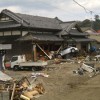
EXCLUSIVE: Report from Fukushima
 My decision to visit Fukushima - the area worst hit by the massive quake, tsunami and nuclear power accident on Mar. 11 - was taken one afternoon last week after a long meeting with scientists.
Oil Giants Need To Think Beyond Profits
The uprisings in the Middle East and North Africa have shaken the petroleum industry, triggering oil price hikes and forcing the sector to go on the defensive. But critics say the industry carries some of the blame for the current crisis.MIDEAST: Turkey Relishes Role as Mr. Fixit
In the course of 24 hours earlier this week, Turkish Foreign Minister Ahmet Davutoğlu met a top envoy from Libya, dispatched a senior Turkish official to Tripoli and traveled to Bahrain and Syria, all struggling to survive the pro- democracy Arab spring.
CLIMATE CHANGE: World Bank Under Fire for Role in New Global Green Fund
The World Bank is facing mounting opposition from a broad network of green and grassroots activists over its role in a new global Green Climate Fund (GCF) aimed at helping developing countries combat the ravages of climate change.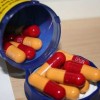
WORLD HEALTH DAY: The Ten-Year Timeline for Antibiotics Burnout
Though the World Health Organisation (WHO) has focused this year's World Health Day Apr. 7 on prioritising the struggle against the global spread of antimicrobial resistance (AMR), scores of international researchers and scientists fear this decision is coming too late, with 2011 already shadowed by the failure of pharmaceutical antibiotics to curb the proliferation of diseases.U.N. Chief Proposes Budget-Cutting Austerity Drive
Armed with a sharp knife, U.N. Secretary-General Ban Ki-moon is on an austerity drive seeking deep cuts, amounting to about 155 million dollars, in the U.N.'s 2012-2013 budget, which comes into effect next January.SOMALIA: Manifestation of Stealth Trusteeship
Somalia is currently under what James Fearon and David Laitin of Stanford University call "a neo-trusteeship system". Various external powers, while disagreeing among themselves, make the important decisions for the Somali people.NGOs Call for IMF Gold Profits to Cancel Debts of Poorest Countries
Nearly 60 international civil society organisations urged the executive board of the International Monetary Fund (IMF) Monday to earmark some 2.8 billion dollars in profits from the agency's gold sales for cancelling the debts of the world's poorest nations.
U.N. Member States Falter in Protecting Staffers, Peacekeepers
The United Nations has remained virtually helpless as hundreds of its staffers, mostly peacekeepers, are killed, kidnapped or victimised by unbridled violence worldwide.MIDEAST: Goldstone’s Volte-Face Gladdens Israelis, Angers Palestinians
Israelis have breathed a national sigh of relief following the publication of an absolutely unexpected article in last Friday's Washington Post. The column's title and author said it all.‘No Safe Levels’ of Radiation in Japan
In a nuclear crisis that is becoming increasingly serious, Japan’s Nuclear Safety Agency confirmed that radioactive iodine-131 in seawater samples taken near the crippled Fukushima Daiichi nuclear power complex that was seriously damaged by the recent tsunami off the coast of Japan is 4,385 times the level permitted by law.CLIMATE CHANGE: Uncertain Future of Kyoto Protocol Alarms Green Groups
With just seven months to go before a pivotal U.N. climate change summit in South Africa, green groups are raising the alarm here about the future of the Kyoto Protocol, the world’s only international treaty that mandates most industrialised nations to cut their environment polluting greenhouse gases (GHG) to save the planet from overheating.« Previous Page — Next Page »


Is the world dominated by three great empires -- the U.S.A, China and the European Union? How much power do the great behemoths of the south -- India, Brazil, and South Africa -- wield? And where does Russia fit in that equation? Are we in the middle of a new Cold War? What are the implications of the armed conflict with Georgia? What about the new axis: Venezuela-Russia? And what role does Turkey play? What about issues like Climate Change and other global forces like the food crisis and the high energy prices? How is all this reshaping the world's forces? IPS looks for some answers.

The Week with IPS

NEXT STOP - SDGs
Tracking global progress towards a sustainable world
Tracking global progress towards a sustainable world
