Languages
Thursday, November 19, 2026



News and Views from the Global South
Global Geopolitics
BRICS to Show Its Weight at WTO
Despite political differences among member countries, BRICS has set its sights on global trade talks to assert its weight. Its declared aim: to secure economic benefits for developing nations.Emerging Markets Clash with Anachronistic Institutions
The first weeks of April have witnessed a maelstrom of multilateralism – from the chambers of the annual Spring Meetings of the World Bank and the International Monetary Fund (IMF) here to the round tables of the BRICS summit in the resort island of the Hainan province in China – leaving in its wake a tome of unanswered questions regarding the contours and configurations of the new world order.WORLD: Finding Funding for LDCs Amidst Global Financial Crisis
Representatives of the world’s poorest nations are preparing to assemble a new "programme of action" to reduce grinding poverty. Among proposals that could emerge from the U.N. Least Developed Countries Conference in Istanbul next month is a global tax on financial transactions that would generate billions of dollars a year for development assistance.JAPAN: Quake’s Aftermath Weighs Heavily on Women
Since the horrific Mar. 11 earthquake and tsunami that devastated her coastal town of Minato, in Ishinomaki city, Masami Endo’s three-year-old daughter has been crying and clinging to her every night.G24 Says Rich Nations’ Policies Hurting Developing World
Finance ministers of the G24 group of developing and emerging countries met on the sidelines the World Bank and International Monetary Fund spring meetings here on Thursday, warning against continued risks to their economies, despite largely "strong" growth as the world climbs out of the global financial crisis.
A Table for Nine Billion
As the World Bank and International Monetary Fund convene for their annual Spring Meetings here, soaring food prices are high on the agenda, prompting some analysts to fast-forward to 2050 and the question of how to nourish the mid-century's estimated world population of 8.9 billion people – the majority of whom will live in developing countries.
ENVIRONMENT: Military Debris Threaten Oceans
 Military debris dumped into the world’s oceans are hazardous to coral ecosystems, reefs, fish and marine wildlife, say experts, who also warn - in light of the recent tragedy in Japan - that earthquakes and tsunamis could disturb this debris and even wash it ashore.
Vast Majority of Stillbirths Found in Developing Countries
According to a special series in the medical journal The Lancet presented in New York Wednesday at the U.N. children's agency UNICEF, over 2.6 million stillbirths occur worldwide annually, affecting mostly African and Asian women who lack proper access to health care and facilities.Diminishing Potential of the Old Medical Paradigm
While the curtain was being raised Tuesday on a U.S. Department of Health and Human Services (HHS) initiative to pour one billion dollars of federal funding into the Partnerships for Patients Act – a new project designed to save thousands of lives and millions of dollars – the Journal of the American Medical Association (JAMA) held a media briefing here simultaneously presenting studies from their theme issue on 'Infectious Diseases and Immunology'.U.N. Decries Stagnant Funding For Population Goals
As the international community readies to cope with a rising world population of some seven billion people by the middle of this year, U.N. Secretary-General Ban Ki-moon warns that financial assistance for population-related activities has made no visible gains since 2008.China’s Green Blueprint Raises Stakes at U.N. Climate Talks
China’s rise as a leader in the environmentally friendly, low-carbon economy is giving the Asian giant new diplomatic muscle for this year’s round of climate change negotiations leading up to the COP17 U.N. summit in Durban, South Africa in November.BAHRAIN: U.S. Keeps Quiet over Repression
If President Barack Obama wanted to place Washington "on the right side of history" during the ongoing "Arab Spring", his reaction to recent events in Bahrain will likely make that far more difficult, according to a growing number of analysts and commentators here.
JAPAN: Difficult Shift From Aid Donor to Recipient
April has traditionally been the time for ‘hanami’, or cherry blossom festivals, when millions of Japanese hold parties under the pink flowering trees in parks and streets lit up gaily by lanterns.More Economic BRICS in the Development Wall
As BRICS (Brazil, Russia, India, China and South Africa) leaders prepare for Thursday’s summit in the resort town of Sanya in China’s southern Hainan province, experts here say there are limits to how ‘political’ the grouping can get.Libyan Exodus Shrinks Remittances
The exodus of migrants streaming out of Libya due to ongoing unrest has highlighted the heavy dependence of some countries on remittances from their citizens working abroad. In several countries this flow has now become choked.Smart Planning for the Global Family
When it comes to population growth, the United Nations has three primary projections. The medium projection, the one most commonly used, has world population reaching 9.2 billion by 2050. The high one reaches 10.5 billion. The low projection, which assumes that the world will quickly move below replacement-level fertility, has population peaking at eight billion in 2042 and then declining.
Israel Leads the Electric Charge
A woman takes the driver's seat, turns on the radio, sliding through broadcasts of the tit-for-tat battles between Israel and the Palestinian Islamist movement Hamas till she finds a quiet music station.
Antarctic Penguin Population Declines with Krill
Two species of Antarctic penguins have declined sharply over the past 30 years as their chief food source has been devastated by a combination of other predators, over-fishing, and rapidly melting sea ice caused by global warming, according to a new study released here Monday by the National Academy of Sciences.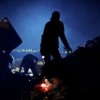
Films Shrink Global Problems Down to a More Human Scale
"It's bad to be rich at the height of fame with your morals a dirty shame," says Valter pointedly as he bumps along in the back of a pickup towards Jardim Gramacho, the largest landfill in the world, located in Brazil.Latin America Logs Largest Increase in 2010 Military Spending
Latin America has displaced traditional high-rollers, including the Middle East and Europe, as the region registering the largest percentage increase in military spending last year, according to a new study released by the Stockholm International Peace Research Institute (SIPRI).New World Development Report Repackages Old Ideas
With over 1.5 billion people living in countries blighted by incessant or recurring violence, the World Bank's annual World Development Report (WDR), with this year's focus on how conflict derails development, was anxiously received Monday by scores of development agencies, governments and NGOs all over the world.« Previous Page — Next Page »


Is the world dominated by three great empires -- the U.S.A, China and the European Union? How much power do the great behemoths of the south -- India, Brazil, and South Africa -- wield? And where does Russia fit in that equation? Are we in the middle of a new Cold War? What are the implications of the armed conflict with Georgia? What about the new axis: Venezuela-Russia? And what role does Turkey play? What about issues like Climate Change and other global forces like the food crisis and the high energy prices? How is all this reshaping the world's forces? IPS looks for some answers.

The Week with IPS

NEXT STOP - SDGs
Tracking global progress towards a sustainable world
Tracking global progress towards a sustainable world
