Languages
Saturday, November 21, 2026



News and Views from the Global South
Global Geopolitics
AFRICA: FAO Paper On Land Grab Is "Wishy-Washy"
The boom in the acquisition of arable land in Africa by foreign companies and governments has stirred an international debate between international institutions such as the United Nations’ Food and Agriculture Organisation (FAO) and non-governmental groups and independent experts.G8: Doha Deal Begins to Look Nearer
Clear signs are emerging at the G8 summit here of progress towards concluding new terms for international trade.G8: The Five Throw a Challenge
"The world needs a new global governance," the G5 declared Wednesday, "the construction of which must be based on inclusive multilateralism." As rhetoric goes, this might sound like more of the same. But the time and place of that declaration gave the words a new significance.
POPULATION: Poorest Countries to Bear Brunt of Growth
The world's population - already at least 6.7 billion people - will double in the next 40 years if current growth rates are left unchecked, warns the United Nations Population Fund (UNFPA).WORLD: Trade Cannot Be Relied Upon to Reduce Poverty
Trade is positively linked to economic growth but trade policies alone cannot be relied upon to meet a country’s poverty reduction objectives, admits a review of aid for trade that was compiled for the World Trade Organisation (WTO) and the Organisation for Economic Cooperation and Development (OECD).POLITICS-INDIA: Waiting to Hear Clinton on AfPak, China
It is hard to say whether U.S. Secretary of State Hillary Clinton will find herself being quizzed more on Washington's 'AfPak' strategy to contain global terror or her appeasement of a financially muscular China, when she lands in India mid-July.G8: Politely, a Revolution Under Way
It is with too much ease that we all sometimes use the word 'revolution'. Because all too often the change being championed is one that too many others simply do not notice. But that isn't the case here: the change pushed for at the G8 summit in Italy, and at other such forums, is no less than revolutionary, and can only be seen as historic.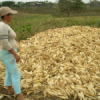
G8: ‘Just Invest in Women’
Investment in the health and the rights of girls and women can help economic recovery, civil society groups are telling G8 leaders.
Q&A: ‘Africa Should Rebuild Domestic Markets to Address Crisis’
Despite the global economic crisis, the world's elites will only "tinker" with the world's markets and financial systems and not bring about the fundamental shifts that are required, says Gyekye Tanoh of the Africa Trade Network.BURMA: UN Chief Speaks Out Against Lack of Human Rights
Using the power of his office, U.N. Secretary-General Ban Ki-moon achieved a rare diplomatic feat during his recent visit to military-ruled Burma. He broke a taboo by delivering a public speech about the lack of democracy and human rights in the country.
PAKISTAN/INDIA: Citizens Push for Peace
The months following last year's Mumbai terror attacks have seen a renewed sense of urgency among peace activists in Pakistan and India. Citizens are pushing their governments to resume the composite dialogue process between the two nuclear-rival nations.U.S.: Obama Discredits 'Green Light' for Israeli Attack on Iran
Seeking to end speculation about whether his administration had eased its opposition to an Israeli military strike against Iran's nuclear facilities, U.S. President Barack Obama Tuesday insisted that Washington's position remained unchanged.HEALTH: Private Sector Boosts Public Toilets in Poorer Nations
The United Nations is disappointed that most governments in the developing world have made relatively little progress in providing basic sanitation facilities to nearly 2.5 billion people who still have no access to toilets.POLITICS: Negative Views of U.S. Persist Despite Faith in Obama
A new survey of global opinion reveals strong negative feelings toward U.S. foreign policy, even as an average of 61 percent of those polled have at least some confidence in President Barack Obama to make sound decisions.AUSTRALIA: Scientist Pushes For Coral Triangle Action
While Australia remains committed to playing an ongoing role in assisting the six nations of the Coral Triangle Initiative (CTI) to protect their marine environments, a leading scientist here says that an Australian-style of management in the triangle will not work.G8: It Will Be a Tale of Two Summits
There is a reason that eight and five do not add up to 13 when it comes to the G8. And it is not just that the five developing countries that now attend the summit of the eight mighty ones as a matter of course are less rich. It's because they have their own way to go, and parallel with the G8 meet, their own summit to attend.
Q&A: "It’s Wrong to Burn Food of the Poor to Drive Cars of the Rich"
The world needs to overcome "the bizarre irony that rural areas, where food is grown, is home to cruel poverty and hunger," says Ismail Serageldin, former chair of the Consultative Group on International Agricultural Research (CGIAR).DEVELOPMENT: MDG Goals Face ‘Triple Crisis’
The developing world faces a "triple crisis" as global economics, food prices and the impact of climate change affect the world's most vulnerable people, a new UN report warns.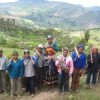
AGRICULTURE: A Stormy Time for Indigenous Wisdom
Indigenous peoples risk losing control over their traditional knowledge if the World Intellectual Property Organisation (WIPO) insists on strict standards for managing access to information.RIGHTS: Muslims Under Scrutiny Despite Waning of ‘Terror War’
When the administration of President Barack Obama formally abandoned the longstanding U.S. "war on terror" - perceived by some as a codeword for "war against Islam" - there were hopes of a new relationship between the United States and the Muslim world after eight long years of political friction.RUSSIA: Hoping for Much, Expecting Little
U.S. President Barack Obama's visit to Russia next week is expected to bring significant but limited improvement in troubled relations between the two giants.« Previous Page — Next Page »


Is the world dominated by three great empires -- the U.S.A, China and the European Union? How much power do the great behemoths of the south -- India, Brazil, and South Africa -- wield? And where does Russia fit in that equation? Are we in the middle of a new Cold War? What are the implications of the armed conflict with Georgia? What about the new axis: Venezuela-Russia? And what role does Turkey play? What about issues like Climate Change and other global forces like the food crisis and the high energy prices? How is all this reshaping the world's forces? IPS looks for some answers.

The Week with IPS

NEXT STOP - SDGs
Tracking global progress towards a sustainable world
Tracking global progress towards a sustainable world
