Languages
Monday, November 23, 2026



News and Views from the Global South
Global Geopolitics
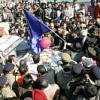
INDIA/PAKISTAN: Trade Through Kashmir Can Heal Rift
After decades of confrontation and rigidity over Kashmir, India and Pakistan seem to be looking at trade through the disputed territory as a path to peace.POLITICS-US: Candidates' Worldviews Are Worlds Apart
While the ongoing financial crisis has almost entirely displaced foreign policy and even the Iraq War as the main concern of voters here, the differences in approach to the world beyond U.S. borders between the Republican candidate, Sen. John McCain, and his Democratic rival, Sen. Barack Obama, remain both wide and substantial.DEVELOPMENT: Harmonious Cities – a Social and Environmental Solution
Sao Paulo emits only a tenth of the greenhouse gases that San Diego produces, even though this Brazilian metropolis is four times larger than that city in California, according to a report released today by the United Nations Human Settlements Programme (UN-Habitat).DEVELOPMENT: Now Sit Up and Listen
For every one in 50 people around the world to make a point of standing up somewhere on the planet to say the same kind of thing adds up to a lot of people. More than any mass mobilisation on any issue ever before.ECONOMY: World Bank Assails Israeli Chokehold on West Bank
The West Bank's economy continues to gasp for air despite increased international aid mainly because Israel keeps the Palestinian territory in a stranglehold, says the World Bank.
ENVIRONMENT: Worst Forms of Pollution Killing Millions
Gold mining and recycling car batteries are two of the world's Top 10 most dangerous pollution problems, and the least known, according a new report.BURMA: Cyclone Relief – Distrust of Junta Deters Donors
Burma’s military regime is struggling to attract international aid nearly six months after the powerful Cyclone Nargis tore through the country’s Irrawaddy Delta. The financial shortfall has more to do with distrust of the junta than donor fatigue.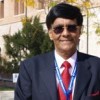
Q&A: ‘Media Must Find a Way for the Message’
While there is clear evidence of growing global warming, "the political will to address it is still lacking," says Mohan Munasinghe, co-winner of the 2007 Nobel Peace Prize as vice-chairman of the United Nations Intergovernmental Panel on Climate Change (IPCC).POLITICS: French Hand Seen in Western Sahara Impasse
The United States justifies Kosovo's declaration of independence from Serbia. The Russians fiercely oppose it. Washington considers Abkhazia as an integral part of Georgian territory. Moscow recognises it as a sovereign nation. Both major powers have no dispute, however, on the question of Western Sahara's independence from Moroccan control.CLIMATE CHANGE: Window of Opportunity Closing Rapidly
The global financial crisis has pushed climate change off the front pages despite new evidence that it is happening faster and with stronger impacts than previous projections, a new report warns.JAPAN/NORTH KOREA: Abductees Issue Traded Over Nuclear Deal
With Washington removing North Korea from its list of state sponsors of terrorism, Japan finds itself isolated over the issue of its nationals abducted by the reclusive communist state, during the cold war, to be trained as spies.ECONOMY: Asia-EU Summit to Address ‘Financial Tsunami’
Cast in the role of global saviour in the unfolding financial turmoil, China is playing host to a meeting of Asian and European leaders in Beijing this week that is expected to castigate the Anglo-Saxon model of capitalism and press for a reshaped global economic order.ECONOMY: Rich-Poor Divide Worst Among Rich Countries
The "American Dream" of upward social mobility appears to have emigrated from its birthplace in the United States to northern Europe, according to a major new report by the Organisation for Economic Cooperation and Development (OECD) on the growth of economic equality over the past 20 years.
SRI LANKA: War May Cost Trade Benefits From EU
By refusing to allow the European Union to probe implementation of international labour and human rights covenants, on the grounds of sovereignty infringement, the Sri Lankan government may be jeopardising trade concessions and risking jobs in this country.BURMA: Asia Europe Summit Can Help
By the end of this week Burmese pro-democracy leader Aung San Suu Kyi will have spent 13 years under house arrest. By coincidence, the anniversary of her incarceration (Oct. 24) falls when the military junta will be represented in a summit between Asian and European leaders in Beijing.ENVIRONMENT: Crisis Could Ease Pressure, But Not for Long
The global economic recession or slowdown that will result from the financial crisis that broke out in the United States could bring some benefits for the environment in the short-term - such as a reduction in power consumption and in the deforestation of the Amazon rainforest -, but the overall effect may turn out to be negative in the long run.DEVELOPMENT: Cell Phone Service, But No Toilets
It is a fact of the 21st century that some of the poorest regions of the world have good mobile phone coverage but no toilets or safe drinking water.
Q&A: “Profit Is Enemy Number One of the Environment”
The global financial debacle is evidence that capitalism "is more alive than ever" and can only be stopped by policies that extinguish all forms of profit or by the end of life on Earth, says Chilean professor and activist Marcel Claude.
TRADE: Cotton Subsidies Remain Big Hurdle in WTO Doha Round
The Doha Round was launched in 2001 in Doha, Qatar, to provide a developmental dimension to global trade by enabling developing and least developed countries to secure enhanced access for their products in rich country markets. However, there is a pronounced shift in the negotiations in the last seven years - from developmental issues to the purely market-driven concerns of the dominant players.TRADE: African States Won’t Compromise on Development in Doha
Faced with the global financial crisis and high food prices, African countries want to conclude the much-delayed modalities agreement in the Doha Round of talks on agriculture and market-opening for industrial goods by the end of this year.
CAMBODIA/THAILAND: Temple Row May Lead to Wider Conflict
This week’s gun battle between Thai and Cambodian soldiers over the disputed Preah Vihear temple raises the possibility of wider conflict between the two South-east Asian nations.« Previous Page — Next Page »


Is the world dominated by three great empires -- the U.S.A, China and the European Union? How much power do the great behemoths of the south -- India, Brazil, and South Africa -- wield? And where does Russia fit in that equation? Are we in the middle of a new Cold War? What are the implications of the armed conflict with Georgia? What about the new axis: Venezuela-Russia? And what role does Turkey play? What about issues like Climate Change and other global forces like the food crisis and the high energy prices? How is all this reshaping the world's forces? IPS looks for some answers.

The Week with IPS

NEXT STOP - SDGs
Tracking global progress towards a sustainable world
