Languages
Wednesday, October 14, 2026



News and Views from the Global South
Global Geopolitics

January Brings Changes for UN Security Council
Five of the UN Security Council's 15 seats were filled by new members this week, but a bigger shift in the council is expected later this month under the new US administration.
Ban Ki-moon’s Mixed Legacy as UN Secretary-General
Ban Ki-moon ended his ten years as UN Secretary-General at midnight on New Year’s Eve with his last official duty - dropping the ball at New York’s Times Square.
2017 — A Thunderous Clash of Politics, Economies and Policies
Yet another new year has dawned. But 2017 will be a year like no other.
Arms Trade Treaty Falling Down in Yemen
Two years after the UN Arms Trade Treaty entered into force many of the governments which championed the treaty are failing to uphold it, especially when it comes to the conflict in Yemen.
Security Council Vote on Israeli Settlements Postponed Indefinitely
The UN Security Council has indefinitely postponed a vote on a draft resolution demanding an end to Israeli settlements.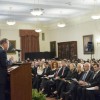
Outgoing UN Chief Yearns for Majority Rule in World Body
As he packs his bags to head home to South Korea, the outgoing UN Secretary-General Ban Ki-moon has been sharply critical of the decision-making process in the world body – specifically the veto powers in the Security Council and the increasing “consensus” rule in voting – where a single country can defy the rest of the 192 members, particularly on politically and financially sensitive issues.
Israeli-Palestinian Conflict Heads for 50 Years of UN Failure
Come 2017, the United Nations will mark the 50th anniversary of one of the world's longstanding unresolved political problems firmly entrenched on the UN agenda: the Israeli-Palestinian conflict dating back to the Six Day War in June 1967.
Gambia May Not Join African Withdrawals from ICC
The International Criminal Court (ICC) may have had a small reprieve this week from a string of African withdrawals, with Gambia’s newly elected President Adama Barrow telling various media outlets that there is no need for Gambia to leave the court.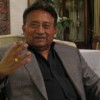
Trump Needs Lessons in Geopolitics : Musharraf
US President-elect Donald Trump has shown he has much to learn about South Asia, Pakistan’s former President Pervez Musharraf said in an interview with IPS. But he counted on Trump having an open mind.
Fidel Castro, a Larger-than-Life Leader in Tumultuous Times
Among the many leaders who left their mark on history in the 20th century, Fidel Castro - who died Nov. 25 at the age of 90 - stood out for propelling Cuba into a global role that was unexpectedly prominent for a small country, in an era when arms were frequently taken up to settle national and international disputes.
The Cuban Revolution Has Lost Its Founder and Leader
Fidel Castro, who survived more than 600 assassination attempts and remained in power longer than any other leader in the history of Cuba, died Friday night at the age of 90.
A Cuban Economy Facing Grim Forecasts Awaits Impact of Trump
Cuba’s economic difficulties will be aggravated by the uncertainty regarding how U.S. president-elect Donald Trump will deal with the thaw inherited from President Barack Obama.
Trump’s Threat on Multilateral Treaties Keeps UN Guessing
At the height of the US Presidential campaign in early 2015, Republican nominee Donald Trump made a rash of public pronouncements -- some threatening internationally-agreed UN conventions-- which set off political reverberations throughout the United Nations.
Iran Deal Is Key Test of Trump’s Commitment to NATO Allies
Donald Trump’s victory over Hillary Clinton threatens to mainstream the Islamophobia, misogyny, racism, and anti-Semitism that swirled around his candidacy and supporters. On the foreign policy front his comments were no less shocking. But the Iran nuclear deal, which Trump hasn’t discussed in any depth beyond his promise at AIPAC’s March conference that his “number-one priority is to dismantle the disastrous deal with Iran,” may stand as an early litmus test for his relationship with NATO allies.
Nicaragua’s Elections Marked by Apathy and Mistrust
In the midst of unusual political tension and apathy, Nicaraguans will go to the polls on Sunday Nov. 6 to vote in elections marked by the absence of the main opposition force and international election observers.
Gorbachev Appeals for Sanity, Dialogue
President Mikhail Gorbachev, former leader of the Soviet Union and recipient of the 1990 Nobel Peace Prize, has appealed to world leaders to reduce the dangerous tensions, which today threaten to plunge human civilization and the biosphere into an all-destroying nuclear war.
UN Cuba Embargo Vote: United States Abstains for First Time
After 25 years of voting against a United Nations resolution condemning the United States (U.S.) embargo on Cuba, the U.S. Wednesday chose for the first time to abstain from voting. An overwhelming 191 UN member states voted for the resolution, with only Israel joining the United States in abstention.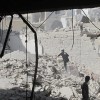
UN Security Council’s “Perilous Interventions” in War Zones
When the UN Security Council last week discussed the “deliberate” attacks on medical facilities in war-ravaged Syria and Yemen, Secretary-General Ban Ki-moon implicitly criticized some of the warring nations lamenting that “even a slaughterhouse is more humane” than the ongoing indiscriminate killings of civilians in the two devastating conflicts.
European Security with or Without Russia?
Consequences of the Chinese-Russian Alliance on the Relationship Between USA and EU
The joint military manoeuvres between the Russian and Chinese navies, armies, and air forces has kicked off. It's a clear message for Washington, which has recently strengthened its action in Asia, indicating that as a country that overlooks the Pacific, it wants to play an important role in the continent, aimed at containing the Chinese expansion.

Fossil Fuels: At What Price?
We often read comparisons between the prices of solar energy or wind energy with the prices of fossil fuels. It is encouraging to see that renewables are rapidly becoming competitive, and are often cheaper than coal or oil. In fact, if coal, oil and natural gas were given their correct prices renewables would be recognized as being incomparably cheaper than fossil fuels.
US, EU Accused of Paying Lip Service to Global Arms Treaty
The Arms Trade Treaty (ATT), which was aimed at curbing the flow of small arms and light weapons to war zones and politically-repressive regimes, is being openly violated by some of the world’s arms suppliers, according to military analysts and human rights organizations.« Previous Page — Next Page »





Is the world dominated by three great empires -- the U.S.A, China and the European Union? How much power do the great behemoths of the south -- India, Brazil, and South Africa -- wield? And where does Russia fit in that equation? Are we in the middle of a new Cold War? What are the implications of the armed conflict with Georgia? What about the new axis: Venezuela-Russia? And what role does Turkey play? What about issues like Climate Change and other global forces like the food crisis and the high energy prices? How is all this reshaping the world's forces? IPS looks for some answers.

The Week with IPS

NEXT STOP - SDGs
Tracking global progress towards a sustainable world
Tracking global progress towards a sustainable world
