Languages
Tuesday, October 13, 2026



News and Views from the Global South
Global Geopolitics
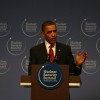
US To Push for UN Security Council Ban on Nuclear Tests
As part of his nuclear legacy, US President Barack Obama is seeking a UN Security Council (UNSC) resolution aimed at banning nuclear tests worldwide.
TPPA could be discarded due to US political dynamics
No country was more active in pushing for the Trans Pacific Partnership (TPP). In the five years of negotiations, the United States cajoled, persuaded and pressurised its trade partners take on board its issues and positions.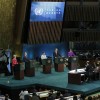
Time for a Woman to Lead the UN
Judging by the latest polls it now seems more likely that the United States will have a female President in 2016, than the United Nations will have a female Secretary-General.
Interview: The UN Security Council and North Korea’s Nuclear Threat
Ambassador Hahn Choong-hee, UN representative of the Republic of Korea, spoke with IPS about the implementation of UN Security Council Resolution 2270, which was unanimously adopted on 2 March 2016.
Turkey’s Syria Headache
Five years into the 'oust Assad' campaign, Turkey finds itself isolated in the region and beyond. After a narrow escape from a failed coup attempt, President Erdogan may finally be rethinking his Syria policy. Because the arming of rebels that included hard-line Islamists has not only contributed to the killing of some 280,000 innocents, it also brought upon Turkey the problem of millions of cross-border refugees and failed to put a dent against the Kurdish Workers' Party, i.e. PKK. The overly ambitious foreign policy of the Turkish government where Erdogan found himself at odds with Egypt, Libya and of course Syria, has done little to raise his profile in the region. That the Syrian engagement is a foolhardy experiment where the rebels cannot bring down Assad is now all the more evident with Russia's entry into the conflict.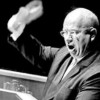
The Day a Soviet Leader Banged His Shoe at the UN
During the height of the Cold War between the United States and the Soviet Union, and particularly in the 1960s, the United Nations was the ideological battle ground where the Americans and the Soviets pummeled each other– metaphorically speaking — either on the floor of the cavernous General Assembly hall or at the horse-shoe table of the Security Council.
Is Hypocrisy The Silent Strategy of Western Democracy?
The official reasons for the US-led, UK-backed invasion of Iraq in 2003 were to disarm Iraq of weapons of mass destruction, end Saddam Hussein’s support of terrorism, and free the Iraqi people.
The -Sad- US Nominations
The US mountain, so rich in human talent, labored and produced the two dwarfs for the huge job. A radical Republican strongman[i] and a conventional Democrat, disliked by 62% and 67%–bad for electing the president of a country that still puts some stamp on the world.
Mainstream Media Are Betraying Humanity
Physicians have a sacred duty to their patients, whose lives are in their hands. The practice of medicine is not a business like any other business. There are questions of trust and duty involved. The physician’s goal must not be to make as much money as possible, but rather to save lives.
A Case of Failing Democracy or Fading Geo-politics
The 'coup' of July 15 in Turkey failed within hours of its start, and given that it enlisted very limited support within the army itself, some called it not a coup but a 'mutiny'.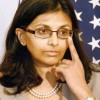
Biswal’s Dreams Just Pretentious Prattle
So Nisha Biswal, the US State Department’s point person on Sri Lanka, says that Sri Lanka could be another Singapore. That will be the day. If after six visits to the country in 20 months she has still not grasped the basics of Sri Lanka’s socio-political culture and mores, the lack of respect for law and order and the rule of law infused by political interference and intimidation, she could hardly be a messenger of hope and good sense.
We Must Talk: Not Just Ph and China but Us and China, Too
Let us do this chronologically. Days before the release on July 12 of the ruling of the Permanent Court of Arbitration, at The Hague, on the Philippine maritime dispute with China, Foreign Secretary Perfecto Yasay, Jr. announced he was willing to sit down with Beijing for bilateral talks on the possible joint exploration of mineral and marine resources of the disputed maritime areas in the South China (West Philippine) Sea.
Feminism Slowly Gaining Support at United Nations
Achieving gender equality has long been one of the United Nations’ top priorities yet the word feminism has only recently begun to find its way into speeches at UN headquarters.
Breaking the South China Sea Stalemate
I grew up in a remote small village of Catanduanes, an island-province on this side of the Pacific where we had no court of law nor even a village cell to detain those who disturbed the peace. By necessity, we were obliged to maintain a zero crime rate. But neighbors and spouses still quarreled, sometimes violently, and whenever this happened, the parties would come to my father, who had a reputation for being a just and honest man, to conciliate or arbitrate. He would talk to the parties, ask a few questions, and then advise them to overlook each other’s defects and compose their differences. Somehow it always worked.China Showing Big-power Attitude
China has been dealt a major setback this week at the United Nations-backed Permanent Court of Arbitration in The Hague, a tribunal established as way back as 1899 and to which 121 member states are signatories. The tribunal this week ruled in favour of the Philippines over the sovereignty of small but strategically significant and resource rich islands in the South China Sea. The tribunal held that China had “no legal basis” to its claim for “indisputable sovereignty” over these islands and dismissed its “historic rights” argument – something that Tamil Nadu Chief Minister (who is making similar claims over the Palk Strait) might take note of.
US Elections Cry Out for Reform!
As many observers around the world have pointed out, the United States is no longer a true democracy. It is an oligarchy. The US government ignores the safety, wishes and needs of the majority of its citizens, and instead makes decisions which will bring profit to enormous corporations, or satisfy the wishes of powerful lobbies.
Civil Society Organizations Worried About Declining Involvement
Less than a year after the adoption of the global Sustainable Development Goals (SDGs), non-government organizations (NGOs) are concerned about declining possibilities for participation, both at the UN and in national politics.
The Delusion ‘I Am Not Responsible’
- One of the many interesting details to be learned by understanding human psychology is how a person's unconscious fear works in a myriad of ways to make them believe that they bear no responsibility for a particular problem.
The UN and Global Economic Stagnation
When the financial crisis preceding the Great Recession broke out in late 2008, attention to the previously ignored UN Secretariat’s analytical work was greatly enhanced. This happened as the UN and the Bank of International Settlements (BIS) had been almost alone in warning, for some years, of the macroeconomic dangers posed by poorly regulated financial sector developments.
First Independent Expert To Tackle LGBTI Discrimination: “Historic Victory”
Human rights groups have described the UN Human Rights Council's (HRC) decision on Thursday to appoint an independent expert to target the ongoing discrimination of lesbian, gay, bisexual, transgender and intersex (LGBTI) people all over the world as a "historic victory."
Post-Brexit blues
AGITATED markets, a tumbling pound-sterling, a downgraded credit rating: none of these should have been an unexpected outcome of the British electorate’s decision last weekend to opt out of the European Union.« Previous Page — Next Page »





Is the world dominated by three great empires -- the U.S.A, China and the European Union? How much power do the great behemoths of the south -- India, Brazil, and South Africa -- wield? And where does Russia fit in that equation? Are we in the middle of a new Cold War? What are the implications of the armed conflict with Georgia? What about the new axis: Venezuela-Russia? And what role does Turkey play? What about issues like Climate Change and other global forces like the food crisis and the high energy prices? How is all this reshaping the world's forces? IPS looks for some answers.

The Week with IPS

NEXT STOP - SDGs
Tracking global progress towards a sustainable world
Tracking global progress towards a sustainable world
