Languages
Wednesday, November 18, 2026



News and Views from the Global South
Global Governance
Exorcising Stalin
In one of his books, Mohamed Heikal, the Egyptian journalist who died last month at the age of 92, records an extraordinary encounter in 1964 between Gamal Abdel Nasser and Nikita Khrushchev.
New Nuclear Hysteria in the Middle East
Three years ago when the tsunami of panic around Iran's potential capability to develop nuclear weapons reached its peak, a combined diplomatic, media campaign warning that a Gulf Arab state would think of purchasing atomic bombs was spread like an oil spot.
World’s Rural Poor Need Social Protection, Says UN
The success of the UN’s post-2015 development agenda is predicated on one underlying theme: no one should be left behind – and certainly not the world’s rural poor --in the fight to eradicate hunger and poverty by 2030.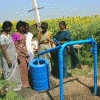
Groundwater Governance in Andhra Pradesh
India is the largest user of ground water in the world. But reliance of this overexploited resource has reached its limits in many parts of the country. Nowhere is this more evident than in the drought-prone districts of Rayalseema, uplands of Prakasam, Krishna, East-West Godavari, parts of Nellore, Vizianagaram and Srikakulam in the state of Andhra Pradesh (AP). Forty per cent of the state’s irrigation needs are met through groundwater. In the drought-prone Rayalseema region – which comprises Chittoor, Anantapur, Kurnool, Prakasam and Kadapa districts -- dependence on groundwater for irrigation is particularly high. The water crisis is also most severe in this region.
Mexico’s Chinampas – Wetlands Turned into Gardens – Fight Extinction
David Jiménez grows two kinds of lettuce and other fresh produce on his “chinampa” or artificial island just under one hectare in size in San Gregorio Atlapulco, on the south side of Mexico City.
Europe: The Schengen Agreement In Danger
Exclusion of Greece from the European free travel zone established by the Schengen Agreement is pending. The European Commission has ruled that the Athens government has “seriously neglected its obligations to control its own borders,” and if the deficiencies are not corrected within three months, the other member states of the Schengen area may exclude it from the agreement. In 2015, some 850,000 people seeking asylum and work in northern European countries passed through Greece, and the influx is continuing.UNDP Pledges to Help Eradicate Poverty, Hunger By 2030
The UN Development Programme (UNDP) celebrated its 50th anniversary this week with a pledge to help implement the UN’s post-2015 development agenda aimed at eliminating extreme poverty and hunger by 2030. When the agency was founded in 1966, one in every three people was living in poverty. But that number has changed to one in eight, according to UNDP figures.
Obama in Cuba: the Reasons for His Trip
At this stage of the process that began in December 2014 with the surprise announcement of the opening of relations between the United States and Cuba, hardly anything counts as spectacular news. The detail in the decision by Washington and Havana that made news in the traditional sense (man bites dog) was that the plan to sit down and talk implied that Cuba gave up its prior demand that the embargo be lifted. The United States, for its part, accepted that Cuba did not undertake to make any special changes to its own political system.
Obama and Raúl Castro to Launch New Era with Historic Visit
U.S. President Barack Obama and his Cuban counterpart Raúl Castro will go down in history as two statesmen who managed to overcome more than half a century of hostility to bring back together two neighbouring countries with too many shared interests to remain at loggerheads.Mideast Arms Supplies Continue Despite Falling Oil Prices
The continued decline in oil prices is threatening to have a direct and indirect impact on several fronts, including development aid, migrant workers and remittances, voluntary contributions to UN agencies, humanitarian assistance to refugees and infrastructure-building in the Gulf countries.
Argentina’s Ties with China: Pragmatism over Politics
Argentina’s new government is reviewing several major projects to be carried out jointly with China. But aside from a few changes in priorities, the administration is not expected to put the brakes on an alliance that Beijing classifies as strategic.
UNDP at 50 Seeks Broad Coalition Targeting Sustainable Development
Fifty years ago, one in every three people around the world was living in poverty. It was against that backdrop that the United Nations Development Programme, UNDP, was founded in 1966. Ever since, UNDP has been a leader in working for a more fair and prosperous world for all. We have worked with governments, civil society, the private sector, and philanthropy to empower people and build resilient nations.
Elections in Iran, a Test for the Regime
Iran will hold two crucial elections on February 26, 2016, which could decide the fate of the Islamic Republic for many years to come. Earlier this month, Iranians celebrated the 37th anniversary of the victory of the Islamic Revolution. During that period, the country experienced revolutionary upheavals, a disastrous eight-year war with Iraq that killed and wounded nearly a million Iranians, eight years of populist rule by a hard-line president, Mahmoud Ahmadinejad, and crippling Western sanctions.
Pilgrimage for Peace on 50th Anniversary of Camilo Torres’ Death
The police cut down trees at six different points to block the road to the spot in northeast Colombia where priest-turned-guerrilla Camilo Torres was killed 50 years ago, and local residents protested the attempt to pay homage to him.Children of Alcoholics – Hidden Human Rights Crisis & Crucial SDGs Issue
Children of alcoholics are the forgotten victims of someone else’s alcohol use. All too often they do remain invisible and alone, neglected by their parents, overlooked by teachers, down prioritized and ignored by governments and authorities.
Evolving Nature of China’s South-South Cooperation
China’s strength in South-South Cooperation (SSC) lies in its carrying out big-ticket infrastructure projects in diverse developing countries. It is remarkable in terms of project scale, speed and cost-effectiveness and has been playing a positive role in promoting partner’s nation-building, economic development and social progress. However, the swift completion of China’s infrastructure projects also has its sets of problems like little or no paper-work leading to lack of transparency, oversight and post-project monitoring. The backlash against Chinese labourers employed by Chinese companies in developing countries has been routinely highlighted by the international media with allegations of skirmishes with the local population, corruption coupled with resource theft.
Boutros Boutros-Ghali Turning Point in the United Nations
It is no coincidence that Boutros Boutros-Ghali was the only Secretary General in the history of the United Nations able to serve only one term instead of the two that have become traditional. The United States vetoed his re-election, in spite of the favourable vote of the other members of the Security Council.
The Nuclear Deal Implementation Day: Can the Deal with Iran Survive Iranian and US Elections? (part three)
Although the implementation of Iranian nuclear deal has been welcomed by all those who had been involved in the negotiations as part of the P5+1, the deal has had many vociferous opponents.
UN Chief Denied Second Term by a Livid US Veto
Boutros Boutros-Ghali, who passed away Tuesday at the age of 93, was the only UN Secretary-General (1992-1996) to be denied a second term in office because of a US veto in the 15-member Security Council.
TPP’s Threat To Multilateralism
2015 proved challenging for multilateralism, especially in relation to development concerns. July’s Addis Ababa third Financing for Development (FfD) conference delivered little real progress. Nevertheless, the September Sustainable Development Goals summit redeemed hopes with an ambitious and universal Agenda 2030.
Gulf migration at an inflexion point
The steep fall in global oil prices has hit Gulf economies severely. Saudi Arabia, United Arab Emirates (UAE), Qatar, Bahrain are expected to run huge budget deficits as shrinking revenues from selling cheaper oil cannot fund their mounting expenditures. As they tighten their belts, the brunt of adjustment will be felt by migrants, who constitute the bulk of the labour force. Reforms include cutting fuel, power, water, education subsidies and a value-added tax (VAT). This will affect migrants and reports indicate family members are returning home.« Previous Page — Next Page »


The Week with IPS

NEXT STOP - SDGs
Tracking global progress towards a sustainable world
Tracking global progress towards a sustainable world
