Languages
Friday, October 9, 2026



News and Views from the Global South
Global Governance
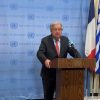
UN Chief, Brazil Gather World Leaders to Reaffirm Commitments Paris Agreement
UN Secretary-General António Guterres and President Lula da Silva of Brazil on Wednesday, April 23, held a closed-door meeting with heads of state to discuss strengthening global efforts against the climate crisis and to ensure a just energy transition.
US Considering Nuclear Power for Saudi Arabia in Grand Bargain
The Trump administration is reportedly pursuing a deal with Saudi Arabia that would be a pathway to developing a commercial nuclear power industry in the desert kingdom and maybe even lead to the enrichment of uranium on Saudi soil.
Slave Trade: Gorée Island and the ‘Fragility of Freedom’
Gorée Island, off the coast of Dakar, is a somber reminder of the transatlantic slave trade. Listed as a UNESCO World Heritage Site, it embodies both the duty to remember and the challenges of passing on a painful past.
Trump Wants World to Subsidise US Empire
Donald Trump’s top economic advisor claims the President has weaponised tariffs to ‘persuade’ other nations to pay the US to maintain its supposedly mutually beneficial global empire.
Shaken and Strained: Myanmar’s Earthquake Adding to the Misery of 4 Years of Conflict
As I walked through the streets of Sagaing and Mandalay, the scenes unfolding in the wake of the 7.7 earthquake were hard to comprehend. Tall buildings and hundreds of homes are now lying in rubble. Of those that are still standing, many are lurching at dangerous angles, defying gravity for now, but could collapse at any moment.
Bringing Resilience to the Table to Achieve Development Goals
The global risk landscape is evolving at an unprecedented pace, posing significant threats to attaining the Sustainable Development Goals (SDGs). As extreme weather, macroeconomic shocks, conflict, and other risks intensify and intertwine, they can create ripple effects that amplify existing vulnerabilities and put both human and development progress in peril.
France to Break Away from UK & US While Recognizing Palestine as Nation State
France, a veto-wielding permanent member of the Security Council, the most powerful political body at the UN, is planning to break ranks with the other two Western members, the US and UK-- and recognize Palestine as a nation state. French president Emmanuel Macron was quoted as saying that France would recognize a Palestinian state within months, and suggested he could do it alongside a UN conference in New York in June.
Genocide Prevention & Responsibility to Protect
April marks Genocide Prevention and Awareness Month, a time to reflect on the history, causes and victims of past genocides and to mobilize the necessary resolve to confront risks facing populations around the world today who face the threat of genocide and other mass atrocity crimes not for anything they have done, but for who they are.
Trump’s ‘Shock and Awe’ Tariffs
US President Donald Trump has again seized global attention by arbitrarily imposing sweeping tariffs on the rest of the world. He reminds us America is still boss, claiming to ‘make America great again’ (MAGA) by ensuring ‘America first’ at everyone else’s expense.
Is it Time to Say RIP to the SDGs?
Is it only a decade since the Sustainable Development Goals (SDGs) and the Paris Agreement on climate change were agreed? The two deals were inked to a groundswell of hope.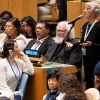
How to Ensure Election of the First Woman Secretary-General: A Daunting Challenge Before the United Nations
On 21 March 2025, the 69th session of the Commission for the Status of Women, popularly referred to as the CSW69, concluded its two-week-long annual meet which commenced on 10 March.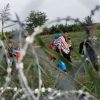
Migrant Smuggling: Europe Must Make a U-Turn
Europe must understand that the only reasonable and humane way to tackle migrant smuggling is to open regular routes for people to reach Europe in safety and dignity.
US Tariffs Threaten to Undermine World Trade Organization
As the Trump administration’s hostility towards the United Nations and other international organizations keeps growing, a New York Times columnist last week proposed what he frivolously described as “something a little incendiary”.
South Korea’s Rapid Aging Doesn’t Have to Be Economic Destiny
Strong economic fundamentals and sound macroeconomic policies have helped the Korean economy through multiple shocks in recent years. However, potential growth has slowed more quickly than in other major advanced economies, and the economic expansion is likely to moderate this year.
Digital Democracy at a Crossroads. Key Takeaways from RigthsCon2025
In an increasingly digital world, democratic practices are evolving to encompass new forms of participation. Digital democracy – the use of technology to enhance civic action, movement building and access to information – has become a crucial force in shaping local and global political landscapes.
We Can Solve Global Challenges Through Global Public Investment
Watching on our screens the devastation wrought by the earthquake which struck South-East Asia last week has brought a stark reminder of our shared vulnerability in this interconnected world. It has exposed again, too, the weak beams of traditional funding models that struggle to ensure a timely response to disasters.
How to Agree an Armistice in Ukraine: Lessons from Korea
The armistice agreement that ended the Korean War in 1953 has been mentioned as a possible model for how to end the fighting in Ukraine. This makes sense. The Trump administration, however, seems to opt for a quick deal like the 1973 Paris agreement on Vietnam or the Minsk agreements of 2014–15, combining “ceasefires in place” with vain prospects of subsequently reaching a genuine peace agreement.

Challenging the Taliban’s Violations of Afghan Women’s Rights
The Taliban’s egregious violations of women's rights in Afghanistan, especially banning women from education and even from speaking in public, are beyond the pale. Imposing economic sanctions alone, however, has not changed in any significant way the Taliban’s treatment of women.
Putting People First: Why SRHR Must Be Central to Health and Development Agendas
As global leaders prepare to convene for the Commission on Population and Development (CPD) in New York, April 7-11, the world finds itself at a critical crossroads. We can either recommit to human dignity, equality, and justice—or risk unraveling decades of progress in global health.
Collapse of Gaza Ceasefire and its Devastating Impact on Women and Girls
The end of the tenuous ceasefire in Gaza is having disastrous consequences for women and girls. From 18 to 25 March—in just those 8 days, 830 people were killed—174 women, 322 children, with 1,787 more injured.
Greenland: A Brief Chronicle of a US Historical Interest
“…I am convinced that Greenland's importance to U.S. interests will grow. Thanks to geography, historical ties (…), the United States has the inside track when competing for influence in Greenland (even as the Chinese have now started making regular visits)…” This quote from a diplomatic cable sent by the U.S. embassy in Copenhagen to Washington might seem recent, perhaps just before President Trump’s abrupt announcement of his intentions to “buy” or “annex” Greenland from Denmark, but that is not the case.« Previous Page — Next Page »





The Week with IPS

NEXT STOP - SDGs
Tracking global progress towards a sustainable world
Tracking global progress towards a sustainable world
