Languages
Thursday, November 26, 2026



News and Views from the Global South
Global Governance
Women’s Soccer Coming to the Fore
This time last year the entire world gathered in front of TV screens to watch the World Cup. According to International Federation of Association Football (FIFA) estimates, 3,178,856 people made their way to South Africa, and around the globe 700 million viewers watched the Spanish victory in the final match.SOUTH SUDAN: Fuel Shortages Grip Country
South Sudan is facing severe fuel shortages less than three weeks before it gains independence from the rest of the country. Many gas stations have shut down and those that remain open have people lining up overnight for fuel.
EGYPT: Solar Energy Projects Picking up Again After Uprising
On a blazingly hot summer’s day in Cairo, it’s 36 degrees Celsius in the shade. Air-conditioners and fans whirr across the city, burdening the national electricity grid. Last summer, the populous city experienced frequent water and power cuts, causing a furore. Consumption had grown by 2,600 megawatts, an increase of 13,5 percent from 2009.U.S.: Kerry, McCain Come to Obama’s Rescue Over Libya
Hoping to head off growing insurgencies in both major parties over Washington’s participation in NATO’s military campaign against Libya, two key senators Tuesday unveiled a resolution that would give President Barack Obama the authority to continue operations there for up to one year.U.S.: Supreme Court Walmart Decision Is a “Blow to Justice”
Labour and women’s rights groups are strongly criticising the Supreme Court’s rejection of a class action suit brought by current and former female employees of Walmart who sought to represent 1.5 million female employees who claim that the company discriminated against women.DR CONGO: Publish All Mining, Oil and Forest Contracts
Civil society and the government are agreed: the Democratic Republic of Congo must make public the details of all mining, forestry and oil contracts.Libya Says NATO Strike Kills 19 Civilians
The Libyan government says 19 civilians have been killed in a NATO air strike on the home of one of Muammar Gaddafi's top officials, a day after the Western military alliance admitted killing civilians in a separate attack.OP-ED: Growing Goat Herds Signal Global Grassland Decline
After the earth was created, soil formed slowly over geological time from the weathering of rocks. It began to support early plant life, which protected and enriched it until it became the topsoil that sustains the diversity of plants and animals we know today. Now the world's ever-growing herds of cattle, sheep, and goats are converting vast stretches of grassland to desert.JAPAN: Anti-Nuke Policy to Bring Severe Economic Fallout
Three months after the devastating Mar. 11 earthquake that caused an accident at the Fukushima power plant, energy experts warn of economic fallout if nuclear energy is snuffed out too quickly, much to the dismay of an increasingly angry and frustrated public.PERU: Dam Project Temporarily Suspended to Calm Protests
The outgoing government of Peruvian President Alan García has suspended construction of the Inambari hydroelectric complex, part of an energy deal with Brazil. But activists say the move is merely aimed at calming tempers among local people opposed to the dam, while handing the problem on to García's successor, president-elect Ollanta Humala.North and South Sudan Sign Pact over Abyei
North and south Sudan have signed an agreement to demilitarise the disputed Abyei region and allow in Ethiopian peacekeeping forces, former South African president Thabo Mbeki said on Monday.
Hydropower Dams Hurt Amerindians in Brazil and Canada
Michael Lawrenchuk, a Cree political activist from Canada, was given a standing ovation at the International Hydropower Association congress held in this Brazilian border town, after depicting the suffering of his people since dams began to be built on rivers across their land.BOOKS-PAKISTAN: Between a Rock and a Hard Country
It is almost obligatory these days to subtitle books on Pakistan with some conjunction of 'failed', 'dangerous', 'lawless', 'deadly', 'frightening' or 'tumultuous'. Pakistan is a 'tinderbox', forever on the brink, in the eye of the storm, or descending into chaos. It is an 'Insh'allah nation' where people passively wait for Allah.Building Vaccines for the “Bottom Billion”
As the world marks 30 years since HIV/AIDS was first identified, vaccine researcher Dr. Peter Hotez hopes intervention programmes can begin to incorporate treatment for some lesser-known ailments called neglected tropical diseases, or NTDs.Africa Faces Explosive Population Growth
The African continent, which is projected to make significant economic gains over the next decade, is in danger of being weighed down by a dramatic explosion in population growth.OP-ED: Ban’s Second Term: The Case for a Woman Secretary-General
Last Friday's recommendation to give the incumbent U.N. Secretary-General Ban Ki-moon another five-year term drew the international community's attention to another opaque, non- democratic process that is the hallmark of the 15-member Security Council's decision-making.
AFRICA: Poor Excluded From Benefits of High Economic Growth
The high economic growth enjoyed by many African states during the 2000s have not led to poverty elimination. This is because the growth did not happen in the sectors where poor people work, as in agriculture, or in the rural areas where poor people live, or simply did not involve labour provided by poor people.Postponing Emissions Cuts Carries Steep Price-tag
If we're lucky, by the time a tough but fair international treaty to meet the climate change challenge is finalised, it will be largely unnecessary. The snail's pace of negotiations certainly gives countries plenty of time to understand the financial, social and environmental advantages of kicking their dangerous addiction to fossil fuels.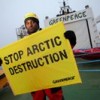
OP-ED: Drilling Deep Mistakes in the Arctic
Nuuk is a long way from my hometown of Durban, and the Arctic is a long way for an African to come to campaign about climate change. Yet, here I sit, in a jail cell, with my colleague Ulvar Arnkvaern, in the ‘Institution’, a prison in Greenland’s capital. I sit here for breaching an exclusion zone and climbing aboard a dangerous deep water drilling rig some 120 km off Greenland’s coast.
ICELAND: New Energy Stinks, And Worse
Public health authorities in Reykjavik have criticised plans for the expansion of the Hellisheidi geothermal power plant. They say that levels of the gas hydrogen sulphide could increase by 40 percent if a new geothermal field, Grauhnukur, is developed and nothing is done to ensure that the levels of the gas remain below maximum permitted levels.U.S.: Obama’s Claim of Libya War Powers Widely Disputed
President Barack Obama’s claim that U.S. military operations against Libya should not be subject to the War Powers Act and do not require Congressional approval is drawing heavy fire from friends and foes alike.« Previous Page — Next Page »


The Week with IPS

NEXT STOP - SDGs
Tracking global progress towards a sustainable world
