Languages
Sunday, November 29, 2026



News and Views from the Global South
Global Governance
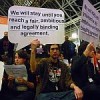
CLIMATE CHANGE: “Canada Is the Dinosaur”
Canada bears a large share of responsibility for any failure to make a breakthrough in reducing greenhouse gas emissions here in Copenhagen, say participants and civil society activists.RELIGION: Few States Enjoy Freedom of Faith, Report Says
About one-third of the countries in the world have high or very high restrictions on religion, and nearly 70 percent of the world's population lives in countries with heavy restrictions on freedom of religion, according to a new study by the Pew Research Center's Forum on Religion & Public Life.SOUTH ASIA: Glacial Data Crucial to Combating Climate Change
People living in the Himalayan region are increasingly confronted by rising temperatures and glaciers melting at an unprecedented rate, threatening their very survival. This much the world already knows.CLIMATE CHANGE: Everything Left to Accomplish*
"It’s clear now – we’re not getting a binding deal at the end of tomorrow," said the president of Friends of the Earth-United States, Erich Pica.MEDIA: 2009 Deadliest Year Ever For Journalists
The election-related killings of more than 30 media workers in the Philippines made 2009 the deadliest year ever for journalists, according to a major press freedom advocacy group.
CLIMATE CHANGE: No Water in Copenhagen Talks
In the last two years, the conclusion among decision-makers has been that the only way to solve the climate crisis is to turn carbon into a commodity and privatise the atmosphere.
CLIMATE CHANGE: Lawmakers Push for a Deal
With only one day to go to the end of the climate change talks and no agreement in sight, it looks like it will ultimately be up to national legislators to effectively implement whatever agreement is forged here in the Danish capital.
Q&A: Global Economic Apartheid Is Obstacle to Fair Climate Deal
"Climate change is an opportunity to deal with all the issues of equity and justice that we have been struggling for all along," said Kumi Naidoo, Executive Director of Greenpeace International in an interview with IPS on Thursday in Copenhagen.
CLIMATE CHANGE: Zenawi Stands Alone In Copenhagen
Ethiopian Prime Minister Meles Zenawi says Africa must compromise and be flexible towards other countries, if the U.N. Climate Conference ending on Dec. 18, is to reach an agreement.
CLIMATE CHANGE: Meat-Eating Gets Grilled
Climate change has given vegetarians a big, new stick to bash meat-eating with, albeit one they would have gladly done without.
CLIMATE CHANGE: ‘What’s Good for Asia Is Good for the World’
China appears to have gained instant celebrity status since the opening days of the United Nations Climate Change Conference here.
CLIMATE CHANGE: Chavez, Morales Lash Out at Wealthy North
Presidents Evo Morales of Bolivia and Hugo Chávez of Venezuela had harsh words for rich countries Wednesday, accusing them of driving the COP 15 talks to the brink of failure out of "selfishness" and supporting a "culture of death."U.S.: Aging Coal Plants Still a Fixture in South
As governments negotiate future greenhouse gas emissions in Copenhagen, a recent report from Environment America has highlighted the problem of the United States' older coal-fired power plants, which generated nearly three-quarters of U.S. carbon dioxide emissions from power plants in 2007.ARGENTINA: “Myth” of Egalitarian Society Fading Away for Young People
A study on young people and human development in South America's Mercosur trade bloc indicates that while in Brazil, the country's longstanding social inequality is the focus of at least somewhat successful efforts to combat it, in Argentina the vision of an equitable society is fading away.CLIMATE CHANGE: Future Energy Scenario Unfavourable to Asia
Much of the discussion in Copenhagen has revolved around targets and deadlines for cutting carbon emissions. But a weekend seminar in the idyllic Danish island of Samsoe, titled "Future Energy," helped journalists locate the problem in the context of the world's biggest emitters.CLIMATE CHANGE: China Reels Under a Barrage of Criticism
China is not happy. This is how one of the Chinese state-sanctioned newspapers summed up Beijing's feelings about the week spent negotiating on climate change in the Danish capital.CLIMATE CHANGE: Asians Find their Collective Voice
If some Asian states appeared to be disunited in the lead-up to the climate change talks currently underway in Copenhagen, now they are rising in unison to get the developed world to accede to their demands.US-IRAN: House Passes Sanctions Bill, Senate Urged to Wait
In advance of U.S. President Barack Obama's end of the year deadline for Iran to respond to negotiations aimed at bringing a halt to the Islamic Republic's nuclear programme, the House of Representatives passed a bill Tuesday to sanction companies that sell refined petroleum to Iran.
CLIMATE CHANGE: The Many Lives of the Tobin Tax
In the decades since 1972, when Nobel laureate economist James Tobin (1918-2002) first proposed it, the idea of a tax on currency speculation has resurfaced and disappeared many times, according to the economic tides.
CLIMATE CHANGE: ”The Struggle Does Not Stop Here,” Say Witnesses
‘’Those who run the decision-making on climate change are the same who have caused it,’’ said Archbishop Desmond Tutu at the world’s first international climate hearing on Tuesday, pithily identifying the reason why justice has been elusive at the ongoing climate change summit in the Danish capital.
Q&A: South Is No Longer a Peripheral Actor
There are broad prospects for developing countries to build on complementarities and leverage South-South Cooperation for development, according to Nassir Abdulaziz Al-Nasser, Ambassador of Qatar to the U.N.« Previous Page — Next Page »


The Week with IPS

NEXT STOP - SDGs
Tracking global progress towards a sustainable world
