Languages
Sunday, November 29, 2026



News and Views from the Global South
Global Governance

ENERGY-ICELAND: Osmotic, Tidal Power Show Promise
Iceland already gets over 72 percent of its energy from renewable, hydroelectric and geothermal sources, but Icelanders are ambitious when it comes to energy and scientists are now looking at osmotic and tidal power to meet future energy needs.RIGHTS: Gender Empowerment at U.N. Still Cloudy
When the United Nations commemorated the 30th anniversary of a major international treaty on women's rights last week, Secretary-General Ban Ki-moon boasted about the increasing number of women he has appointed to senior positions in the world body since he took office in January 2007.
MIDEAST: Gaza March Puts Spotlight on Civilian Suffering
More than 50,000 people are expected to take to the streets of Gaza on Dec. 31 for a mass march designed to send a message to the United States, a key supporter of Israel's army, that the situation in Gaza violates international human rights laws.DEVELOPMENT: Chile to Join the “Rich Man’s Club”
The Paris-based Organisation for Economic Cooperation and Development (OECD) has invited Chile, a developing nation with a vibrant economy, to join what has long been described as "the rich man's club".CLIMATE CHANGE: Copenhagen Fizzled, California Forges Ahead
As countries failed to reach a substantive climate change pact at Copenhagen last week, action at the subnational level has emerged as one of the likeliest paths toward significant climate action.
Q&A: “The Sun Also Shines in North Korea”
North Koreans are not as isolated from the world as the United States thinks, and in fact understand the U.S. better than the U.S. understands North Koreans, says regional expert Robert Carlin.
POLITICS: Nobel Laureate’s Burma Visit: ‘Moment of Hope’?
To activists more accustomed to working against Burma’s military junta than with it, any engagement with the recalcitrant regime will amount to nothing. But to 2001 Nobel Prize winner Josepth Stiglitz, it is a window of opportunity for a country that has known only poverty and repression.JORDAN: Palestinian Refugees Live Out Lives in Limbo
Music enlivens the yellow taxi as it traverses the Jordanian capital. A small Palestinian flag hangs from the rearview mirror. Jihad, the cab driver, says his father fled here from the Palestinian West Bank in 1948.INDIA: Despite Failed Climate Talks, More Green Awareness
The world supped on an alphabet soup of acronyms over the nearly two weeks of climate change talks that just ended – UNFCCC, COP-15, IPCC, CDM, LDCF, MEF, CCS. But did any of these filter down to reach the average citizen?
CLIMATE CHANGE: “We’re Not Finished Yet,” Civil Society Warns
The climate change summit proved to be a "spectacular failure even according to its own terms," but civil society had "some successes," such as the inclusion of certain issues on the climate agenda, and making the voice of the South heard loud and clear.POLITICS: The Week the IAEA Applied a Nuclear Double Standard
In 2004, the International Atomic Energy Agency (IAEA) revealed that a member state had violated its Safeguards Agreement by carrying out covert uranium conversion and enrichment activities and plutonium experiments for more than two decades. The nature of certain of those enrichment activities, moreover, raised legitimate suspicions of interest in a nuclear weapons programme.
CLIMATE CHANGE: History Was Not Made
There is no Copenhagen climate treaty. History was not made here and no deal was sealed.
CLIMATE CHANGE: Scientific Fact, Not Political Issue
"In a year's time, the Japanese archipelago will be completely under water." This official announcement was made following a violent eruption of Mt. Fuji, as a series of devastating earthquakes shook the country, forcing the world to face the challenge of taking in 110 million refugees within a very short time.
CLIMATE CHANGE: Getting Ready for Mexico
Before the outcome of COP 15 has even emerged, Latin American social organisations are already discussing their strategies for the next climate summit, to be held in a year's time in Mexico.
CLIMATE CHANGE: No Real Deal, and No Exit
The roof of our house is on fire but our leaders, our economic system and we ourselves are ignoring the alarms and continuing to add more fuel. There are no exit doors in our house; there is nowhere else to go.
DEVELOPMENT: South-South Cooperation at 30-Year High
As the United Nations commemorated its sixth annual 'U.N. Day for South-South Cooperation' Friday, Secretary-General Ban Ki-moon singled out the growing new ties among developing countries that go far beyond trade and investments: education, science, agriculture, medicine, health services and information technologies.
CLIMATE CHANGE: Draft Accord Weak on Cuts, Funding
Heads of state and government are working fervently Friday to complete an agreement at the climate change summit in Copenhagen, but texts coming out of their midst so far lack details on emissions cuts and long-term funding.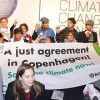
CLIMATE CHANGE: “The Intelligence We Lacked”*
World leaders speaking in Copenhagen on Friday, the last day of negotiations for a deal on climate change, retreated into their national positions.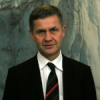
CLIMATE CHANGE: Norway Is Trying*
Norway is the world’s third largest donor in terms of development aid as a percentage of GDP. Norwegian Minister of Environment and International Development Erik Solheim spoke to TerraViva about the initiatives promoted by his country on environmental protection and its role during the Copenhagen negotiations.CLIMATE CHANGE: Copenhagen Talks Create Hardly a Ripple in Malaysia
Even if Prime Minister Najib Razak is in Copenhagen for the high-level segment of the U.N. conference on climate change, there has been precious little meaningful debate on the subject here in Malaysia.BANGLADESH: Food Security in Great Peril from Climate Change
Unless the world comes to its aid, Bangladesh says the vulnerability of its agriculture sector to climate change could spell severe consequences for its millions of people, who stand to lose their main source of livelihood.« Previous Page — Next Page »


The Week with IPS

NEXT STOP - SDGs
Tracking global progress towards a sustainable world
