Languages
Friday, September 25, 2026



News and Views from the Global South
Global Governance

An Ominous Reckoning for the Gulf States
Trump’s Iran war has left the Gulf shattered: US bases turned into targets, economies battered, and the “oasis” myth destroyed. Gulf rulers now confront a harsh reckoning over their reliance on Washington and the uncertain search for a new, fragile security order.
The United Nations Needs a Secretary-General of Courage, Not Convenience
The United Nations was not founded to be comfortable; it was founded to be necessary. Created in the aftermath of catastrophe, its purpose was clear: to maintain international peace and security, to uphold international law, to defend human rights and to promote human dignity and development.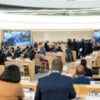
The “Extremely Dangerous and Unpredictable” situation in Middle East and Beyond
More than three weeks after the United States and Israel launched strikes on Iran, the conflict is spreading and intensifying in the region and beyond, with civilians bearing the brunt. Families across the region marked Eid and Nowruz under fire, in fear and uncertainty, and facing further hardship.
Torture and Physical Abuse of Children in Gaza Declared War Crimes
The ongoing Israeli-Palestinian conflict, which began October 2023, has claimed the lives of more than 73,600 Palestinians and about 1,195 Israelis. But there are widespread charges accusing Israel of war crimes, genocide, torture and the abuse of Palestinian detainees in Israeli jails.
EXCLUSIVE: Water Laureate Kaveh Madani on Arrest, Exile and Fight for Science
Professor Kaveh Madani of Iran has been named the 2026 Stockholm Water Prize laureate. The award will be formally presented by King Carl XVI Gustaf of Sweden in August during World Water Week in Stockholm.
A World Order in Crisis: War, Power, and Resistance
Article 2(4) of the United Nations Charter prohibits member states from using threats or force against the territorial integrity or political independence of any state. Violating international law, the United States and Israel attacked Iran on February 28, 2026. The ostensible reason for this unprovoked aggression was to prevent Iran from developing a nuclear weapon.
Central Bank Hedging Triggered Gold Fever
In mid-1971, US President Nixon ended the dollar’s gold peg at $35 per ounce, triggering de-dollarisation. The 2025 gold and silver rush followed private speculators trying to profit from central banks hedging against perceived new risks.
Gender Equality: A Global Priority or a Global Consensus?
The 70th session of the Commission on the Status of Women (CSW70) (March 9-19), held at the United Nations headquarters, brought together governments, decision makers, civil society, and international organizations to address a central issue: access to justice for women and girls.
Europe and Multilateralism
“Europe can no longer be a custodian for the old-world order, for a world that has gone and will not return (…) we need a more realistic and interest-driven foreign policy.” These were some of the words pronounced one week ago by the President of the European Commission, Ursula von der Leyen, at the EU Ambassadors’ Conference in Brussels. A speech that sparked considerable controversy: an almost immediate rebuttal from the President of the Council, Antonio Costa; rumours of a motion of censure against Von der Leyen in the European Parliament; more or less public reproaches from several European leaders; and a swift and complete retraction by the President herself.
International Tensions Spark New Nuclear Threat
When German Chancellor Friedrich Merz opened the 62nd Munich Security Conference by declaring that the post-war rules-based order ‘no longer exists’, there was plenty of evidence to back his claim. Israel is committing genocide in Gaza in defiance of international law, Russia is four years into its illegal invasion of Ukraine, the last nuclear arms control treaty between Russia and the USA has just expired and the USA has withdrawn from 66 international bodies and commitments. Since the conference, Israel and the USA have launched another war on Iran, threatening to spark a broader regional conflict. Meanwhile the UN is undergoing a funding crisis, cutting staff and programmes, and civil society organisations that relied on US Agency for International Development funding are facing closure.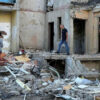
Is WWIII here?
It is becoming increasingly difficult to ignore the tension, violence and uncertainty in the world in recent years. The number of wars is growing, more and more money is being spent on weapons, and the rhetoric of major powers is becoming increasingly decisive.
Beyond Stereotypes: Reclaiming Muslim Histories during Ramadan
In public discourse today, Muslims often appear as subjects of debate rather than authors of their own histories. Discussions about Muslim societies tend to revolve around geopolitics, security or conflict, leaving little space for the cultural, artistic and intellectual traditions that have shaped Muslim communities across centuries.
A Remotely-Piloted Weapon That Targets Civilians in War Zones
As the world continues to be weighed down in political and military turmoil, drones are being increasingly used as weapons of war in a rash of ongoing conflicts—including Ukraine vs Russia, Israel vs Palestine, US vs Iran and Israel vs Lebanon, plus in civil wars in the Democratic Republic of the Congo (DRC), Sudan and Haiti.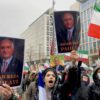
Iran Conflict: “Civil War Will Be Inevitable”
Iranian and Israeli flags fill the centre of Manchester, in northern England. There are also portraits of a king overthrown almost half a century ago and of his son, now a claimant to the throne from exile. It is yet another march of Iranians calling for Reza Pahlavi as an alternative to the regime of the ayatollahs.
Rapid Rise of Smart City Surveillance Tech Across Africa to Spy on Citizens
A massive expansion of AI-enabled surveillance of public spaces across Africa is violating citizens’ freedoms and the fundamental human right to privacy, warns a new report by the Institute of Development Studies.
Nigeria: Lessons from the Aba Women’s Riots for Today’s Women’s Movements
The Aba Women’s Riots of 1929 remain one of the most powerful demonstrations of Nigerian women’s collective resistance. Thousands of market women, farmers, traders, and mothers mobilized across districts in the then Eastern Nigeria to challenge colonial taxation and the extension of warrant chiefs’ authority over their lives. They organized without formal structures and without institutional support.
Syria’s Mobile Cultural Bus: Championing Cultural Justice, Delivering Art and Literature to Children of War
In the Al-Azraq camp in northern Syria, 10-year-old Abeer Al-Qaddour sits, browsing a colourful book with intense focus and curiosity. Nearby stands a bus, elegantly inscribed with the words 'The Cultural Bus'.
Why Does African Leadership Lack Coordination on Reparations?
Professor Jude Osakwe—a Nigerian scholar at the Namibian University of Science and Technology (NUST) and Continental Chairman of the Nigerians in Diaspora Organisation Africa (NIDOAF)—has reiterated the absolute truth over Reparations for Africa, noting that African governments have consistently expressed only 'emotional solidarity' over Reparations instead of tackling and addressing, with seriousness, this pertinent issue within the context of diplomacy.
Only 1 in 7 Countries is Led by a Woman– as Global Political Power Remains Dominated by Men
Across the world, women remain vastly under-represented in political leadership, with the most powerful decisions still overwhelmingly made by men. In 2026, only 28 countries are led by a woman Head of State or Government, while 101 countries have never had a woman leader, according to the latest data released by Inter-Parliamentary Union (IPU) and UN Women.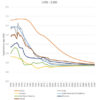
The Most Appropriate Response to Falling Birthrates? Embrace Them
As birthrates continue to decline in many industrialized countries, anxious governments are running out of schemes to keep women procreating.
The Cost of Being Seen: Exposure versus Exploitation
I have often been asked a simple but important question: How can we make it sustainable if we are not being compensated for it?« Previous Page — Next Page »


The Week with IPS

NEXT STOP - SDGs
Tracking global progress towards a sustainable world
Tracking global progress towards a sustainable world
