Languages
Wednesday, October 14, 2026



News and Views from the Global South
Peace
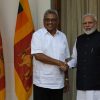
Modern Tools, Age-old Wisdom: on India-Sri Lanka Relations
The unique India-Sri Lanka relationship, de jure, is between equals as sovereign nations. But it’s asymmetric in terms of geographic size, population, military and economic power, on the one hand, and social indicators and geographical location, on the other. It is steeped in myth and legend, and influenced by religious, cultural and social affinities.
The Charter of the United Nations After 75 Years: Personal Reflections
The Charter of the United Nations is not only the constituent instrument of the United Nations as an organization. It is a multilateral legal manifesto encompassing a set of basic principles and norms aimed at ensuring peace, freedom, development, equality and human rights throughout the world. These principles and norms reflect the shared values proclaimed in the preamble on behalf of the “Peoples of the United Nations”. As such, it is the most innovative and trailblazing multilateral treaty ever concluded among States. Today, it is a universal instrument by which all States have solemnly accepted to be bound in their international relations.
Rohingya Women Take a Seat at the Table & Share Stories in a Growing Rights Movement
Rohingya women are coming together to feature their own work, plight and stories in mainstream conversations about their community — a space they say they’ve been left out of. “If we think of revolutions or liberty or think of any ways to liberate ourselves from the shackle of suffering and being dubbed as 'the most persecuted minority on earth', women have to be part of it,” Yasmin Ullah, president of the Rohingya Human Rights Network, told IPS.
Trump the Wannabe Dictator
I, like many of my fellow Americans, am extremely concerned about Trump’s dictatorial tendencies. Given his behavior – what he said and did over the past four years – he may well act on some of these tendencies, especially if he loses the election by a narrow margin.
Marking 75 Years of the Charter of the United Nations
The Charter of the United Nations has been a constant presence in my life. My awareness of it started with the usual brief introduction to the basics of the United Nations as an organization that many young people receive in school. Later, as my political awareness took shape against the backdrop of military rule in Portugal and my country’s status as a colonial power, the Charter’s calls for self-determination and other freedoms registered with urgency. During the time I spent as a volunteer in the poor neighbourhoods of Lisbon, the Charter’s vision of social justice was equally resonant. In subsequent service as a parliamentarian and then as Prime Minister, I was privileged to have an opportunity to advance not only national progress but one of the Charter’s other main objectives: international cooperation. Across a decade as High Commissioner for Refugees and now in my current role, the Charter’s power inspires me onward every day in serving “we the peoples”, including the most vulnerable members of the human family, who have a special claim on that landmark document’s provisions and protections.
The United Nations At 75 Remains The World’s Moral Compass
“The vision and promise of the United Nations is that food, healthcare, water and sanitation, education, decent work and social security are not commodities for sale to those who can afford them, but basic human rights to which we are all entitled.” Those were the poignant words of the UN Secretary-General, Antonio Guterres, in a hard hitting speech on 18 July 2020 to mark Mandela Day.
UN Chief Warns of Deadly Germs as Potential Bioterrorist Weapons
The coronavirus—which has claimed the lives of over 538,000 people and infected more than 11.6 million worldwide—has destabilized virtually every facet of human life ever since its outbreak in late December.
Nuclear Testing, Never Again
Seventy-five years ago, on July 16, the United States detonated the world’s first nuclear weapons test explosion in the New Mexican desert. Just three weeks later, U.S. Air Force B-29 bombers executed surprise atomic bomb attacks on the cities of Hiroshima and Nagasaki, killing at least 214,000 people by the end of 1945, and injuring untold thousands more who died in the years afterward.
India’s Test along the Line of Actual Control
Being the sole candidate from the Asia Pacific region for the non-permanent seat of the United Nations Security Council (UNSC), India was elected by 184 votes in the 193-member United Nations’ General Assembly. on June 17, 2020.
Are We Going from San Francisco?
Seventy-five years ago, on 26 June 1945, before the Japanese surrender ending the Second World War, fifty nations gathered at San Francisco’s Opera House to sign the United Nations (UN) Charter.
When Old Age Catches Up, Even Nuclear Weapons Go into Retirement
The world’s stockpile of nuclear weapons—estimated at over 13,400 at the beginning of 2020 – have a least one thing in common with humans: they are “retired” when they reach old age.
Racism and Dominance
The #MeToo movement triggered worldwide protests that hopefully was instrumental in making people better aware of a continuous and often hidden mistreatment of women. Maybe can the current I can’t breathe movement make people realize that institutional racism is far from extinct.
World Comes Together with $1.35 billion for Yemen
World leaders gathered on Tuesday to pledge $1.35 billion in aid for Yemen, which currently undergoing what many is the world’s “worst humanitarian crisis”, with Saudi Arabia announcing a contribution of $500 million.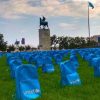
An Appeal to UN’s Budget Committee: It’s no Time to Cut Back on Child Protection
On February 26 this year, 15 South Sudanese children were released from armed groups and handed over to civilian child protection actors, including UNICEF and UNMISS, UN’s peacekeeping operation in South Sudan, who were able to facilitate the children’s safe return to their families.
As COVID-19 Burns, World’s Forgotten Wars Continue to take Toll on Civilians as Well
Earlier this year, just before the coronavirus virtually shut down international travel, I sat under a mesquite tree and listened to a rambling speech by a South Sudanese general at a military base outside of the capital, Juba.
Beyond Trump— US, UN & Global Health Governance
US President Donald Trump’s battle with the World Health Organization (WHO) hides two important issues. One, the long running love-hate relationship between the US and the UN, and two, a better understanding of how global public health is governed and in the overall context of global governance.
The UN Is Hunting for a New Medical Director, Based in New York City
“Are you a senior medical executive with expertise in healthcare management with oversight of clinical services and occupational health at a facility, state, national or international level? The United Nations Secretariat is seeking a Medical Director at the D-2 level in the Department of Operational Support,” an ad posting on the UN’s job portal reads.
On the Agenda of Iraq’s New Government: An Empty Treasury, Low Revenue, and COVID-19
Iraq’s newly-announced leader has brought hope to a country embroiled in a 17-year-long conflict, but authorities must ensure that issues such as swift and rapid response to COVID-19, security concerns, and corruption among others are addressed with urgency, experts said on Tuesday.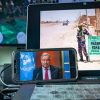
US Pulls the Plug on a UN Global Cease-Fire Resolution
After six weeks of negotiations, the United States shot down hopes for a resolution to be approved in the United Nations Security Council on May 8, refusing to back worldwide cease-fires as the US continues to castigate China and the World Health Organization for the Covid-19 pandemic. Meanwhile, momentum behind tenuous cease-fires is vanishing, experts say.
VE Day Marks the End of the Second World War-But the World is Still at War
The world commemorated the 75th Anniversary to mark the end of the 2nd World War also called VE Day on 08 May 2020. With her nation, and much of the world still in lockdown due to COVID 19, England’s Queen marked 75 years since the allied victory in Europe with a poignant televised address. From Windsor Castle, Queen Elizabeth said, “the wartime generation knew that the best way to honour those who did not come back from the war, was to ensure that it didn’t happen again”.
COVID-19 Pandemic Vulnerable to Exploitation by Proliferators, Terrorists & Criminals
Even during this pandemic, perhaps especially during this pandemic, the global institutions to help prevent the spread of biological and chemical weapons to proliferators or terrorists must continue their work.« Previous Page — Next Page »





The Week with IPS

NEXT STOP - SDGs
Tracking global progress towards a sustainable world
Tracking global progress towards a sustainable world
