Languages
Saturday, October 10, 2026



News and Views from the Global South
Peace

Mahatma’s Non-Violence: Essence of Culture of Peace for New Humanity
I will begin by presenting to you excerpts from the message from UN Secretary-General António Guterres on the International Day of Non-Violence.
COVID’s Impact in Real Time: Finding Balance Amid the Crisis
One enduring lesson from the COVID-19 pandemic is that any lasting economic recovery will depend on resolving the health crisis.
A Feminist Perspective from Middle East & North Africa on the COVID-19 Pandemic
Since before the COVID-19 pandemic, feminists across the Middle East and North Africa (MENA) have been increasingly shedding light on the global shifts that will shape the Future of Work. From their perspective, those shifts would mainly be driven by the Fourth Industrial Revolution, the impact of climate change and the looming global care crisis.
Peace in the Middle East
After the fall of the Ottoman Empire at the end of WWI, The League of Nations mandated that Britain administer Palestine. The London administration was quite ineffective, in part, due to the contradictory promises which were made to the Arabs, to the Zionists and to France, the other colonial power which divided the territory with Britain.
Central Sahel – Shaping peace together with women and young people Statement for International Peace Day
The countries of Central Sahel—Burkina Faso, Mali, and Niger—face an unprecedented crisis, marked by violent extremism, forced displacement, and rising insecurity. The sharp increase in armed attacks on communities, health centres, schools and other public institutions and infrastructure has disrupted livelihoods and access to social services. The impact on affected people is devastating.
Peace is the North Star During and the Post COVID-19 Pandemic
Amid various global conflicts in the 1980s and 1990s, the International Day of Peace (IDOP) was established to commemorate the strengthening of the ideals of peace globally. Today, peace is not just the absence of conflict, but a key prerequisite for development. It is in recognition of the crucial linkages between peace, respect for human rights and sustainable development that more than 36 indicators for peace were included across the Sustainable Development Goals (SDGs).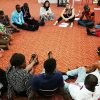
The Culture of Peace: Change our World for the Better in the Age of COVID 19
Last year, we paid tribute to the 20th Anniversary of the 1999 Declaration of the Program of Action on a Culture of Peace. Today, we need to ask ourselves if we had genuinely carried out our moral responsibilities to transition from a culture of hatred and violence to a culture of tolerance and peace.
Impact of COVID-19 on Women and Children
The impacts of crises are never gender-neutral and COVID-19 is no exception. The pandemic has resulted in increased rates of violence against women and has exacerbated challenges in accessing justice. Women are losing their livelihoods faster than men.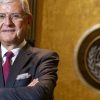
INTERVIEW: the top diplomat shepherding the General Assembly through its 75th year
The Turkish diplomat elected to be the president of the 75th session of the UN General Assembly, Volkan Bozkir, is taking on the role as the Organization grapples with an unprecedented pandemic, and questions surrounding the future direction it should take.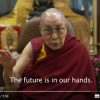
Message for Laureates and Leaders for Children
 His Holiness the Dalai Lama’s message for "Fair Share for Children - Laureates and Leaders Summit 2020", held online September 9, 2020.

Mozambique Reels from Repeated Attacks on Press Freedom
While Mozambique was recently rattled by an arson attack on a local media organisation, experts say that it’s only a part of a worrying pattern of continuous attacks on the media in the country.

Qatar Accuses UAE of Racial Discrimination in UN’s Highest Court
Qatar officials reiterated their claim on Wednesday that the United Arab Emirates (UAE) be held responsible for their “discrimination” against Qatari citizens, as the third day of public hearings proceeded at the International Court of Justice (ICJ), the United Nation’s highest court. But foreign policy experts caution that the case is not good for stability in the Persian Gulf region.
Katiba at 10: A Landmark Constitution and a Blueprint for Deepening Democracy
On 27 August 2020, we mark the tenth anniversary of the New Constitution of Kenya – a landmark social contract inspired by citizens’ desire for a country characterised by participatory governance, inclusive development, human rights and the rule of law.
The Abraham Accord: Will it Bring Peace or Perpetuate Pain in Palestine?
There is not much good news for President Donald Trump of the United States these days. If electoral polls have any credibility, he is staring at the face of almost certain defeat in the elections come November. So, when the so-called Abraham Accord between Israel and the United Arab Emirates (UAE) was sealed in a telephone call between him and the leaders of Israel and the UAE, signalling a sliver of silver lining in the otherwise hovering dark clouds over him, Trump was ecstatic. A Trump twitter called it a “HUGE breakthrough among “three GREAT friends!”.
Beating Anger into Empathy: the Need of the Hour in Ethiopia
The murder of Haacaaluu Hundeessaa, an icon of the Oromo people in Ethiopia was a tragic loss for all who struggle for rights in systems that fail to accommodate them.
Reform of the United Nations Organization
The US detains essential keys to the political and economic stability of the planet. The last four years have been challenging for Americans, their allies, and the rest of the world.
75 Years after the Bomb, Hiroshima Still Chooses ‘Reconciliation and Hope’
In a video message delivered to a Peace Memorial Ceremony in Japan on Thursday, UN Secretary-General António Guterres has paid tribute to the victims of the atomic bombing of Hiroshima, which devastated the city in 1945.
The UN General Assembly: A 75-Year Journey Towards the Future We Want
The United Nations came into existence at a time of great despair, when the penholders of its founding document dared to imagine a better world, one that would be defined by peace and equality. Visionary world leaders chose hope over cynicism, empathy over indifference and partnership over distrust when they came together in San Francisco on 26 June 1945 to sign the Charter of the United Nations. They embarked upon a new, rules-based world order, with an Organization of unrivalled legitimacy at its core.
The Charter of the United Nations: Ideals for Shaping Our Reality
“Reconciling the requirements of the ideal with the possibilities of the real": this is how Georges Bidault, Minister for Foreign Affairs and head of the French delegation to the San Francisco Conference, summed up the objective pursued by the drafters of the Charter of the United Nations. On the still living ashes of the Second World War, the fathers of an Organization charged with developing friendly relations between nations, promoting human rights and economic and social progress were less utopian than visionary. They understood that the community of States should have a common constitution. It has been tested by conflict, crisis and upheaval, but its resilience and strength have shaped the very structure of contemporary international relations.
Modern Tools, Age-old Wisdom: on India-Sri Lanka Relations
The unique India-Sri Lanka relationship, de jure, is between equals as sovereign nations. But it’s asymmetric in terms of geographic size, population, military and economic power, on the one hand, and social indicators and geographical location, on the other. It is steeped in myth and legend, and influenced by religious, cultural and social affinities.
The Charter of the United Nations After 75 Years: Personal Reflections
The Charter of the United Nations is not only the constituent instrument of the United Nations as an organization. It is a multilateral legal manifesto encompassing a set of basic principles and norms aimed at ensuring peace, freedom, development, equality and human rights throughout the world. These principles and norms reflect the shared values proclaimed in the preamble on behalf of the “Peoples of the United Nations”. As such, it is the most innovative and trailblazing multilateral treaty ever concluded among States. Today, it is a universal instrument by which all States have solemnly accepted to be bound in their international relations.« Previous Page — Next Page »





The Week with IPS

NEXT STOP - SDGs
Tracking global progress towards a sustainable world
Tracking global progress towards a sustainable world
