Languages
Monday, September 28, 2026



News and Views from the Global South
Peace

Pyeongchang Olympics: A New Cornerstone for Peace and Prosperity
All eyes are on the 23rd Olympic Winter Games and 12th Paralympic Winter Games in PyeongChang this February. Top athletes will carry their national flags in an opening ceremony which has come to epitomize the international community. Sports fans worldwide eagerly await the Olympics, and this time there is cause for cautious optimism that sport diplomacy may lower tensions on the Korean Peninsula itself. Leaders, diplomats and citizens from the world over will witness North and South Korean athletes walking side by side. For this, there could be few better places than PyeongChang, which means peace (Pyeong) and prosperity (Chang): goals integral to the mission of the United Nations and the 2030 Sustainable Development Agenda.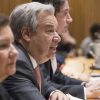
“The World Has Gone in Reverse”
A year into his position, the United Nations Secretary-General António Guterres said that peace remains elusive and that renewed action must be taken in 2018 to set the world on track for a better future.
Pakistan, Facing Military Aid Cuts, One Step Ahead of US
When the United States abruptly cuts off military supplies to its allies for political or other reasons, the reaction has been predictable: it drive these countries into the arms of the Chinese, the Russians and Western European weapons suppliers.
The Reality of North Korea as a Nuclear Power
With a track record of six underground nuclear tests between 2006 and 2017, North Korea is desperately yearning to be recognized as the world’s ninth nuclear power – trailing behind the US, UK, France, China, Russia, India, Pakistan and Israel.
Why the #MeToo Movement Disrupts the Creeping Commodification of Feminism
As the 62nd Session of the Commission on the Status of Women (CSW) at the United Nations in New York draws near, women from every corner of the world will convene to deliberate on the theme of CSW 2018: Challenges and Opportunities in achieving gender equality and the empowerment of rural women and girls. This year, the theme of empowerment has added significance. The #MeToo movement has shocked our collective conscience and made it impossible to ignore that empowerment goes far beyond economic agency.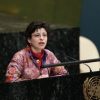
Religion: Between ‘Power’ and ‘Force’
In 1994, Dr. David R. Hawkins wrote a book positing the difference between power and force (Power vs. Force: The Hidden Determinants of Human Behavior - the latest revised version came out in 2014).
Perpetrators of Crimes against Humanity Must be Brought to Justice
On the occasion of the 2017 International Day of Human Solidarity observed on 20 December, the Chairman of the Geneva Centre for Human Rights Advancement and Global Dialogue Dr. Hanif Hassan Ali Al Qassim calls for peace for and human solidarity with, the Rohingya minority in Myanmar.
Dr. Al Qassim: “The promotion of Arabic language and culture is key to enhance cultural diversity and promote peaceful relations between peoples“
On the occasion of the 2017 World Arabic Language Day, the Chairman of the Geneva Centre for Human Rights Advancement and Global Dialogue H. E. Dr. Hanif Hassan Ali Al Qassim stated that the increased use of Arabic language worldwide is key to build bridges between peoples and to enhancing intercultural understanding between Arabs and non-Arabs.
Civil Society Activists Speak Out– Despite Threats
They are young, smart and willing to take the rough road. Victor, Jubilanté and Khaled are independent fighters who speak out with a force that could possibly change the appearances of their countries, and beyond.
Shedding Diplomacy, Roberto Savio Speaks about Fear as a Tool to Gain Power
At the outset my thanks to Dr Hanif Hassan Ali Al Kassim, and Ambassador Idriss Jazairy who lead the Centre for Human Rights Advancement and Global Dialogue for organizing this panel discussion at a critical moment in history. The Centre, is one of the few actors for peace and cooperation between the Arab world and Europe. As a representative of global civil society, I think it will be more meaningful if I speak without the constraints of diplomacy, and I make frank and unfettered reflections.
South Sudan: a Nation Tormented by a Crisis
I come from Panyijar County, South Sudan, just south of where famine was declared in February this year and one of thousands of places badly hit by the conflict which enters its fifth year today. With each year the fighting continues, the hopes that I and my fellow South Sudanese had when voting for independence in 2011 are dimmed.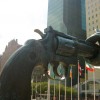
Arming Poor Countries Enriches Rich Countries
Although the Cold War came to an end over a quarter century ago, international arms sales only declined temporarily at the end of the last century. Instead, the United States under President Trump is extending its arms superiority over the rest of the world.
A Responsibility to Prevent Genocide
Almost 70 years since the Genocide Convention was adopted, the international community still faces a continued and growing risk of genocide.
No One Country Can Do It Alone — Towards a Migration Compact
International commitment and cooperation is critical to reap the benefits and overcome the challenges of migration, stressed a leading official at the conclusion of a UN meeting.
Should Foxes Rule the Chicken Coop? Reflections on Security Council Reform
Since the end of the Cold War, the UN Security Council has dramatically increased its activity and authority. Though the Council has exercised unprecedented global power, it has remained a very insular, secretive and undemocratic body, dominated by its five Permanent Members, armed with their notorious vetoes and benefiting from perpetuity in office.
Post-Nuclear Nightmares Still Linger Over Pacific Islands
The Pacific islands have long remained victims of nuclear crimes – but the perpetrators, three of the world’s major powers with permanent seats in the UN Security Council, never paid for their deadly sins.
Aid Groups Sound Alarm on DRC Crisis
The Democratic Republic of the Congo (DRC) is on the brink of a humanitarian crisis and the international community must step in before it worsens, humanitarian agencies warn.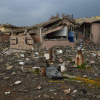
The Illusion of Justice: When Will Reparations be Served to Iraq’s Victims?
It is difficult to spend any time in Iraq without being struck by a sense of profound injustice. After successive decades of war and occupation, violence has become the rule rather than the exception in the country, with each phase of conflict outdoing the previous in terms of brutality and capacity to shock the conscience.
UN Member States, With Exceptions, Pay Lip Service to Women & Peacekeeping
A UN Security Council (UNSC) resolution adopted on 31 October 2000, underlying the role of women in peacekeeping, has long been described as both historic and unprecedented.
Historic Resolution on Women & Peacekeeping Remains Mostly Unimplemented
At the 26 October launch of GNWP’s (Global Network of Women Peacebuilders) manual “No Money, No NAP” on dedicated budgetary allocation to fund the implementation of the 1325 National Action Plans, Executive Director of UN Women Phumzile Mlambo-Ngcuka characterized UNSCR 1325 as the most unimplemented resolution of the UN Security Council.
Ending the Male Monopoly on Peace: Women Still Need More Seats at the Table
Whether targeted by perpetrators of sexual violence, oppressed by ideological extremists, or uniquely threatened by the bombing of hospital maternity units, women often bear the brunt of conflicts. Yet when it comes to peace negotiations, women too often don’t have a seat at the table. The continuing reality that men, particularly armed men, enjoy an almost exclusive role in peace processes defies both logic and evidence.« Previous Page — Next Page »


The Week with IPS

NEXT STOP - SDGs
Tracking global progress towards a sustainable world
Tracking global progress towards a sustainable world
