
Saturday, November 21, 2026



News and Views from the Global South
IPS UN: Inside the Glasshouse
OP-ED: Secularism to the Rescue of the Arab Spring
Spring has come early this year to the Arab world. Climate change has awakened the once comatose Middle East from the stupor of singular leaderships. A new dawn of democracy and freedom is sprouting from Morocco to Oman. Or so we are told.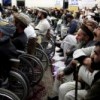
Armed Conflicts Claim Unprecedented Number of Civilians
Afghanistan, once described as the graveyard of empires, is ranked number one as the country with the most "significant rise" in civilian deaths last year, turning it into a veritable killing field, according to a new report by the London-based Minority Rights Group International (MRG).U.N. to Host World Summit on Nuclear Safety
The severity of the recent nuclear accident at the Fukushima Daiichi power plant in Japan has prompted U.N. Secretary- General Ban Ki-moon to convene a high-level meeting of world leaders on a politically-sensitive issue: nuclear security.Seed Proteins May Help Plants Weather Drought
British researchers are working on techniques to improve seeds chances of surviving drought by tapping the potential of little-known proteins that regulate water intake.HEALTH: ‘Lifestyle Diseases’ Cause Two-Thirds of Deaths
Health experts from around the world have acknowledged rising numbers of ‘lifestyle’ or non-communicable diseases (NCDs) in different countries, admitted inadequate funds are the biggest obstacle in health delivery, and called on the global community to consolidate efforts to effectively tackle the problem.
LDCs Seek Mini Trade Deal
Leaders from the Least Developed Countries are making a strong push in Istanbul for a mini trade deal for their 48 impoverished nations - ahead of any worldwide agreement under the Doha Round.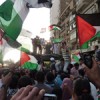
MIDEAST: Egyptian Activists Gear Up For Third Intifadah
Following the February ouster of Egypt’s longstanding President Hosni Mubarak, calls have been circulating in Egypt and throughout the region for a ‘Third Intifadah’ to begin May 15.Obama Faces Tough Choices on Mideast Diplomacy
With Israeli Prime Minister Benjamin Netanyahu scheduled to descend on Washington in less than two weeks, President Barack Obama faces some difficult decisions about how to restore the credibility of his promise to achieve a two-state solution to the Israeli-Palestinian conflict without triggering a backlash in a Congress that is solidly pro-Israel.POPULATION: Promise Rises With a Problem
On the face of it, a rapidly rising population among the Least Developed Countries (LDCs) spells the usual doom about adequate resource distribution. But the least developed are also among the youngest in the world - and well channelled, they can be a valuable asset, United Nations Population Fund (UNFPA) head Babatunde Osotimehin told IPS.ECONOMY: Looking for Development Leverage
Given a few incentives, private companies can be attracted to invest in poor countries that before were not on their radar. Donor countries are betting on this new avenue of public-private-partnerships (PPPs) to channel funds, technology and business knowledge to the 48 Least Developed Countries (LDCs) - the impact can be huge, but many challenges remain.U.N. Experts Push for Details on Bin Laden Operation
Was last week's killing of an unarmed Osama bin Laden in his hideout in Pakistan legitimate self-defence, justified homicide or extra-judicial execution?OP-ED: Private Beliefs, Public Change
When the suicide bomb exploded as worshippers left New Year's mass at a Coptic church in Alexandria, 21 people died and 79 were wounded. It's hard to imagine a more grim, ghastly, or tragic way to ring in a new decade.North Korea Hungry for Aid
The Democratic People's Republic of Korea (DPRK) lived through a famine that killed, at conservative estimates, nearly a million people in the 1990s, and is now nearing the brink of a second food disaster, according to an extensive study conducted this year by the United Nations World Food Program (WFP).Nuclear Threat Draws WHO and Civil Society Closer
The global health agency and a network of non-governmental organisations opposed to nuclear proliferation have resumed their dialogue, prompted by concern over the effects of the nuclear catastrophe at Fukushima in Japan and the enduring consequences of the explosion at Chernobyl, in Ukraine.ICC Poised to Issue Warrants on Libya
The International Criminal Court (ICC) appears poised to issue arrest warrants for three yet unnamed high-level members of the Libyan government for committing alleged crimes against humanity during the past two months of political turmoil that has taken thousands of lives.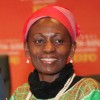
Q&A: Translating Southern Successes Into LDC Solutions
"In South-South cooperation we are all partners," Josephine Ojiambo, ambassador of Kenya to the U.N. and president of the U.N. General Assembly High-Level Committee on South-South Cooperation, told IPS. "SSC specifically shies away from the donor-client relationship."U.N. Predicts 9.3 Billion Population by 2050
The United Nations is predicting that come Oct. 31, the world population will hit the seven billion mark - and keep expanding till it reaches 9.3 billion by the year 2050.
Q&A: Child Victims Have ‘Leading Role’ in Creating a Non-Violent Society
Appointed to the gigantic task of building international understanding of violence against children and adolescents, 58-year-old Portuguese lawyer Marta Santos Pais is based in New York and works with a small staff of only seven people.Syria’s Crackdown Undermines Claim for Seat on Human Rights Council
When the General Assembly meets on May 20 to elect 15 new members for the Human Rights Council (HRC), the four candidates from the Asian Group - India, Indonesia, the Philippines and Syria - were until now considered certain winners for one primary reason: they remain uncontested on a "clean slate" for four vacant uncompetitive Asian regional seats.Bolivia Steps Up Campaign at U.N. to Legalise Coca Leaf
Is coca a dangerous drug that should be tightly regulated, or an essential part of Andean indigenous people's cultural and medicinal heritage? Or perhaps both?
Human Rights Council Issues First-Ever UN Condemnation of Syria
The special session on Syria held by the United Nations Human Rights Council Friday agreed on neither an international mission of enquiry, as originally foreseen, nor a lower level fact-finding mission - only a mission by the Office of the High Commissioner for Human Rights.« Previous Page — Next Page »


It was dubbed "The Glass House" by U.S. ambassador James Wadsworth in 1966. Half a century later, the United Nations has gradually expanded its role as agent of peace and protector of the world's vulnerable populations, while simultaneously facing internal pressures to become more inclusive, increase transparency and maintain legitimacy in the post-Cold War political and economic order. Highlighting the local impacts of global policies on economic development, environment, health and human rights, IPS's coverage goes beyond the edicts of the Security Council to illuminate the power struggles, successes and shortcomings of the 193-member institution as it grapples with crises like climate change, armed conflict, poverty and HIV/AIDS.

The Week with IPS
