
Sunday, November 22, 2026



News and Views from the Global South
IPS UN: Inside the Glasshouse
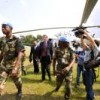
U.N. Tight-Lipped on Use of Military Force in Cote d’Ivoire
As the continuing political stalemate threatens to unleash a civil war in Cote d'Ivoire, the United Nations is taking an increasingly aggressive stance in the widening standoff with the West African nation.
HAITI: The Year of Living Dangerously – Part 2
When diplomat Ricardo Seitenfus spoke out in interviews last month condemning the international community, he was dismissed from his post within days by the Organisation of American States.OP-ED/HAITI: Give Us Just a Day to Grieve
The anniversary of the earthquake is in less than a week, on Jan. 12. Never before had Haiti seen so many victims from a single catastrophe in so short a time. Never had Haitians experienced such solidarity, nor received so much attention from abroad and from the international community.Pressure Mounts on Security Council to Rein in Israel
Calls are growing for a swift international response to the situation in the Middle East, as Israel continues to build new settlements in Palestinian territories with increased military actions against civilians.U.N. Chief Leaves Women out of Year-End Summing Up
When Secretary-General Ban Ki-moon wrote a year-end op-ed piece for an Australian newspaper last week, he talked about the future of a world body facing a new generation of threats: climate change, poverty, nuclear disarmament and human rights.U.N. Threatens Ivorian Leaders With Possible War Crimes
The United Nations has warned the beleaguered president of Cote d’Ivoire and his military leaders that they may well go the way of Sudanese President Omar Hassan al-Bashir: face charges of war crimes and genocide before the international criminal court.Indigenous Peoples Gain U.S., U.N. Recognition
As 2010 draws to a close, both the United States and the United Nations have reached out to one of the world’s most marginalised groups in society: indigenous peoples.
Cholera Forces Haiti to Face Sewage Dilemma
The cholera crisis is forcing Haitian authorities to address an unpleasant and now life-threatening problem – untreated feces.Peace Must Be “Afghan-led and Afghan-owned”, Diplomats Say
The U.S. move to send 30,000 more troops to Afghanistan may be seen in Washington as the only effective and viable strategy to stabilise the country, but not everyone in the diplomatic community here at U.N. headquarters agrees.
Q&A: “Transparency Helps Ensure Donors’ Promises Are Met”
This past September, world leaders meeting at the United Nations vowed to spend $40 billion over the next five years to save the lives of more than 16 million women and children dying of deadly diseases or lack of medical care, particularly during and after pregnancy.
U.N. in Test of Wills over Cote d’Ivoire Crisis
The United Nations is taking an unrelenting stand on the spreading constitutional crisis in Cote d'Ivoire, where two contenders - one victorious and the other vanquished - are battling it out for the country's presidency.
Dire Development Issues Converge in the Drylands
Few are aware that close to one billion people in over 100 different countries are suffering from or severely threatened by intense desertification. Yet awareness is crucial, for it is human behaviour that has led to the proliferation of hyper- arid, uncultivable drylands over the past few decades.U.S., Last Holdout on Native Rights Declaration, Reverses Stand
U.S. President Barack Obama announced Thursday he was reversing the U.S.'s position and endorsing the United Nations Declaration on the Rights of Indigenous Peoples.U.N. Deplores Escalating Violence in Cote d’Ivoire
U.N. Secretary General Ban Ki-moon reiterated his concern Thursday at the escalating violence in Cote d'Ivoire, where as many as 20 people were reportedly killed in clashes between security forces and opposition activists.West Continues to Dodge Migrants’ Rights Treaty
Against the backdrop of rising xenophobia and growing anti- immigrant trends in Western Europe, the United Nations will commemorate International Migrants Day next week calling on member states to ratify the 1990 international convention aimed at protecting the rights of migrants worldwide.
HAITI: Envoys and Poll Officials Try to Defuse Tensions
After almost a week of violent protests over preliminary elections results that left at least five dead, Haiti awoke to an eerie and tense calm Monday after a well-coordinated trial balloon was launched late Sunday night.
CLIMATE CHANGE: Emissions Punted to Durban, Breakthrough Seen on Forests
If success is measured by delaying difficult decisions, then the Cancún climate meeting succeeded by deferring crucial issues over financing and new targets to reduce greenhouse gas emissions to the next Conference of the Parties meeting a year from now in Durban, South Africa.
CLIMATE CHANGE: Summit Ends Without Solving Emissions Puzzle
"We are the coldest country in the world... so global warming is good for us. The warmer it is, the bigger the harvests... They talk about stopping deforestation of the tropical jungles to fight climate change, but we don't have tropical jungles."
CLIMATE CHANGE: See the Green in REDD+, Say Top Leaders in Cancun
An entire body of leaders, spearheaded by U.N. Secretary- General Ban Ki-moon, is now looking at REDD+ as a panacea to global warming with multiple benefits thrown in.Debunking the Nuclear Deterrence Myth
When the horrors of the Cold War began to wane in the late 1980s, U.S. President Ronald Reagan and Russian President Mikhail Gorbachev met in the Icelandic capital Reykjavik to discuss the "complete abolition of nuclear weapons".U.N.’s Message to Whistleblowers: “Kill the Messenger”
A rousing battle between former Under-Secretary-General Inga- Britt Ahlenius, who once headed the U.N.'s powerful investigating arm, and her boss Secretary-General Ban Ki-moon is threatening to get ugly.« Previous Page — Next Page »


It was dubbed "The Glass House" by U.S. ambassador James Wadsworth in 1966. Half a century later, the United Nations has gradually expanded its role as agent of peace and protector of the world's vulnerable populations, while simultaneously facing internal pressures to become more inclusive, increase transparency and maintain legitimacy in the post-Cold War political and economic order. Highlighting the local impacts of global policies on economic development, environment, health and human rights, IPS's coverage goes beyond the edicts of the Security Council to illuminate the power struggles, successes and shortcomings of the 193-member institution as it grapples with crises like climate change, armed conflict, poverty and HIV/AIDS.

The Week with IPS
