
Sunday, November 22, 2026



News and Views from the Global South
IPS UN: Inside the Glasshouse

Is the U.S. Going Soft on Israeli, Indian & Pakistani Nukes?
When a much-ballyhooed two-day nuclear security summit ended in Washington early this week, there were several lingering questions that remained unanswered - even by the host of the high-powered 47-nation gathering, U.S President Barack Obama.HEALTH: Maternal Deaths Drop, but Progress Still “Slow”
One day closer to an ever-approaching deadline to achieve the Millennium Development Goals (MDGs), U.N. Secretary-General Ban Ki-moon announced a Joint Action Plan to improve reproductive, maternal and newborn health on Wednesday, flanked by international leaders and development experts.DEVELOPMENT: Farmers on Fringe of Intl Agriculture Policy?
How's this for short-sighted: A billion people go hungry every day, food prices have climbed 30 to 40 percent, climate change is reducing agricultural production - and for the past two decades, the world has slashed investments in publicly-funded agriculture until it is a pittance in most countries.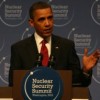
POLITICS: Nuclear Security Summit Boosts Disarmament Agenda
On the second and last day of the largest gathering of world leaders ever in Washington, U.S. President Barack Obama connected the commitments made here on securing vulnerable nuclear materials to the broader goal of a "nuclear-free world".HEALTH: Empowering Women to Slash Mother and Child Deaths
In developed countries, child and maternal mortality is a health problem that has largely been solved.DISARMAMENT: U.N. Chief Doubts Mideast Nuke-Free Zone
Against the backdrop of a major summit meeting of world leaders on nuclear non-proliferation hosted by the United States, Secretary-General Ban Ki-moon expressed strong doubts about the longstanding proposal to create a nuclear-free zone in the militarily-volatile Middle East.HAITI: Disorganised Diaspora on Fringe of Post-Quake Decisions
For years, Haitians living overseas have been the lifeline of the troubled country, sending billions of dollars to relatives back home.POLITICS-EGYPT: Critics Question ElBaradei’s Promises of Change
Mohamed ElBaradei, former head of the International Atomic Energy Agency (IAEA), rocked Egypt's political arena last year by announcing his desire to contest the presidency. But while the idea has fired the imagination of political activists, many analysts remain sceptical.RWANDA: Remembering the Unforgettable
Sixteen years after the genocide in Rwanda, U.N. Secretary-General Ban Ki-moon vowed that the international community would never again sit by while mass atrocities are committed against innocent civilians.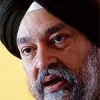
Q&A: IBSA Summit Aims to Strengthen South-South Cooperation
When the political leaders of three of the world's major democracies in the global South - India, Brazil and South Africa (IBSA) - gather at a high-powered summit meeting in Brasilia next week, one of the key items on the agenda would be how best to strength economic cooperation among developing nations.
RIGHTS: UNESCO in Disarray Over Controversial Prize
As UNESCO’s executive board meets here in the first of its two sessions per year, behind-the-scenes wrangling could result in a controversial life sciences prize being put on hold indefinitely.HEALTH: Putting the Focus on Cities
The world's public health policy-makers should focus on urban health problems, since for the last three years the majority of the planet's population is living in cities, World Health Organisation (WHO) experts say.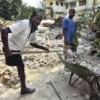
HAITI: Rebuilding Waits on Promised Aid
A week ago, 59 U.N. member states, international institutions and NGO coalitions pledged nearly 10 billion dollars towards rebuilding Haiti over the next decade.US-CHINA: Spring Thaw in the Air?
Springtime appears to be bringing a thaw in U.S.-China relations, with U.S. President Barack Obama and Chinese President Hu Jintao holding an hour-long phone conversation Thursday in which both leaders expressed a desire to build a more positive bilateral relationshipIRAN: Obama Sanctions Strategy Complicated by Congress
President Barack Obama is hoping that relatively quick approval by the U.N. Security Council of a new round of sanctions against Iran will relieve growing pressure on Capitol Hill to take stronger measures against Tehran./CORRECTION*/HAITI: Donors Pledge 10 Billion Dollars in Aid
Eleven weeks after an earthquake killed over two percent of its population and flattened its capital city, Haiti is looking towards a long and complex rebuilding process.POLITICS: U.N. Panel Rejects Request to Reopen Bhutto Probe
A three-member U.N. commission, which has been investigating the 2007 assassination of former Pakistani Prime Minister Benazir Bhutto, has flatly rejected a request to reopen the inquiry.DEVELOPMENT: Recovery Could Leave Behind World’s Poorest
The world's 49 least developed countries (LDCs), described as the poorest of the poor, could feel the effects of the global economic crisis for decades, a senior U.N. official warned this week.
HAITI: Looking More and More Like a War Zone
On an empty road in Cite Militaire, an industrial zone across from the slums of Cite Soleil, a group of women are gathered around a single white sack of U.S. rice. The rice was handed out Monday morning at a food distribution by the Christian relief group World Vision.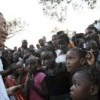
HAITI: U.N. Gears Up for Major Aid Meet
Although the humanitarian crisis in Haiti remains dire, with over a million still homeless and hundreds of thousands in need of adequate shelter for the upcoming rainy season, the international community has started looking towards the country's long-term reconstruction.
Q&A: South Korea a Key Convention Centre in Asia
The Republic of Korea (ROK), one of the fastest growing industrial nations and the world's 13th largest economy, has not only survived the global financial crisis but is also gearing up to play a key role in the international arena.« Previous Page — Next Page »


It was dubbed "The Glass House" by U.S. ambassador James Wadsworth in 1966. Half a century later, the United Nations has gradually expanded its role as agent of peace and protector of the world's vulnerable populations, while simultaneously facing internal pressures to become more inclusive, increase transparency and maintain legitimacy in the post-Cold War political and economic order. Highlighting the local impacts of global policies on economic development, environment, health and human rights, IPS's coverage goes beyond the edicts of the Security Council to illuminate the power struggles, successes and shortcomings of the 193-member institution as it grapples with crises like climate change, armed conflict, poverty and HIV/AIDS.

The Week with IPS
