Languages
Friday, October 9, 2026



News and Views from the Global South
Headlines
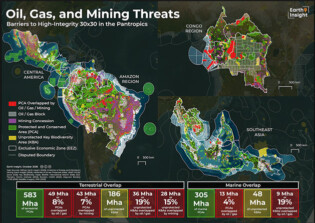
Protection That Holds: Keeping Nature Safe From Extraction
When governments gather in Yerevan this month for the 17th UN Convention on Biological Diversity, they will weigh a promise nearly 200 countries adopted six years ago: to effectively conserve at least 30 percent of land, inland waters, and sea by 2030. Achieving the ambitious 30x30 target is essential to sustaining the systems humanity relies on for survival—including crop pollination, purification of water and air, and climate regulation—as well as the biodiversity that underpins food production, fisheries, and tourism.
Smartphone Ban Robs Afghan Female Journalists of a Vital Working Tool
It has become difficult for Afghan journalists to obtain information from the authorities, who are permitted to use smartphones only with special authorization. This ban particularly affects women, for whom face-to-face interviews are not an option.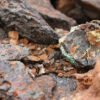
How AI-Powered War Drives the Critical Minerals Race
The demand for critical minerals is accelerating as world powers scramble to stay on top of emerging technologies. Meanwhile, the environment and frontline communities are paying a steep price.
A Rash of Hard-Hitting Questions—Which May Remain Evasive–for Candidates Running for UN Chief
The seven candidates, still in the running for the post of UN Secretary-General (SG), have so far faced a barrage of questions, mostly from delegates and the news media.
Ukrainian Groups Urge WHO to Act on Torture of Captives by Russian Medical Staff
More than 60 Ukrainian organisations have issued an appeal to the World Health Organisation (WHO) to help stop the torture of Ukrainians held in Russian captivity.
Nigeria’s School Kidnapping Threat Is Changing: Four Lessons from the 56 Day Oyo Attack
Following the mass abduction of 46 pupils and teachers in Oyo State, south-west Nigeria in 2026, the authorities attributed the attack to the Ansaru terrorist group. Key suspects were prosecuted and handed prison terms. But this was not the first time terrorist groups had engaged in mass abduction of school pupils in Nigeria. Peace and security researcher Saheed Babajide Owonikoko explains what factors could have motivated the Ansaru terror group to stage that attack and what lessons Nigeria should take away from the incident, which lasted 56 days.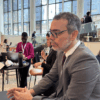
Prioritize Multilateralism to Resolve Iran War Deepening Humanitarian Crisis, Says OSF Vice President
Seven months into the Iran War, threats of further military escalation and stalled efforts to reopen the Strait of Hormuz have heightened fears of worsening humanitarian suffering and wider regional instability.
Dementia: A Rapidly Rising Global Challenge
Dementia is a rapidly growing global health challenge that affects many millions of people worldwide and places significant economic, healthcare, and social strains on societies, particularly as populations age.
Workers Help Feed the World but Starved of Dignity
A new report reveals widespread labour exploitation among food system workers, warning that keeping the world fed comes at the cost of human dignity.
The Late Arrivals
One night, many years ago now, on a remote beach in the outer islands of Seychelles, I sat in the darkness and watched a green turtle come ashore. She had waited for the heat of the day to leave the sand. Under a sky crowded with stars, she hauled herself slowly above the tideline, dug with a patience no human hand could match, and laid her eggs. Then, in the small hours, she turned back toward the water. She did not hurry. She paused once, as though listening, and then made her slow, unhesitating way down the sand, back to a home older than any I could imagine.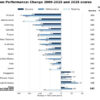
Austerity and Privatization Weakened OECD Education Systems
The results of the OECD PISA 2025 report point to the marked deterioration of results in countries whose education systems were once considered exemplary. PISA assesses how students aged 15 apply skills in reading, mathematics, and science to real-life situations, and the latest report contains the lowest averages ever measured in all three subjects across the OECD (as illustrated in the graph above). Public debate has rushed to blame the use of AI and social media, but the deterioration long predates them. In many countries, this decline has unfolded alongside years of austerity cuts and growing pressures on public education systems, including public spending, teacher pay and working conditions, staffing and the capacity of schools to provide quality education.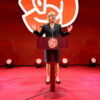
Sweden’s Far Right Falters
Four years ago, Sweden’s far right became the power behind a right-wing government. This time, it expected further gains and cabinet seats. But voters turned against it. In the 13 September general election, support for the far-right Sweden Democrats fell for the for the first time in the party’s history. Four days later, Prime Minister Ulf Kristersson resigned, leaving the way clear for the centre-left Social Democrats to negotiate a coalition. But the Sweden Democrats’ defeat will prove hollow if the next government maintains the hostility towards migrants that has come to characterise Sweden’s politics.
Climate Change Is Becoming a Pregnancy Hazard Worldwide, Survey Finds
Extreme heat is increasingly threatening pregnant women and newborn babies around the world, with almost all maternal health professionals surveyed across five continents saying they have cared for women or infants whose health was affected by high temperatures.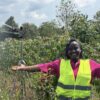
Renewables, Farmer Aggregation Offer Solutions to Africa’s Post-Harvest Losses
Post-harvest losses, particularly in rural areas, threaten the gains Africa is making in agricultural production and export capacity.
For Pakistan Rising Fistula Cases Make SDG 3 Goal Elusive
“You’re living a life drained of joy,” is how Shehnaz Sher Ali describes her “perpetually wet and stinky” existence. “I wouldn’t wish it on my worst enemy,” says the 35-year-old, who travelled by bus for more than 12 hours with her husband from their village in Rahim Yar Khan, Punjab, changing diapers whenever possible to keep the smell from reaching the fellow passengers.
SUDAN: ‘It’s Shocking to Be Forced into Silence Simply Because You Are a Refugee’
CIVICUS discusses life as a refugee with an exiled Sudanese civil society activist who has asked to remain anonymous for security reasons.
The Ingenuity Trap
In the 21st century, getting a pencil into Gaza became international news. In January, after more than two years of restrictions, UNICEF finally brought in learning kits with pencils and exercise books. Textbooks stayed out. By then, the UN had recorded damage to 97.5 per cent of Gaza's schools.
If We Can Start an Epoch, We Can Start a Farming Revolution
In November 1952, the United States detonated the world's first thermonuclear device at Enewetak Atoll in the Marshall Islands. The test, code-named Ivy Mike, erased the island of Elugelab and scattered a signature of plutonium across the planet that remains in lake beds, ice sheets and ocean sediments today.
Caring for Carers: Addressing Workplace Violence Against Nurses in Malaysia
Nurses are often called the backbone of the health system. We praise their compassion, commitment and resilience. On Nurses’ Day we thank them. During emergencies and crises, we call them heroes. But there is a harder question Malaysia, like most countries around the world, needs to ask more seriously: what happens when the people who care for everyone else are not safe, supported or respected at work?
Afghanistan’s Drought Deepens, and Women Bear the Heaviest Burden
Drought has depleted wells, withered fruit trees, and reduced crop yields across Afghanistan. The heaviest burden of the water shortage falls on women in their daily lives, as they must fetch water from increasingly distant sources and use every single drop with extreme care.
How to Protect Coastal Communities From Tide-Related Loss and Damage in Bangladesh
Villagers rush to the vulnerable spot of the embankment—early warning of the rising tide has alerted them. Together, they save the village from tidal flooding by repairing the vulnerable embankment, which is at risk from the impact of low pressure in July this year. The message is clear: early warnings of the rising tide save lives and property.Next Page »





