Languages
Sunday, November 8, 2026



News and Views from the Global South
Headlines

Rural Survival: Guardians of Mother Earth Saving Mau, Revitalizing Native Lands
The Great Rift Valley is part of an intra-continental ridge system that runs through Kenya from north to south. A breathtaking, diverse mix of natural beauty that includes dramatic escarpments, highland mountains, cliffs and gorges, lakes and savannas. It is also home to one of Africa’s greatest wildlife reserves—the Maasai Mara National Reserve.
At 76, India’s ‘Super Granny’ to Run Marathon in Australian Masters Event
Kmoin Wahlang, a 76-year-old woman, starts her running training every morning at 4 a.m. Dressed in track pants, a jacket, and running shoes, she sets out to navigate the hilly terrain of the small village of Shngimawlein in the southwest Khasi Hills district of Meghalaya, a state in northeastern India.
Climate Action Greatest Economic Opportunity of this Century, Says UN Climate Chief
With fewer than 100 days to go to COP29, the highest decision-making body on climate issues under the United Nations Framework Convention on Climate Change (UNFCCC), the need for creative and innovative solutions to protect lives and livelihoods is now extremely urgent.
INDIA: ‘Civil Society Organisations Are at the Forefront of the Fight Against Gender-based Violence’
CIVICUS discusses the recent wave of protests against gender-based violence (GBV) in India with Dr Kavitha Ravi, a member of the Indian Medical Association (IMA).
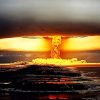
The Time to End Nuclear Tests is Now
Today, the General Assembly convenes – for the fifteenth consecutive occasion – to observe the International Day Against Nuclear Tests, which is commemorated annually on 29 August.
Recovering stolen assets: No weakening of resolve
The White Paper on the state of Bangladesh’s economy will include a review of “smuggled money”, according to the head of the committee, Debapriya Bhattacharya, entrusted to prepare the White Paper.
Latin American Rulers Embrace Harsh Prisons
Invoking the fight against terrorists and sending those who can be charged with this crime to new maximum security prisons are increasingly emerging in the toolbox of Latin American leaders who want to show an iron fist against criminals and opponents.
Preventing a Measles Outbreak—the Shared Responsibility of Vaccination
Measles infections are surging right now, with epidemiologists reporting that the number of large or disruptive outbreaks has tripled over the past three years. It is one of the most infectious diseases that we know. The virus spreads through respiratory droplets; when an infected person coughs or sneezes, it can linger in the air for up to two hours and infect 10 others who are not immune.
Food Security in Latin America and the Caribbean: Progress, Challenges and the Commitment to Move Forward
The latest publication of the State of Food Security and Nutrition in the World 2024 (SOFI) report launched last July in the framework of the G20 meeting in Rio de Janeiro provides a detailed overview of progress and setbacks in the fight against hunger.
Lack of Accountability for War Crimes in Libya Raises Instability
The situation in Libya continues to grow more dire every year since the emergence of the al-Kaniyat militant group. From 2013 to 2022, al-Kaniyat had been responsible for a multitude of human rights violations, including mass killings, kidnappings, forced displacements, torture, and sexual violence. The lack of accountability for these injustices has spurred renewed conflict, which threatens to destabilize Libya years later.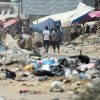
UN Expert Says Impunity for Israel Must End as ‘Genocidal Violence’ Spreads to West Bank
An independent United Nations expert has warned that "Israel's genocidal violence risks leaking out of Gaza and into the occupied Palestinian territory as a whole" as Western governments, corporations, and other institutions keep up their support for the Israeli military, which stands accused of grave war crimes in the Gaza Strip and West Bank.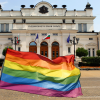
New Bulgarian LGBT+ Law Marginalizes Communities, Rights Groups Warn
A law banning the portrayal of LGBT+ identities in Bulgarian educational institutions is just the latest piece of repressive legislation in a wider assault on minorities and marginalized communities across parts of Europe and Central Asia, rights groups have warned.
Tackling Climate Change Will Be a Pyrrhic Victory If We Lose Sight of the Poor
Last July, we were confronted with alarming statistics: 733 million people experienced hunger in 2023, equivalent to one in eleven people globally. In Africa it was even higher, with one in five people going hungry. Climate change is a significant driver of this crisis.
Pandemic’s Silver Lining—Africa Uses COVID-19 Technology for Agriculture
 In this IPS podcast, Inter Press Service correspondent Jewel Fraser talks with a scientist from the International Livestock Research Institute in Nairobi, Kenya.

Israel’s Goal: Smashing Palestinian Legitimacy
Most people think that Israel’s main goal in Gaza is to recover the hostages seized by HAMAS on October 7, 2023 with an announced follow-up mission to eliminate HAMAS as a threat. If you thought that, you would be wrong. Substantial evidence reveals a different strategic aim—destroying every shred of Palestinian legitimacy as a nation.
World Leaders Who Opted to Skip the United Nations
When the high-level segment of the UN General Assembly took place last September, there were several key world leaders missing in action (MIAs)—including, most importantly, leaders of the four of the five permanent members of the Security Council, the most powerful political body at the United Nations.
New Zealand: Māori Rights in the Firing Line
A New Zealand bill that would roll back Indigenous rights is unlikely to pass – but it’s emblematic of a growing climate of hostility from governing politicians. A recent survey shows that almost half of New Zealanders believe racial tensions have worsened under the right-wing government in power since December 2023.
Kenya’s Unanswered Questions About Enforced Disappearances
As the world marked International Day of the Disappeared, Kenya grapples with a shadowy and persistent crisis—enforced disappearances. This harrowing violation of human rights has left countless families in anguish, searching for their loved ones while battling a wall of government denial and indifference.
A Sustainable Future within Reach: The Promise of Digital Transformation
The development paradigm has shifted to ‘digital by default’ as a norm, reshaping societies and economies. As a hub for digitally driven innovations, Asia and the Pacific is well positioned to leverage the transformative potential of digital technologies to accelerate progress towards the Sustainable Development Goals.
US Support of UN Organizations Must Remain Unabated
During Donald Trump's presidency, the United States withdrew from several international organizations. These include the United Nations Relief and Works Agency for Palestine Refugees (UNRWA), the World Health Organization (WHO), the United Nations Educational, Scientific and Cultural Organization (UNESCO), and the United Nations Human Rights Council (UNHRC).
In Tonga the UN Secretary-General Declares a Global Climate Emergency
Three months ahead of the COP29 United Nations (UN) Climate Change Conference, the United Nations Secretary-General, António Guterres, has called for an emergency response from the international community as new data from the World Meteorological Organization (WMO) reveals a critical deterioration in the state of the climate.« Previous Page — Next Page »





