Languages
Friday, October 16, 2026



News and Views from the Global South
Headlines

The Growth of One-Person Households
In much of the past, few people lived alone. At the start of the 20th century, one-person households were relatively rare and are estimated to have accounted for less than 10% of all households worldwide.
‘Noboa Did Not Receive a Blank Cheque: He Will Have to Show Tangible Results’
CIVICUS discusses Ecuador’s presidential election with Jorge Tapia de los Reyes, Coordinator of the Democracy and Politics Department and the Political Funding Observatory of the Citizenship and Development Foundation (FCD). FCD is an Ecuadorian civil society organisation that promotes participation, citizen monitoring and open government.
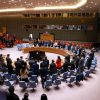
UN Warns of an Imminent Collapse in Haiti
As gang violence in Haiti continues to target civilians and critical infrastructures, humanitarian organizations and the Haitian National Police (HNP) have found it increasingly difficult to manage the growing scale of needs. The United Nations (UN) and its partners fear that Haiti will approach a nationwide collapse due to numerous shortfalls in funding, a widespread lack of essential resources, and rampant insecurity.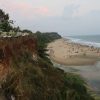
Rampant Tourism, Climate Change Threatens Varkala’s Unique Geodiversity
From the top of the cliff, the beach down below appears like a box of sand, with people scattered on it like tiny ants. This is Varkala, arguably the most sought-after coastal tourism spot in Kerala, India, right now. The Varkala cliff—spanning across Edava Cliff, North Cliff, and South Cliff—is 7.5 km long and has a maximum height of 40 m. Religious rituals take place at the part of Papanasam beach that divides the North and South Cliffs.
A Nation Bleeds While the World Watches: The Tragedy in Sudan Must End
The ongoing civil war in Sudan is tragic, but the greater tragedy is that if the international community sits on its hands and does nothing to stop this horrific war and prevent further escalation of the conflict, it will come at an unfathomable price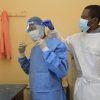
African Countries Still Underfunding Health by as Much as 50 Percent
The majority of African countries are yet to commit 15 percent of their GDP to funding the health sector, despite the growing disease burden weighing down the continent and two decades after the coming into force of the Abuja declaration on health sector funding.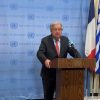
UN Chief, Brazil Gather World Leaders to Reaffirm Commitments Paris Agreement
UN Secretary-General António Guterres and President Lula da Silva of Brazil on Wednesday, April 23, held a closed-door meeting with heads of state to discuss strengthening global efforts against the climate crisis and to ensure a just energy transition.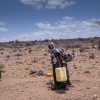
Climate Groups Report 2025 Is Unlikely To Be Hotter Than 2024
On March 19, the World Meteorological Organization (WMO) and the Copernicus Climate Change Service (C3S) issued a report on the State of Global Climate in 2024, detailing the numerous heightened natural disasters that were a consequence of human-induced climate change. With the past three years having been recorded as the three hottest years in human history, climate scientists are optimistic that 2025 will see slightly cooler global temperatures.
Chel Snakehead: A Fish That Time Forgot, Rediscovered
The Chel Snakehead fish, thought to be extinct, has made a dramatic comeback to the eastern Himalayan ecosystem after more than 85 years of absence near its source river in India.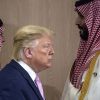
US Considering Nuclear Power for Saudi Arabia in Grand Bargain
The Trump administration is reportedly pursuing a deal with Saudi Arabia that would be a pathway to developing a commercial nuclear power industry in the desert kingdom and maybe even lead to the enrichment of uranium on Saudi soil.
How Science Solutions Are Saving Africa’s Livestock and Livelihoods
Livestock are a lifeline for millions of farmers in Africa as a source of food and wealth. But devastating diseases are threatening the health and productivity of their animals. Now scientists at the International Livestock Research Institute (ILRI) have unleashed a toolbox of science solutions by outsmarting the parasites and pathogens that cost millions of dollars in livestock losses across Africa. The toolbox includes everything from vaccines that protect livestock from ‘cattle malaria’ to genetics to breed animals tolerant to East Coast fever.
Slave Trade: Gorée Island and the ‘Fragility of Freedom’
Gorée Island, off the coast of Dakar, is a somber reminder of the transatlantic slave trade. Listed as a UNESCO World Heritage Site, it embodies both the duty to remember and the challenges of passing on a painful past.
Trump Wants World to Subsidise US Empire
Donald Trump’s top economic advisor claims the President has weaponised tariffs to ‘persuade’ other nations to pay the US to maintain its supposedly mutually beneficial global empire.
Essential Supplies Run Critically Low in Gaza While Displacement Soars
Since the deterioration of the ceasefire agreement between Israel and Hamas in March, the Israeli Defense Forces (IDF) have issued numerous evacuation orders and bombardments on the Gaza Strip, resulting in exacerbated rates of displacement and a significant amount of civilian casualties. Roughly two million Palestinians within the enclave struggle to stay alive amid repeated blockages of humanitarian aid.
Shaken and Strained: Myanmar’s Earthquake Adding to the Misery of 4 Years of Conflict
As I walked through the streets of Sagaing and Mandalay, the scenes unfolding in the wake of the 7.7 earthquake were hard to comprehend. Tall buildings and hundreds of homes are now lying in rubble. Of those that are still standing, many are lurching at dangerous angles, defying gravity for now, but could collapse at any moment.
Four Rare Snow Leopards Spotted Together on Pakistan’s Northern Peaks
In a remarkable conservation achievement, four rare and elusive snow leopards have been spotted together in the rugged peaks of northern Pakistan, highlighting the success of the ongoing global efforts aimed at protecting this critically endangered species and preserving its fragile habitat.
Hooves Vs. Habitats: Striking a Sustainable Balance Between Livestock and the Environment Is Crucial to Africa’s Future
In my country, Senegal, almost 70 percent of our land is used to graze livestock. Here and across Africa, pastoralists and livestock keepers sustain herding systems which are closely bound up with our landscapes and crucial to nationwide food security, economic growth, and ecological balance.
Bringing Resilience to the Table to Achieve Development Goals
The global risk landscape is evolving at an unprecedented pace, posing significant threats to attaining the Sustainable Development Goals (SDGs). As extreme weather, macroeconomic shocks, conflict, and other risks intensify and intertwine, they can create ripple effects that amplify existing vulnerabilities and put both human and development progress in peril.
France to Break Away from UK & US While Recognizing Palestine as Nation State
France, a veto-wielding permanent member of the Security Council, the most powerful political body at the UN, is planning to break ranks with the other two Western members, the US and UK-- and recognize Palestine as a nation state. French president Emmanuel Macron was quoted as saying that France would recognize a Palestinian state within months, and suggested he could do it alongside a UN conference in New York in June.
Smallholder Farmers Are Not ‘Beneficiaries’, but the ‘Co-Creators of Change’
Eliud Rugut comes from generations of farmers, yet his family expected him to move out of their home and pursue another career.
Amputated Limbs, Enduring Pain: The Suffering of Syria’s War Wounded
The Syrian war has left countless Syrians with devastating injuries, ranging from limb amputations and burns to the loss of sensory functions. These injuries have profoundly impacted their lives, compounded by the limited attention and support they receive from civil society organizations.« Previous Page — Next Page »





