
Wednesday, September 9, 2026



News and Views from the Global South
Combating Desertification and Drought

Opinion: The Oceans Need the Spotlight Now
The international community must focus its energies immediately on addressing the grave challenges confronting the oceans. With implications for global order and peace, the oceans are also becoming another arena for national rivalry.
Pope Could Upstage World Leaders at U.N. Summit in September
Judging by his recent public pronouncements - including on reproductive health, biodiversity, the creation of a Palestinian state, the political legitimacy of Cuba and now climate change – Pope Francis may upstage more than 150 world leaders when he addresses the United Nations, come September.
New Approaches to Managing Disaster Focus on Resilience
Natural disasters have become a fact of life for millions around the world, and the future forecast is only getting worse.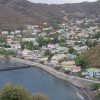
Views from the Caribbean ahead of COP21, the December 2015 Climate Change Summit in Paris – Building Resilience to Disaster: Adaptation
 From constructing barriers against rising sea levels to rehabilitating mangroves and providing agrometeorology services, the Caribbean isn’t waiting for a new international agreement on climate change to start implementing adaptation measures. But funding to roll out such projects on the necessary scale remains a key issue, and many communities remain desperately vulnerable to storms and flooding.
Opinion: What the Philippines Can Learn from Morocco, Peru and Ethiopia
(Last week, Australian Climate Activist offered an apology to the Philippines for his country’s lack of action. Today, he partners up with climate tracker from the Philippines Jed Alegado to talk about what the Philippines can do to show its leadership in tackling climate change.)
Climate Justice: Trial by Public Opinion for World’s Polluters
The United Nations, which is tasked with the protection of the global environment, has asserted that climate change affects people everywhere - with no exceptions.
Adaptation Funding a Key Issue for Caribbean at Climate Talks
With less than six months to go before the next full United Nations Conference of the Parties also known as COP 21 – widely regarded as a make-or-break moment for an agreement on global action on climate change – Caribbean nations are still hammering out the best approach to the talks.
Peru a Shining Example for South America’s Climate Action Plans
This week, Peru became the first South American nation to publicly announce its Climate Action Plan, or INDC. In doing so, it may have set the scene for a new wave of highly transparent and ambitious INDC submissions from the continent.
Small Victories at Bonn Climate Talks
As climate talks wind down in Bonn, Germany, observers of the negotiations say that despite some progress on a draft text, key issues remain unresolved and will carry over at least until the next round in August.
U.N. Chief Backs New Int’l Decade for Water for Sustainable Development
As the United Nations continues its negotiations to both define and refine a new set of Sustainable Development Goals (SDGs) before a summit meeting of world leaders in September, Secretary-General Ban Ki-moon has expressed support for a new “International Decade for Water for Sustainable Development.”
Opinion: For a New Generation of Climate Activists, It’s Too Late to Wait
I remember pretending not to be so excited. There was this nervous energy that kicked up my heels as I prowled through the U.N. negotiations that afternoon. You could feel it all around. Circling our meeting point like sharks quietly rounding our prey. If you knew what to look for, you would know exactly what was about to happen.
Thirsty in Nicaragua, the Country Where ‘Agua’ Is Part of Its Name
Nicaragua, the Central American country with the most abundant water sources, and where water – “agua” in Spanish – is even part of its name, is suffering one of its worst water crises in half a century, fuelled by climate change, deforestation and erosion.
As Jamaica’s Prime Forests Decline, Row Erupts Over Protection
For Jamaica, planting more trees as a way to build resilience is one of the highest priorities of the government's climate change action plan. So when Cockpit Country residents woke up to bulldozers in the protected area, they rallied to get answers from the authorities.
Prolonged Drought Leaves Caribbean Farmers Broke and Worried
St. Lucian farmer Anthony Herman was hoping that next year he’d manage to recoup some of the losses he sustained after 70 per cent of his cashew crop withered and died in the heat of the scorching southern Caribbean sun.
Bahamas Builds Resilience Against a Surging Sea
Small Island Developing States (SIDS) have championed the phrase “1.5 to stay alive” in demanding that global temperature increases be kept as far below 1.5 degrees C as possible to limit the anticipated devastating effects of climate change on the world’s most vulnerable countries.
Opinion: Let’s End Chronic Hunger
At the 1996 World Food Summit (WFS), heads of government and the international community committed to reducing the number of hungry people in the world by half. Five years later, the Millennium Development Goals (MDGs) lowered this level of ambition by only seeking to halve the proportion of the hungry.
Poor Land Use Worsens Climate Change in St. Vincent
For 32 years, Joel Poyer, a forest technician, has been tending to the forest of St. Vincent and the Grenadines.
NGOs Urge Post-2015 Declaration Include Water, Sanitation as Basic Human Rights
Virtually every major international conference concludes with a “programme of action” (PoA) – described in U.N. jargon as “an outcome document” – preceded by a political declaration where 193 member states religiously pledge to honour their commitments.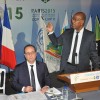
Caribbean Looks to Paris Climate Summit for Its Very Survival
Caribbean leaders on Saturday further advanced their policy position on climate change ahead of the 21st Conference of Parties, also known as COP 21, scheduled for Paris during November and December of this year.
Caribbean Stakes Out “Red Lines” for Paris Climate Talks
When the international climate change talks ended in Peru last December, the 15-member Caribbean Community (CARICOM), a political and economic union comprising small, developing, climate-vulnerable islands and low-lying nations, left with “the bare minimum necessary to continue the process to address climate change”.
In Belize, Climate Change Drives Coastal Management
A five-year project launched here in Belize City in March seeks to cement a shift in view of climate change and its impact on Belize’s national development.« Previous Page — Next Page »


Today, some two billion people depend on ecosystems in dryland areas, with 90 percent of them living in developing countries. But the pace of arable land degradation is accelerating – now estimated at 35 times the historical rate -- impacting biodiversity, availability of clean water and food security, as well as exposing vulnerable communities to the harsh impacts of climate change. As the only legally binding international agreement linking environment and development to sustainable land management, the United Nations Convention to Combat Desertification (UNCCD) works to improve the living conditions of people in the drylands. IPS looks at local solutions being implemented around the world, from restoring soil productivity and mitigating the effects of drought, to projects that empower communities to manage their dryland resources more effectively.

The Week with IPS

Tracking global progress towards a sustainable world
