Languages
Saturday, November 21, 2026



News and Views from the Global South
Africa
MALAWI: Power Interconnection Project Costly but Needed
In Malawi’s administrative and commercial capitals, Lilongwe and Blantyre, two things are clear, especially at night: blackouts and the sound of generators in various workplaces.
Gender Indicators for Global Climate Funds Still an Afterthought
Of the millions of dollars spent on climate change projects in developing countries, little has been allocated in a way that will benefit women. Yet, in Africa, it is women who will be most affected by climate change.
Ban Proposed on Export Restrictions that Undermine Food Security
Egypt has initiated a proposal in the World Trade Organisation (WTO) to ban export restrictions on farm products to poor countries that are net food importers. The Group of 20 has also exhorted the upcoming WTO ministerial conference to adopt a specific resolution on export restrictions.RIGHTS-AFRICA: Rwandan Woman Sentenced to Life for Genocide
Rwanda’s former minister of family and women affairs and the only woman to be indicted by the International Criminal Tribunal for Rwanda (ICTR), Pauline Nyiramasuhuko, has been sentenced to life imprisonment for genocide and rape, among other crimes.NIGERIA: Islamic Sect’s Siege on Nation Borne Out of Frustration
The sectarian crisis and recent violence by extremist groups, like the Jun. 16 bomb blast on the Nigerian Police Headquarters, are borne out of anger at prevailing economic conditions rather than religion, analysts say.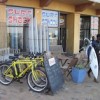
AFRICA: Bike-Share Systems Already Thrive
One winter morning in central Cape Town, despite the gale force wind and the threat of rain, Jacques Sibomana, who was going to be ‘up and down the city all day’, decided he’d rather cycle than brace against the wind on foot.SUDAN: Feeling the Economic Impact Before Secession
Amira Amer* becomes very picky the minute she reaches the bus station. One by one she lets the new air-conditioned busses pass her by. She is waiting for a cheaper bus. They are limited in the expensive city of Khartoum and are constantly packed to the point of overflowing.
MALAWI: Tax on the Poor Is to Compensate for Tariff Revenue Loss
The decision by the Malawian government to introduce value-added tax (VAT) of up to 16.5 percent on products such as bread, meat, milk and dairy products is being blamed for losses incurred by small-scale businesses. The move comes in response to a loss of revenue due to regional trade commitments.Chinese Model Showing Cracks
The Chinese Communist Party likes claiming credit for the success of the country’s model of steady rule and economic prosperity. But as it prepares to celebrate its 90th birthday on Jul. 1, the party has seen the attractive China brand lose appeal with once enthusiastic followers abroad and being outright rejected by violent protests at home.Amidst ‘Dire’ Humanitarian Crisis, U.S. Urges Ceasefire in South Kordofan
As the date for South Sudan’s long anticipated Jul. 9 secession inches closer, on-going violence in the Northern state of South Kordofan threatens to destroy the country’s hopes for peace.
KENYA: No Longer Forced to Buy Ineffective Anti-Malarial Drugs
People in Western Kenya are now able to buy effective anti-malarial drugs at low prices thanks to the success of the Global Fund’s subsidy programme, and thanks to honest pharmacists who are reselling the drugs at the recommended low prices.ZIMBABWE: Microcredit Operators Target Salaried Workers
Johnson Gama knows life on the poverty line only too well. A qualified teacher, Gama has in the last few years been unable to survive on his salary despite working in a profession which two decades ago was considered middleclass in Zimbabwe.SOUTH SUDAN: Fuel Shortages Grip Country
South Sudan is facing severe fuel shortages less than three weeks before it gains independence from the rest of the country. Many gas stations have shut down and those that remain open have people lining up overnight for fuel.
EGYPT: Solar Energy Projects Picking up Again After Uprising
On a blazingly hot summer’s day in Cairo, it’s 36 degrees Celsius in the shade. Air-conditioners and fans whirr across the city, burdening the national electricity grid. Last summer, the populous city experienced frequent water and power cuts, causing a furore. Consumption had grown by 2,600 megawatts, an increase of 13,5 percent from 2009.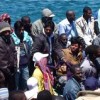
ITALY: ‘They Saw Numbers, We Saw People’
It’s only a few hundred metres from the rocky hillside overlooking Lampedusa’s commercial port to the other side of the protected bay. For more than a decade this narrow strip of ocean has been a migratory gateway into Europe for tens of thousands of mostly African migrants. The numbers have risen and fallen in response to shifting government policies and geopolitical developments.DR CONGO: Publish All Mining, Oil and Forest Contracts
Civil society and the government are agreed: the Democratic Republic of Congo must make public the details of all mining, forestry and oil contracts.Libya Says NATO Strike Kills 19 Civilians
The Libyan government says 19 civilians have been killed in a NATO air strike on the home of one of Muammar Gaddafi's top officials, a day after the Western military alliance admitted killing civilians in a separate attack.KENYA: Empowering Women through Micro-Finance Credit
Without a college education and against the backdrop of limited job opportunities, it was not easy for Salome Wairimu to find employment.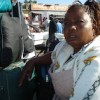
KENYA: Uneducated Women Struggle to Access Credit Fund
As an estimated 3.7 million dollars continues to sit idle in the Women Enterprise Fund (WEF) kitty, the very women the fund was meant to benefit have complained about the difficult requirements that need to be met in order to access the money.UGANDA: Distribution Policy Means Not Enough Drugs for Clinics
The nurse at Najembe Health Centre in Buikwe district says the centre’s supply of malaria drugs will be finished in two days. A malaria epidemic has hit the area and the demand for the drugs is high. But the centre, which serves the entire sub-county, will have to wait up to six weeks before their supply will be replenished.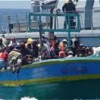
ITALY: Refugees Find Easier Reception, For Now
It’s 4.30 in the morning and the full moon is low in the sky above Lampedusa harbour as the Guardia di Finanza patrol boat escorts a fishing boat containing 19 Tunisian migrants into the closed military port. They include six women, one child and – to the amusement of the Medicins Sans Frontieres (MSF) team - one sheep. The migrants are driven away in a coach to one of the two holding centres, some of them wrapped in silver emergency blankets. But the sheep remains in the port.« Previous Page — Next Page » *#*

The Week with IPS

NEXT STOP - SDGs
Tracking global progress towards a sustainable world
Tracking global progress towards a sustainable world
