Languages
Saturday, November 21, 2026



News and Views from the Global South
Africa
TRADE: Brazil and Africa Ready to Do the Samba
African trade with India and China flourished over the past decade but, with unemployment rising and industrialisation failing to take hold, cracks are appearing in Africa’s much-vaunted "Look East" doctrine. Meanwhile, from across the Atlantic, Brazil is making inroads into the continent.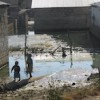
ZAMBIA: “Every Year Flooding Makes This Place a Little Hell”
During the rainy season, and many weeks afterwards, home is never the best place to be for Miriam Banda. Until the end of 2008, she enjoyed living at her house in Kanyama, a high-density settlement bordering the central business district in Lusaka, Zambia's capital.AFRICA: African Union Divided over Libya
As African heads of state gather to discuss the future of the youth of the continent, Libya’s Colonel Muammar Gaddafi is a noticeable absentee at the African Union (AU) summit in Equatorial Guinea.
SUDAN: The Point of No Return
From across the border, they anxiously watch the drama unfold. As their home land of South Sudan prepares itself to split from the Islamic north, fighting continues across the disputed oil-rich areas. During the decades of civil war, almost 400,000 refugees dreamt of the day independence would come. But now it is finally there, many are not ready to go home.ZIMBABWE: “Blood Diamonds” Slip Through Watchdog’s Cracks
Following a recent procedural breakdown of one of the world's leading "blood diamond" watchdogs, experts warn that controversial stones from the Marange fields of Zimbabwe may soon find their way into the hands of unknowing consumers.DEVELOPMENT: Partners, Not Donors Needed For Africa
On an unusually hot Belgian afternoon, Thoko Kaime, leans back in his chair and explains how ‘township’ actually means ‘slum’ in his home country of Malawi.
CLIMATE CHANGE: Water Sources Need to be Protected
Seventy-five-year-old Verdiana Protas is worried that the 20 cattle she bought with her pension money will soon die because the 10-kilometre-long river in her village in northwest Tanzania has been dry for two years now and finding alternative sources of water is getting more and more difficult.
Q&A: “Africa Can Provide More Than Minerals in South-South Trade”
South-South co-operation is firmly on Africa’s agenda. Leading the way is South Africa, which has recently joined up with Brazil, Russia, India and China’s BRIC formation to form a new global grouping of emerging markets, known as BRICS.SUDAN: Southern Kordofan – A State of Ghost Towns
While humanitarian organisations try to bury the corpses scattered across Southern Kordofan, aid to the thousands of people displaced by the fighting is slow as the country's humanitarian commission has prohibited most aid organisations from working in the area.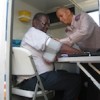
NAMIBIA: Investing in the Health of Farm Workers
In one of the most sparsely populated countries on the planet, people travel up to 200 kilometres in the simmering heat to see a nurse or get basic medication.
SOUTHERN AFRICA: Getting Water to the People
The Southern African region is underutilising its water – a resource to which its citizens already have limited access.
UNICEF Leads ‘Back to School’ Initiative in Cote d’Ivoire
When the five-month-old political standoff in Cote d'Ivoire came to an end in early April, the strife-torn West African nation was expected to return to normal - later than sooner.
UGANDA-HEALTH: When Women Go Without Needed Contraceptives
When the monthly contraceptive injection that Bernadette Asiimwe, a mother of four, got from government health centres in western Uganda was out of stock for weeks, she fell pregnant with her fifth child.Africa-Wide Trade Zone Could Boost South-South Cooperation
The plan to create a new 26-nation liberalised trade zone for Africa, spanning the length of the continent from Cape to Cairo, could open up more possibilities for South-South cooperation that would benefit Africans.
ZIMBABWE: Harvesting Water for Food Security
Earth mounds running across her field hold back the water that Caroline Ndlovu uses to grow maize, pumpkins, beans and watermelons long after the short rainy season in this arid part of Zimbabwe.
Mauritania Could Lose Its Capital City to the Sea
For the past five years, water has been seeping out of the ground beneath parts of Nouakchott, undermining foundations and transforming some areas of the Mauritanian capital into uninhabitable marshes.Cooperation Key to ICC Libya Warrants
The International Criminal Court (ICC) issued warrants Monday for the arrest of Libyan leader Colonel Muammar Gaddafi, his son Seif al-Islam al-Gaddafi, and the Libyan chief of intelligence, Abdullah al-Senussi, for crimes against humanity.
DR CONGO: Water Shortages Grip the Capital
In recent months, no one in the Congolese capital has been spared the effects of water shortages. Where spending entire days criss-crossing Kinshasa in search of water with battered containers in hand was previously the unhappy task of women and children, now men in suits have joined the fray.
Army Jets ‘Bomb South Sudan Villages’
Civilians in south Sudan say jets from the north are launching attacks on villages close to the border.
KENYA: Training Poultry Farmers to Vaccinate Against Disease
Every Tuesday and Friday Teresia Muisyo wakes up at 05.00 to feed her ever- growing flock of over 300 free-range indigenous birds.
“Microfinance Can Help Rural Communities Adapt to Climate Change”
Projects to fight climate change are being designed all around the world. But only five percent of them can be financed with the current international funds available, which means resources have to be used more wisely. Microfinance could be one solution.« Previous Page — Next Page » *#*

The Week with IPS

NEXT STOP - SDGs
Tracking global progress towards a sustainable world
Tracking global progress towards a sustainable world
