Languages
Wednesday, November 11, 2026



News and Views from the Global South
Africa

Digital Agriculture Benefits Zimbabwe’s Farmers but Mobile Money is Costly
Shurugwi communal farmer, Elizabeth Siyapi (57) can no longer be scammed by unscrupulous middlemen to sell her crops cheaply. Nowadays, before she takes her produce to market she scours her mobile phone, which has become an essential digital agriculture data bank, for the best prices on the market.
Kenya’s Adolescent Women Left Behind As More Married Women Access Contraception
It was only when 17-year-old Eva Muigai was in her final trimester that her family discovered she was pregnant. Muigai, a form three student who lives with her family in Gachie, Central Kenya, had spent her pregnancy wearing tight bodysuits and loose-fitting clothes that hid her growing baby bump.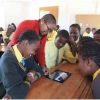
Education Post-COVID-19: Customised Blended Learning is Urgently Needed
Many well meaning education benefactors and commentators in South Africa have expressed that in the light of the COVID-19 pandemic online self-guided learning could solve some of the current teaching problems and address the educational backlog. What learners need, the reasoning goes, is to get free internet access to educational support materials on offer online. Nothing could be further from the truth.
As COVID-19 Burns, World’s Forgotten Wars Continue to take Toll on Civilians as Well
Earlier this year, just before the coronavirus virtually shut down international travel, I sat under a mesquite tree and listened to a rambling speech by a South Sudanese general at a military base outside of the capital, Juba.
To Restore Forests, First Start With a Seed
In 2011, when Rwanda committed to restoring 2 million hectares of land in a global effort to restore 150 million hectares of degraded and deforested areas by 2020 — it seemed like a big ask.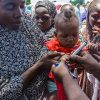
Africa Needs a DOVE Fund: Or Should We Starve So We Can Pay our Debts?
Sub-Saharan Africa has a debt problem. According to the most recent World Bank debt statistics, in 2018 the region had about $493 billion in long term external debt.
South Africa Must Respond – & Lead– on COVID-19 & SDGs
Sitting on the southern tip of Africa during a time of social distancing, while the entire planet fights Covid-19, we cannot help but reflect on how vulnerable our country is to this scourge.
Without Universal Health Coverage We Are Sitting Ducks When the next Pandemic Strikes
We live in a different world to the one we inhabited six short months ago. With more than 4 million people infected and over 280,000 dead globally by mid May 2020, Covid-19 has ruthlessly exposed the vulnerability of a globalised world to pandemic disease. People are slowly coming to terms with the frightening and heartbreaking death toll, and we are still not out of the danger.
Malawi’s Vulnerable Shortchanged in Human Trafficking Prevention Efforts
Malawi is not doing enough to enforce its laws on human trafficking, resulting in a number of cases against perpetrators being dismissed by the courts, according to a local rights group. But local officials say that this Southern African nation — one of the poorest countries in the world — just doesn’t have the financial resources to do so.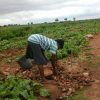
COVID-19: Zimbabwe’s Smallholder Farmers Step into the Food Supply Gap
Bulawayo, Zimbabwe' second city of some 700,000 people, has experienced a shortage of vegetables this year, with major producers citing a range of challenges from poor rains to the inability to access to bank loans to finance their operations. But this shortage has created a market gap that Zimbabwe smallholders — some 1.5 million people according to government figures — have an opportunity to fill.
Finding Money for Public Health, Green Economic Recovery & SDGs
The coronavirus pandemic underscores the profound fragility and unsustainability of today’s world. It exposes the chronic underinvestment in human health and well-being and the consequences of a relentless exploitation of biodiversity and the natural environment.
Africa’s Health Dilemma: Protecting People from COVID-19 While Four Times as Many Could Die of Malaria
Experts across Africa are warning that as hospitals and health facilities focus on COVID-19, less attention is being given to the management of other deadly diseases like HIV/AIDS, tuberculosis and malaria, which affect millions more people.
Africa’s Youth Scholars Harvest Ideas on the Business of Agriculture
In Rwanda, Benimana Uwera Gilberthe, a scholar and pepper producer, experienced first-hand the challenges of breaking into agribusiness. While in Nigeria, Ayoola Adewale is trying to understand if poultry egg farming will prove a profitable and viable business opportunity to the youth of the continent’s most populous nation. Also in Nigeria, Esther Alleluyanatha is understanding the link between young people leaving their villages for larger cities, the remittances they send home, and the implications on rural livelihoods and agriculture productivity.
How South Africa can Address Digital Inequalities in E-learning
South Africa’s education system is complex, with historical inequalities dating back to apartheid. Most of the country’s pupils come from disadvantaged backgrounds. Language is an issue; most pupils do not speak English as a mother tongue, yet English dominates in many classrooms. And, as the COVID-19 crisis has showed, there’s a huge digital divide at play.
Pandemic Lays Bare Africa’s Deficits, but Youth Will Grow the Future
Africa’s frailties have been brutally exposed by the coronavirus pandemic. The virus has reached nearly every country on this continent of 1.3 billion people and the World Health Organization warns there could be 10 million cases within six months. Ten countries have no ventilators at all.
COVID-19 – How Eswatini’s Garden Farmers are Keeping the Vegetable Supply Flowing
Nobukhosi Cebekhulu (68) and Khetsiwe Tofile (64) are small-scale vegetable farmers who are producing from their permaculture home gardens in Malkerns, Eswatini.
Why Reproductive Rights Must Be a Critical Part of Our Arsenal to Fight Pandemics
Sexual and reproductive health and pandemics might seem to be unrelated topics, but large and dense populations are drivers of the high velocity transmission of COVID-19, and there are lessons to be learned for the future.
Thandika Mkandawire, Pan-Africanist Par Excellence
Thandika Mkandawire (1940-2020) had a wicked sense of humour. But he was so considerate that he often made himself the butt of his jokes which typically had a moral. When others struggled to pronounce his surname, he would help them out, “Me kinda weary”.
Coronavirus: Six Key Factors Poor Countries Should Focus on
Since the outbreak of coronavirus pandemic late last year in Wuhan, China, the global community has witnessed unprecedented policy responses to curtail, contain and control the disease. Many have proven to be successful. But others required critical context consideration.
Multilateralism Through Public-Private Partnerships Are Key to Flattening the COVID-19 Curve
The UN Secretary-General Antonio Guterres has said that now is “a defining moment for modern society. History will judge the efficacy of the response not by the actions of any single set of government actors taken in isolation, but by the degree to which the response is coordinated globally across all sectors for the benefit of our human family.”
Debunking 9 Popular Myths Doing the Rounds in Africa About the Coronavirus
In the second week of March the World Health Organisation (WHO) declared COVID-19 a pandemic. By mid-March the disease had spread rapidly in many countries around the world.« Previous Page — Next Page » *#*

The Week with IPS

NEXT STOP - SDGs
Tracking global progress towards a sustainable world
Tracking global progress towards a sustainable world
