Languages
Thursday, November 12, 2026



News and Views from the Global South
Africa

Multilateralism Through Public-Private Partnerships Are Key to Flattening the COVID-19 Curve
The UN Secretary-General Antonio Guterres has said that now is “a defining moment for modern society. History will judge the efficacy of the response not by the actions of any single set of government actors taken in isolation, but by the degree to which the response is coordinated globally across all sectors for the benefit of our human family.”
Debunking 9 Popular Myths Doing the Rounds in Africa About the Coronavirus
In the second week of March the World Health Organisation (WHO) declared COVID-19 a pandemic. By mid-March the disease had spread rapidly in many countries around the world.
Few Clinical Trials are Done in Africa: COVID-19 Shows Why this Urgently Needs to Change
The World Health Organisation (WHO), in its quest to find efficacious therapies to treat COVID-19, plans to conduct a multi-arm, multi-country clinical trial. The trials have yet to begin, but ten countries have already signed up. Only one of them, South Africa, is on the African continent.
A Gender-equal Ethiopian Parliament can Improve the Lives of all Women
Recent gains by women in the Ethiopian political landscape offer a chance to improve gender equality around the country and put an end to long-standing societal iniquities. Since coming to power in 2018, Prime Minister Abiy Ahmed has reorganised the cabinet to ensure that 50 percent of the government’s top ministerial positions have been given to women.
The Cost of Coronavirus in Africa: What Measures can Leaders Take?
With the novel coronavirus COVID-19 having reached the African continent, countries are getting ready to manage the spread of the virus and ensure that their fragile health systems can cope. Images from China and Europe give many reasons for concern.
UN and Partners Request $267.5 Million to Respond to Humanitarian Needs Arising from COVID-19 Pandemic in Kenya
The Government of Kenya, the United Nations and humanitarian partners have launched today a Flash Appeal requesting $267.5 million to respond to the most immediate and critical needs of10.1 millionpeople.
Ending the Unthinkable Injustice of Human Chaining
When Akanni’s mother died in early 2018, she stopped eating for three weeks. Her mood became unpredictable; she was often shouting or sulking angrily. Medicine from a local pharmacist didn’t help. At a loss for what to do to handle the trauma, Akanni’s father took her to a church in Abeokuta, Ogun state, in Nigeria. And then he left her there.
**Correction**How the COVID-19 Pandemic is Affecting Women’s Sexual and Reproductive Health
A little over half of women across the globe are able to freely make choices about their sexual and reproductive health, according to a latest report based on data from 57 countries. However, as much of the world has gone into lockdown because of the coronavirus pandemic, with countries implementing social distancing and restricting the free movement of people, experts are concerned that even this small gain in sexual and reproductive health may suffer negatively.
NGOs Pivot to COVID-19 Prevention in Refugee Camps
We are living in uncertain times. All of us are experiencing the Corona pandemic in various ways. For most it means quarantine and physical isolation. We worry about family members, loss of income and not knowing what the future will look like- or how long this will continue.
Green Counter-Revolution in Africa?
In 2006, the Bill and Melinda Gates Foundation and the Rockefeller Foundation jointly launched the Alliance for a Green Revolution in Africa (AGRA). The African Green Revolution Forum claims AGRA is the “world’s most important and impactful forum for African agriculture”.
The Boardwalk For Birds: Protecting Lake Victoria’s Dunga Beach Wetland
At around 11am on a Saturday, Luke Okomo arrives at Dunga Beach, on the outskirts of Kenya’s Kisumu City, and heads straight to what is known as the ‘Dunga Papyrus Boardwalk’.
Human Rights and Compassion Must Guide Enforcement of COVID-19 Mitigation
Covid-19 infections continue to rise, bringing normal life to a virtualstandstill and causing countries to shut themselves off from the rest of the world.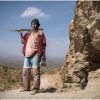
Growing Youth Activism for Environmental Protection in Africa
The mining sector in Africa is facing radical change as youth activists take action against the environmental degradation caused by mining industries. Tensions between activists and the mining industry have raised, however, concerns over human rights abuses.
Coronavirus Proves Need for Free Healthcare for All– Now
The multi-layered crisis of the Coronavirus epidemic has been a dramatic shock to everyone. But, to communities affected by HIV and AIDS, the crisis has not only brought a further shock to already vulnerable people, it has brought other reactions too – a troubling sense of déjà vu, and a passionate, empathetic, fierce solidarity with all those affected by Coronavirus.
Zimbabwe’s Afforestation Challenge
“I have never planted a tree in my life,” laughs Jairos Saunyama, a tobacco farmer, revelling at the absurdity of the question of whether he is involved in the country's afforestation efforts. Sawunyama is one of thousands of farmers who are blamed by local conservationists for turning the country's forests into deserts and dust bowls.
Can Eswatini’s Traditional Healers Encourage HIV Testing Among People Not Accessible via Routine Healthcare Systems?
Doctor Khalishwayo is a traditional healer based in Nhlangano, a town in the Shiselweni Region, in southern Eswatini. His clients are people who consult him when they are suffering from different ailments. And he in turn diagnoses them using divine methods.
TB, HIV and COVID-19: Urgent Questions as Three Epidemics Collide
Tuberculosis (TB) and HIV pose a significant burden on South Africa’s health system. There’s a close relationship between the two. About 60% of TB patients are also HIV-positive. The novel coronavirus (Sars-CoV-2) is likely to be of particular concern for communities with high rates of TB and HIV.
Djibouti Intensifies Awareness-raising Efforts Against FGM
Female Genital Mutilation (FGM) is still widely practised in the African country of Djibouti. Despite efforts by the government and development agencies to curb this practice, culture, tradition and religion continue to slow down progress.
Health Workers Are the Frontline Soldiers Against Covid-19. Let’s Protect Them
Many soldiers have seen first-hand the horrors of war and, terrifying though it often was, they knew who they were fighting, and could recognise their enemy.
The UN and International Community united in fighting COVID-19 in Kenya
The Government of Kenya, United Nations and International Community convened today at the UN Complex in Nairobi to combine their forces in their fight against the COVID-19 pandemic in Kenya.
Lessons from Nigeria in Responding to Coronavirus
Coronavirus is now a pandemic and the World Health Organization considers Europe as its new epicenter. Italy, Spain and France are on lockdown and several nations are banning travelers from countries where cases are on the rise.« Previous Page — Next Page » *#*

The Week with IPS

NEXT STOP - SDGs
Tracking global progress towards a sustainable world
Tracking global progress towards a sustainable world
