Languages
Thursday, November 19, 2026



News and Views from the Global South
Armed Conflicts
Reports of Abuses Stain New Ivorian President’s Record
Forces loyal to Ivorian President Alassane Ouattara have carried out indiscriminate torture, rape, extrajudicial killings, and other acts of violence and abuse, according to an investigation by Human Rights Watch.U.S. Uses Peace Talks to Divide Taliban from Pakistan
The leaked reports over the past two weeks of a series of meetings between U.S. officials and a Taliban figure close to leader Mullah Omar seemed to point to real progress toward a negotiated settlement of the war in Afghanistan.LIBYA: Zuma says Gaddafi Ready for Truce
Muammar Gaddafi is ready for a truce to stop the fighting in his country, Jacob Zuma, the South African president, has said.Yemen Jets ‘Bomb Al-Qaeda-Held City’
At least 30 people have been killed by military jet fire in Yemen's southern city, Zinjibar, which is said to be controlled fighters linked to Al-Qaeda.Explosions Greet Nigerian President’s New Term
Bomb blasts hit a military base in the northern Nigerian city of Bauchi on Sunday, killing ten and injuring more than a dozen just hours after the swearing in ceremony of President Goodluck Jonathan in the capital, Abuja. News reports also said three others died in a bombing in Zuba, just outside the capital.SRI LANKA: Peace Dividend Skips Remote Villages
The road to Unnichchai in eastern Sri Lanka makes for a nerve-wracking journey trying to avoid large crater-like potholes, squeezing across narrow bridges, and passing by a patchwork landscape of paddy fields - both abandoned and cultivated - with not a building in sight.New Leadership for the ICC
As the International Criminal Court gears up to elect six judges and a new prosecutor, observers are warning that political rather than merit-based considerations could govern the evaluation of candidates.GEORGIA: Opposition Rallies in the Face of Repression
More than half of Georgia’s population still lives in abject poverty due to economic stagnation, worsening living standards, rising unemployment and low pay nearly nine years after the 2003 bloodless ‘Rose Revolution’ that promised post-Soviet economic revival, a new political course and better living conditions.U.S.: House Votes Suggest Growing War Weariness
In a sign of growing war weariness in Congress and among the general public, the Republican-led House of Representatives voted Thursday to bar the deployment of U.S. troops to Libya and narrowly defeated a provision requiring President Barack Obama to submit a plan for withdrawing U.S. troops from Afghanistan.Mideast Uprisings Underlie Falling Peace Index
The world has witnessed a decline in global peace over the last year, according to the 2011 Global Peace Index, or GPI, released by the Institute for Economics and Peace Wednesday.U.S./SOUTH ASIA: Influential Think Tank Urges Long-Term Commitment
With public and Congressional debate hotting up over post-bin Laden U.S. policy in South Asia, a think tank with close ties to the administration of President Barack Obama is calling for a strategy that will keep Washington deeply engaged in the region for a long time to come.
Arab Spring Solidarity Defies National Boundaries
Ever since the ousting of Tunisian president Zine El Abidine Ben Ali, ordinary citizens have been leading uprisings all over North Africa and the Middle East against unwanted rulers. But what is now known as the "Arab Awakening" is not confined to people resisting within their own borders. Some Arabs are helping the fight in neighbouring countries too.Tajikistan’s New Generation of Guerrillas
While most of the world is closely watching the Middle East, monitoring the human rights situations in Bahrain, Syria, Libya and Israel, the International Crisis Group (ICG) is keeping its eye on neighbouring Central Asia.
Violence Threatening South Sudan Independence
Escalating violence in Abyei, the largest of several towns in the disputed borders between North and South Sudan, has displaced thousands of people and, according to U.S. officials, is threatening the viability of both the 2005 Comprehensive Peace Agreement (CPA) and the soon-to-be independence of Southern Sudan, set for Jul. 9, as the potential for civil war between the two sides grows.Sudan’s Abyei ‘Ablaze’ After Capture by North
Sudan's disputed border town of Abyei is ablaze, with gunmen looting properties days after troops from the government in Khartoum entered the area, U.N. peacekeepers say.
Global Refugee Problem Bigger Than Ever
This year marks the 60th anniversary of the landmark 1951 U.N. Convention on the Status of Refugees defining their rights and states' legal obligations to protect them.Obama Troop Surge Decision Ignored Pak-Taliban Ties
The unilateral U.S. raid that killed Osama bin Laden created a spike in mutual recriminations between U.S. and Pakistani politicians, but their fundamental conflict of interest over Afghanistan was already driving the two countries toward serious confrontation.U.S.: Congress Pushes for Vote on Libya Intervention
As the War Powers Act, which purportedly authorised U.S. President Barack Obama to wage war in Libya for 60 days without Congressional approval, expires Friday, experts here continue to question the strategic focus of the NATO-led operation, with pressure mounting from Capitol Hill on the Obama administration to lay out what its desired end game in Libya will be.
LIBYA: Ajdabiya Seeks Semblance of Peace
Although the front line is at its gates in eastern Libya, the city of Ajdabiya is trying to get back to normal under threat of attack by the troops loyal to Muammar Gaddafi and, especially, under the risk posed by unexploded ordnance in streets, gardens and houses.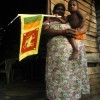
SRI LANKA: Wounds of War Healing Slowly
Suresh Sundaram and Wilfred Wickremasinghe live 350 kilometres apart, and have never met each other. But their lives ran parallel for over a quarter of a century, as war ravaged their tear-shaped country Sri Lanka and changed their destinies forever.
War Crimes Prosecutor Seeks Gaddafi Warrant
The International Criminal Court's chief prosecutor has asked a three-judge panel to issue arrest warrants for Libyan leader Muammar Gaddafi, his second-eldest son, Saif al-Islam, and his intelligence chief, Abdullah Senussi.« Previous Page — Next Page »


Armed conflicts are a sad constant on daily front pages worldwide. Wars, civil wars, revolts, coups, genocides, ethnic and political violence, and global terrorism capture our attention for the geopolitical landslides, human suffering, food crises and streams of migration that follow in their wake. As in times of natural disaster, man-made crises claim frequent casualties among the poor, women and children. IPS examines emerging and ongoing armed conflicts around the world with an eye on the underlying social and political dynamics, and special focus on the lived experiences of those most affected by armed conflict.

The Week with IPS

NEXT STOP - SDGs
Tracking global progress towards a sustainable world
Tracking global progress towards a sustainable world
