Languages
Thursday, November 19, 2026



News and Views from the Global South
Armed Conflicts
U.N. Chief Powerless to Pursue War Crimes in Sri Lanka
U.N. Secretary-General Ban Ki-moon admitted Monday he is not empowered to establish an international war crimes tribunal to probe the "serious violations" of international humanitarian and human rights law committed during the concluding stages of the decades-long conflict in Sri Lanka in May 2009.CAMBODIA/THAILAND: Diplomatic Breakthrough Elusive as Troops Clash on Border
A diplomatic deadlock between Thailand and Cambodia is ratcheting up already rising tensions between the two Southeast Asian countries, where a fresh round of border clashes between Thai and Cambodian troops has resulted in 12 deaths on both sides since Friday.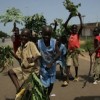
COTE D’IVOIRE: Hesitant Steps Towards Normal Life
The prime minister of Côte d'Ivoire, Guillaume Soro, held his first cabinet meeting away from the Golf Hotel on Tuesday. The meeting - at the Prime Minister's Office in the Plateau d'Abidjan - was symbolic, intended to signal a return to normal life in a city that endured heavy fighting between Mar. 30 and the fall of former president Laurent Gbagbo on Apr. 11.Libya Group Agrees ‘Trust Fund’ for Rebels
The international contact group on Libya has agreed to set up a temporary "trust fund" to help the international community channel assets to the opposition Transitional National Council in Benghazi.Pakistan Moves to Curb More Aggressive U.S. Drone Strikes, Spying
The Pakistani military's recent demands on the United States to curb drone strikes and reduce the number of U.S. spies operating in Pakistan, which have raised tensions between the two countries to a new high, were a response to U.S. military and intelligence programmes that had gone well beyond what the Pakistanis had agreed to in past years.COTE D’IVOIRE: Gbagbo Being Held by Ouattara Forces
Cote d'Ivoire's Laurent Gbagbo has surrendered to the forces of presidential claimant Alassane Ouattara and is being held by them, the U.N. has said.Latin America Logs Largest Increase in 2010 Military Spending
Latin America has displaced traditional high-rollers, including the Middle East and Europe, as the region registering the largest percentage increase in military spending last year, according to a new study released by the Stockholm International Peace Research Institute (SIPRI).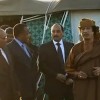
Gaddafi Accepts AU Plan to End Fighting
Muammar Gaddafi, the Libyan leader, has accepted a "road map" for a ceasefire with rebels, according to a delegation of African leaders.LIBYA: U.N. Experts Probe Human Rights Abuses
The international commission of inquiry established by the U.N. Human Rights Council to investigate alleged violations of human rights in Libya will start its mission next week, and report on all crimes, committed by anyone, including foreign powers.
Manufacturing Cote d’Ivoire’s ‘Good Guy’
As Côte d'Ivoire's bloody leadership contest draws to a close and the surrender of Laurent Gbagbo, the incumbent president, seems imminent, a long list of atrocities and electoral irregularities mark the records of both him and his opponent, Alassane Ouattara.COLOMBIA: Court Documents Reveal Chiquita Paid for Security
Contrary to claims by Chiquita Brands International that its payments to Colombian paramilitary and guerrilla groups over more than a decade were extorted, internal company documents released here Thursday strongly suggest that the transactions provided specific benefits to the banana giant.U.S.: Libya Splitting Republicans in 1990s Redux
In something of a replay of the infighting among Republicans over Washington's military interventions in the Balkans in the 1990s, U.S. involvement in the civil war in Libya is exposing serious splits among self-described conservatives.Maliki’s Doubts Threaten Post-2011 Troop Presence Plan
President Barack Obama has given his approval to a Pentagon plan to station U.S. combat troops in Iraq beyond 2011, provided that Iraqi Premier Nouri al-Maliki officially requests it, according to U.S. and Iraqi sources.MIDEAST: Turkey Relishes Role as Mr. Fixit
In the course of 24 hours earlier this week, Turkish Foreign Minister Ahmet Davutoğlu met a top envoy from Libya, dispatched a senior Turkish official to Tripoli and traveled to Bahrain and Syria, all struggling to survive the pro- democracy Arab spring.NATO Vows to Protect Misurata Amid Criticism
NATO has vowed to protect Libya's civilian population and give priority to the besieged city of Misurata, a day after rebel fighters accused the military alliance of acting too slowly.U.S. Defends Role in Cote d’Ivoire Crisis
As Cote d'Ivoire enters its fourth month of post-election violence with intensified fighting and bloodshed, the White House is defending its efforts thus far to shepherd a solution to the stalemate between incumbent Laurent Gbagbo and Alassane Ouattara, the internationally-recognised winner of last fall's elections.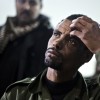
LIBYA: Prisoners on Both Sides at Risk
After a month and a half of conflict in Libya, the situation of political prisoners and prisoners of war on both sides is uncertain, and their fundamental rights are at risk.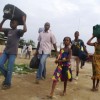
Cote d’Ivoire on the Edge of Chaos
Forces of law and order have abandoned their posts in Abidjan, creating a vacuum which has rapidly filled with violence, looting and fear.SOMALIA: Manifestation of Stealth Trusteeship
Somalia is currently under what James Fearon and David Laitin of Stanford University call "a neo-trusteeship system". Various external powers, while disagreeing among themselves, make the important decisions for the Somali people.COTE D’IVOIRE: Pro-Ouattara Forces Launch Palace Assault
Heavy fighting is continuing in Abidjan where forces loyal to Côte d'Ivoire's presidential rivals are battling for control of the country's main city.
U.N. Member States Falter in Protecting Staffers, Peacekeepers
The United Nations has remained virtually helpless as hundreds of its staffers, mostly peacekeepers, are killed, kidnapped or victimised by unbridled violence worldwide.« Previous Page — Next Page »


Armed conflicts are a sad constant on daily front pages worldwide. Wars, civil wars, revolts, coups, genocides, ethnic and political violence, and global terrorism capture our attention for the geopolitical landslides, human suffering, food crises and streams of migration that follow in their wake. As in times of natural disaster, man-made crises claim frequent casualties among the poor, women and children. IPS examines emerging and ongoing armed conflicts around the world with an eye on the underlying social and political dynamics, and special focus on the lived experiences of those most affected by armed conflict.

The Week with IPS

NEXT STOP - SDGs
Tracking global progress towards a sustainable world
Tracking global progress towards a sustainable world
