Languages
Saturday, November 7, 2026



News and Views from the Global South
Armed Conflicts

ICJ Orders Israel to Take All Measures to Prevent Genocide in Gaza
The International Court of Justice today told Israel to take all measures within its power to prevent a genocide in the Gaza Strip. Judge Joan E. Donoghue, the court's president, read the order directing the State of Israel to abide by temporary measures to stop the humanitarian crisis facing the Palestinian population in Gaza from worsening.
International Court of Justice Set to Deliver Order in Genocide Case
The International Court of Justice will deliver it's order for provisional measures submitted by South Africa in the case of South Africa versus Israel today.
Rights Coalition Calls for Israel Arms Embargo to End Gaza Carnage
A coalition of 16 leading human rights organizations issued a joint statement Wednesday calling on all nations to immediately stop sending weapons to both Israel and and Palestinian militants, warning that continued arms transfers risk exacerbating what's already one of the worst humanitarian crises in modern history.
Learning for a Lasting Peace
Education is the bedrock of peace, the foundation of strong societies, and the building block for a better world. This year, as we celebrate the Sixth International Day of Education under the theme of ‘learning for a lasting peace’, we call on world leaders to end wars and armed conflicts and focus on our common humanity to embrace the vast potential learning offers in uniting our world.
Turning Protracted African Conflicts into Sustainable Peace
Among East Africa’s dozens of pastoral tribes, major conflicts have erupted repeatedly, largely over land and water disputes. Generational trauma and anger have built to create tensions and grievances that carry emotional weight even hundreds of years later.
Gaza Health Workers Struggling to Save Injured Without Medical Supplies, WHO Expert Warns
Gaza’s healthcare system is “on its knees” as ongoing hostilities force hospitals to operate beyond their capacity and displace their healthcare workers, according to a WHO expert.
The Impact of Climate Migration on Developing Nations
As the world is still gearing up to welcome 2024, let us find a moment to reflect on some of the key trends of the past year and pursue now to embrace the path towards hope and promise for everyone, everywhere.
Mozambique Insurgency Significantly Decreased, Say Experts
There is cautious optimism regarding the conflict that has been raging in northern Mozambique, largely in the province of Cabo Delgado, since 2017. There are encouraging indications that the Islamic State (IS)-driven insurgency has significantly decreased thanks to the deployment of the Mozambique Defense Armed Forces (FADM), Southern African Development Community (SAMIM) forces, and a contingent of Rwandan troops (RSF).
With Attack on Yemen, the U.S. Is Shameless: “We Make the Rules, We Break the Rules”
Have you heard the one about the U.S. government wanting a “rules-based international order”? It’s grimly laughable, but the nation’s media outlets routinely take such claims seriously and credulously. Overall, the default assumption is that top officials in Washington are reluctant to go to war, and do so only as a last resort.
South Africa’s Genocide Case Flawed, Premature, Inaccurate, says Israel
Israel disputed both South Africa’s jurisdiction and the provisional measures that it demanded the International Court of Justice impose on the State of Israel to prevent genocide. Israel’s co-agent, Tal Becker, said in his opening address that Jewish people’s experience of the Holocaust meant that it was among “among the first states to ratify the Genocide Convention, without reservation, and to incorporate its provisions in its domestic legislation. For some, the promise of ‘never again for all people’ is a slogan. For Israel, it is the highest moral obligation.”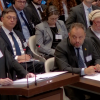
Palestine: Nothing Can Justify Genocide, It’s Not the Time for Silence
Far from the mayhem, destruction, and humanitarian crisis in Gaza, the South African government argued in the International Court of Justice in the Hague that it had an obligation and a right to bring a case to halt a genocide by the Israeli government and its military.
South Africa’s Genocide Case Against Israel at the International Court of Justice
The Institute for Middle East Understanding (IMEU) published the following Q&A with human rights attorney and political analyst Diana Buttu on South Africa’s genocide case against Israel at the International Court of Justice ICJ). The court is scheduled to hold hearings on the petition January 11-12.
Where Does the International Criminal Court Stand on Charges of Mass Killings in Gaza?
The continued devastation of Gaza by Israel has triggered widespread charges of war crimes, genocide, forced displacement, ethnic cleansing, starvation as a weapon of war and mass killings of civilians – over 22,000 at last count—compared to 1,200 killings by Hamas. These accusations have prompted growing demands for intervention by the International Criminal Court (ICC) in The Hague, which has remained silent while its Prosecutor Karim Khan is accused of double standards and playing politics.
Time to End the Israeli-Palestinian Conflict with a Two State-One Nation Solution
Since October 9 2023, Israel’s war on Gaza has displaced over 1.8 million, according to UN estimates and killed almost 22,000 people in Gaza as of 2 January 2024, most of them women and children, according to the Hamas-run territory’s health ministry. Hamas' October 7 surprise attacks on Israel killed 1,200 people.
2024 Demands Swift Action to Stem Sudan’s Ruinous Conflict
Nearly nine months of war have tipped Sudan into a downward spiral that only grows more ruinous by the day. As the conflict spreads, human suffering is deepening, humanitarian access is shrinking, and hope is dwindling. This cannot continue.
Is it Time for Palestine to be Voted UN Member State?
The atrocities against Palestinians in a ruthlessly devastated Gaza — with over 21,000 mostly civilian deaths in retaliation to the killings of 1,200 inside Israel —have resurrected a longstanding question: is it time for Palestine to be recognized as a full-fledged UN member state? The question has also been triggered by a statement by China, a veto-wielding permanent member of the UN Security Council (UNSC).
Will the Human Rights Movement Survive the Gaza War?
In its military campaign in Gaza, Israel faces a seemingly endless list of alleged human rights violations. International monitors argue the Israel Defense Forces have starved Gazans, targeted journalists attempting to cover the carnage, tortured detainees, and attacked hospitals full of wounded civilians.
US Hypocrisy Over Russian and Israeli Killings
When US President Joe Biden lambasted “the largest aerial assault,” which hit “a maternity hospital, a shopping mall and residential areas killing innocent people”, he was not talking of the devastating Israeli attacks on Gaza but criticizing the most recent Russian military assault on Ukraine.
Amidst a Horrendous 2023, Civil Society is Fighting Back Society
The year 2023 has brought so much tragedy, with incomprehensible loss of lives, whether from wars or devastating ‘natural’ disasters, while our planet has seen yet more records broken as our climate catastrophe worsens. And so as the clock ticks towards the (mostly western) New Year, readers are traditionally subjected by media outlets like ours to the 'yearender'—usually a roundup of main events over the previous 12 months, one horror often overshadowed by the next.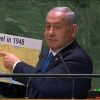
Regime Change in Israel
Benjamin Netanyahu must go. Under the guise of judicial reform, Netanyahu has undermined the rule of law and divided the country. He is toxic to Arab states, even those which have signed the Abraham Accords. Netanyahu has become an impediment to Israel’s democratic development and regional relations.
Catastrophic Shortage of Food in Gaza—Starvation as a Weapon of War
As the killings of civilians in Gaza rose to over 20,000, the besieged city—which has been virtually reduced to rubble by Israeli bombardments—is also being ravaged by hunger and starvation. In new estimates released on December 21, the Integrated Food Security Phase Classification (IPC), a global partnership that includes the World Health Organization (WHO), said Gaza is facing “catastrophic levels of food insecurity,” with the risk of famine “increasing each day.”« Previous Page — Next Page »





Armed conflicts are a sad constant on daily front pages worldwide. Wars, civil wars, revolts, coups, genocides, ethnic and political violence, and global terrorism capture our attention for the geopolitical landslides, human suffering, food crises and streams of migration that follow in their wake. As in times of natural disaster, man-made crises claim frequent casualties among the poor, women and children. IPS examines emerging and ongoing armed conflicts around the world with an eye on the underlying social and political dynamics, and special focus on the lived experiences of those most affected by armed conflict.

The Week with IPS

NEXT STOP - SDGs
Tracking global progress towards a sustainable world
Tracking global progress towards a sustainable world
