Languages
Saturday, November 7, 2026



News and Views from the Global South
Armed Conflicts

UN and Humanitarian Partners Seek USD 46 Billion for Humanitarian Assistance
Funding humanitarian programs will continue into the new year, but the funding cuts of the previous year may impact the prioritization of the most immediate and most life-threatening needs. The Office for the Coordination of Humanitarian Affairs (OCHA) released the Global Humanitarian Overview (GHO) for 2024. This annual assessment of the global humanitarian sector provides insight into the humanitarian action undertaken by the UN and its partners and reviews current and future trends in this sector.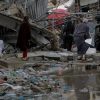
The United States, the United Nations, and Genocide in the Gaza Strip
The political significance of US-Israeli differences is easily exaggerated. It is certainly true that tensions in the relationship exist. Israel is currently committing genocide against the Palestinians in the Gaza Strip. The US would like Israel to reduce - not cease, but reduce – its slaughter Palestinian civilians,
A Desperate Plea from Palestinians: Drop Your Nuclear Bomb on Gaza–and Exterminate Us
The unrestrained destruction of Gaza and the disproportionate killings of over 17,000, mostly civilians-- in retaliation for 1,200 killings by Hamas and 120 hostages in captivity-- have left the Palestinians in a state of deep isolation and weighed down by a feeling of being deserted by the world at large.
Sudan’s Conflict Needs Civil Society Solutions
It’s recently been reported that the two main protagonists of Sudan’s current conflict – leaders of the armed forces and militia at war since April – have agreed to face-to-face talks. The Intergovernmental Authority on Development (IGAD), an East African body, announced the potential breakthrough – although Sudan’s foreign ministry has since claimed IGAD’s statement is inaccurate, creating further uncertainty.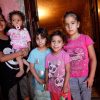
The Solutions to Child Poverty Must Reach the Most Vulnerable Communities
Child poverty persists even in some of the world’s richest countries, new findings from a UNICEF report reveal.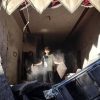
Israel’s 2,000-pound Bunker-Busting Bombs, Supplied by US, May Have Annihilated Gaza
As the civilian death toll in Gaza continues to rise to unprecedented heights —reaching over 17,000 since October 7, with more than 46,000 injured – one of the most distressing reports to come out of the war zone is the use of excessively heavy weaponry by Israel. The Hamas attack on October 7, which killed 1,200 inside Israel, has resulted in a disproportionate number of Palestinians killed so far—and rising.
Freedom, Equality and Justice Lead to Peace
Today we mark a milestone in history: the 75th anniversary of the Universal Declaration of Human Rights. As people around the world commemorate Human Rights Day, we must also deeply reflect on the meaning of this historic document and what it takes to achieve peace in the world.
Greening Education: Education Paying Highest Cost for Ongoing Climate Crisis
It is a global catastrophe of astounding proportions that millions of children are on the run today, forcibly displaced from their homes. As conflict and climate change increasingly become the most pressing challenges facing the world now, the number of displaced children has doubled in the last decade alone, reaching a record high of 43.3 million children.
Civilian Deaths in Gaza a Stain on Israel and its Allies
The pulverising of Gaza now ranks amongst the worst assaults on any civilian population in our time and age. Each day we see more dead children and new depths of suffering for innocent people enduring this hell.
Art and Climate Change
A dark cloud is hovering above human existence. It is a fairly illusory cloud haunting our minds and wellbeing, but also an actual, menacing, mostly invisible cloud that covers the Earth’s entire atmosphere. Saturated by greenhouse gases, this global threat increases with every year, threatening all life on Earth, causing increased flooding, extreme heat, draught, wild fires, rising sea levels, food and water scarcity, as well as diseases and mounting economic loss. This misery, caused by human greed, thoughtlessness, and self-aggrandizement, trigger human migration and armed conflicts.
The Climate Crisis is an Education Crisis
“The one international language the world understands” wrote Eglantyne Jebb, founder of Save the Children, “is the cry of a child,” and the evidence is accumulating that children are not only the innocent victims of conflict whose pleas need to be heard, but also the most vulnerable victims of climate change.
Nowhere is Safe in Gaza — and Nowhere Left to Go
The 7-day ceasefire brought respite to everyone; hostages were reunited with their families and desperately needed aid went into Gaza. We need more of this; all hostages released and considerably more aid and protection for Palestinian civilians.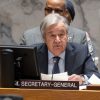
Scale of Death & Destruction in Gaza Result of Wide-Area Explosives in Populated Areas
Resolution 2712 was approved in a context of widespread death and wholesale destruction unleashed by the conflict in Gaza and Israel. According to Israeli authorities, more than 1,200 people were killed -- including 33 children -- and thousands were injured in the abhorrent acts of terror by Hamas on 7 October. Some 250 people were also abducted, including 34 children.
Navigating Russian Censorship from the Polar Circle
At 400 kilometres north of the Arctic Circle, Russian journalist Giorgi Chentemirov says he had already been out of the country for six months when the Russian Ministry of Justice labeled him a "foreign agent."
The Increase in Nuclear Rhetoric on the Korean Peninsula is Deeply Concerning
At 10:42 PM local time on 21 November, the Democratic People’s Republic of Korea (DPRK) launched a rocket “Chollima-1" loaded with the reconnaissance satellite "Malligyong-1", from the Sohae Satellite Launching Station.
A Crisis of Humanity
The UN Secretary-General has defined the crisis in Gaza not just as a humanitarian crisis, but rather as a crisis of humanity. According to UN Secretary-General António Guterres: “Gaza is becoming a graveyard for children. Hundreds of girls and boys are reportedly being killed or injured every day.” This continued trend of violence and disregard for international humanitarian law and human life has enveloped our world.
The Cries of Gaza Reach Afghanistan
On the morning of 11 November, Mohammed Abu Salmiya, the Director of Gaza's largest medical center, Al Shifa Hospital, sent out an emotional S.O.S. to the world through a television news interview and through the remaining charge on his mobile phone. His plea for an immediate ceasefire on behalf of a hospital under siege and its 700 critically injured and ill patients, 36 premature babies, 400 staff, and the 2000 vulnerable civilians. These people sheltering within the hospital and its garden were heard as far away as Afghanistan yet totally ignored where it counted most- with the men in Israel's war cabinet and Washington; they were busy executing and aiding an illegal war of choice on an unarmed, defenseless hospital and one of the poorest and densely populated places in the world.
What Will Tomorrow’s World Order Look Like?
Ukraine, the Caucasus and the Middle East. The latest eruptions of violence mark the end of Pax Americana. The rise of new powers is shifting the global balance of power. Whether tomorrow’s world will be bipolar or multipolar still remains to be seen.
The World’s Right-Wing & Left-Wing Torturers
Jeanne Kirkpatrick, a former U.S. ambassador to the United Nations, once made the distinction between "friendly" right-wing authoritarian regimes (which were mostly U.S. and Western allies) and "unfriendly" left-wing totalitarian dictatorships (which the U.S. abhorred). Among the “dictators” the U.S. shunned in the 1970s and 80s were Zimbabwe's Robert Mugabe, Myanmar's General Than Shwe, Iraq's Saddam Hussein, Cuba's Fidel Castro, Libya’s Mummar al-Qaddafi, Syria’s Hafez al-Assad and North Korea’s Kim IL-Sung.
For Every Child, Every Right—Delivering Psychosocial Support for Crisis Impacted Children
As the global community marks World Children's Day, every child should be guaranteed their rights, including those in the Gaza Strip, where heavy bombardment and military operations by Israel have killed more than 11,000 people, 40 percent of them children.
The Carnage in Gaza Cries Out for Repudiation & Opposition. Maybe Poetry Can Help.
Two centuries ago, Percy Shelley wrote that “poets are the unacknowledged legislators of the world.” Yet elite power has routinely vetoed their best measures. Still, the ability of poetry to inspire and nurture is precious, including when governments are on protracted killing sprees.« Previous Page — Next Page »





Armed conflicts are a sad constant on daily front pages worldwide. Wars, civil wars, revolts, coups, genocides, ethnic and political violence, and global terrorism capture our attention for the geopolitical landslides, human suffering, food crises and streams of migration that follow in their wake. As in times of natural disaster, man-made crises claim frequent casualties among the poor, women and children. IPS examines emerging and ongoing armed conflicts around the world with an eye on the underlying social and political dynamics, and special focus on the lived experiences of those most affected by armed conflict.

The Week with IPS

NEXT STOP - SDGs
Tracking global progress towards a sustainable world
Tracking global progress towards a sustainable world
